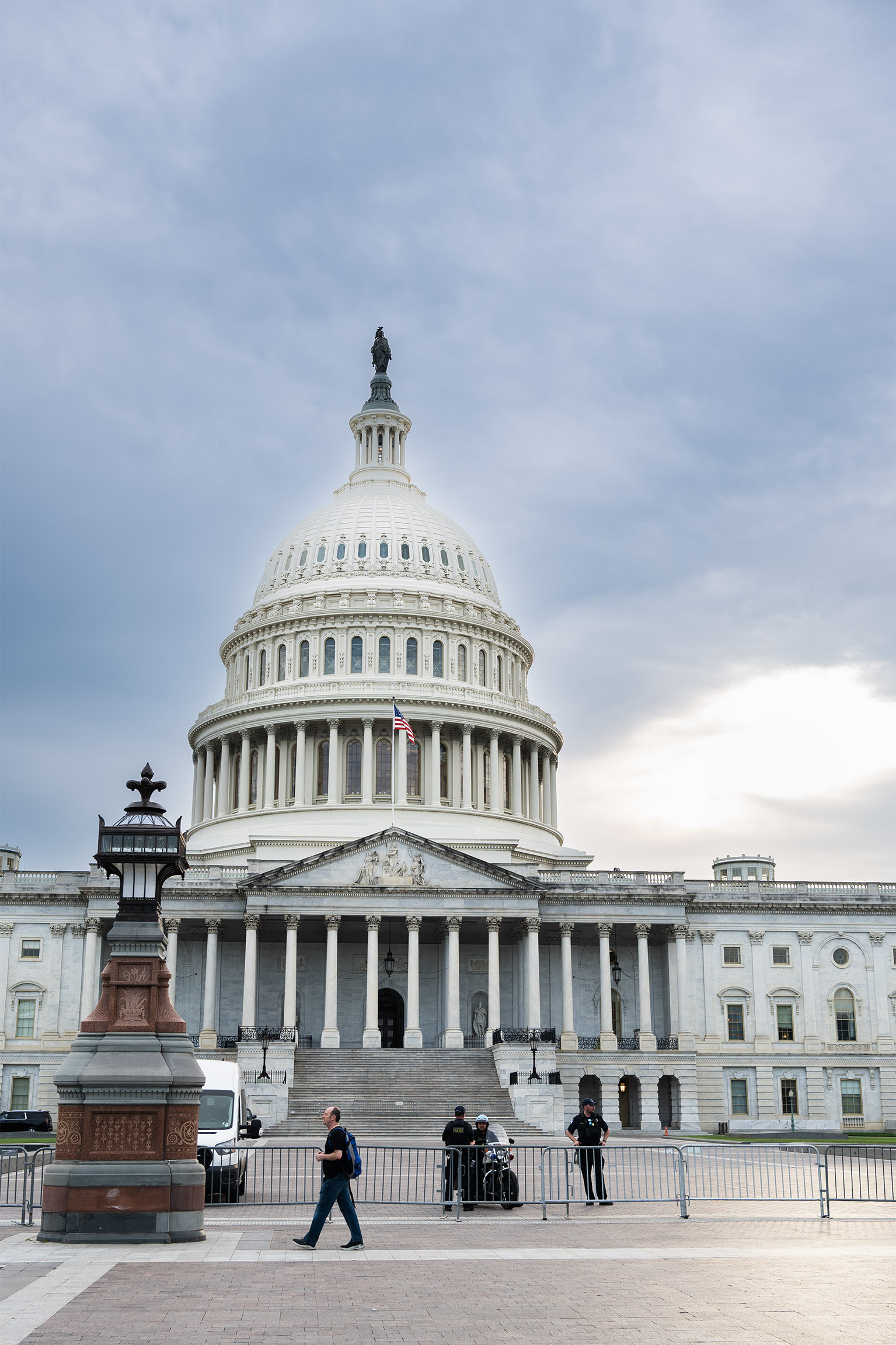
(Further to Wisps of Washington Part — I)
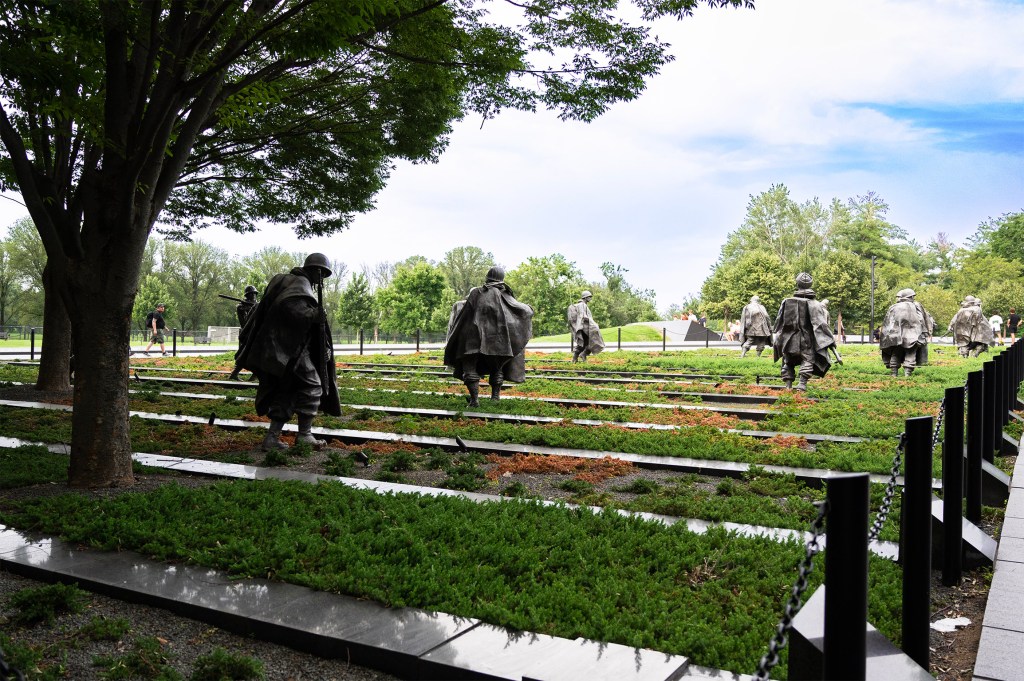
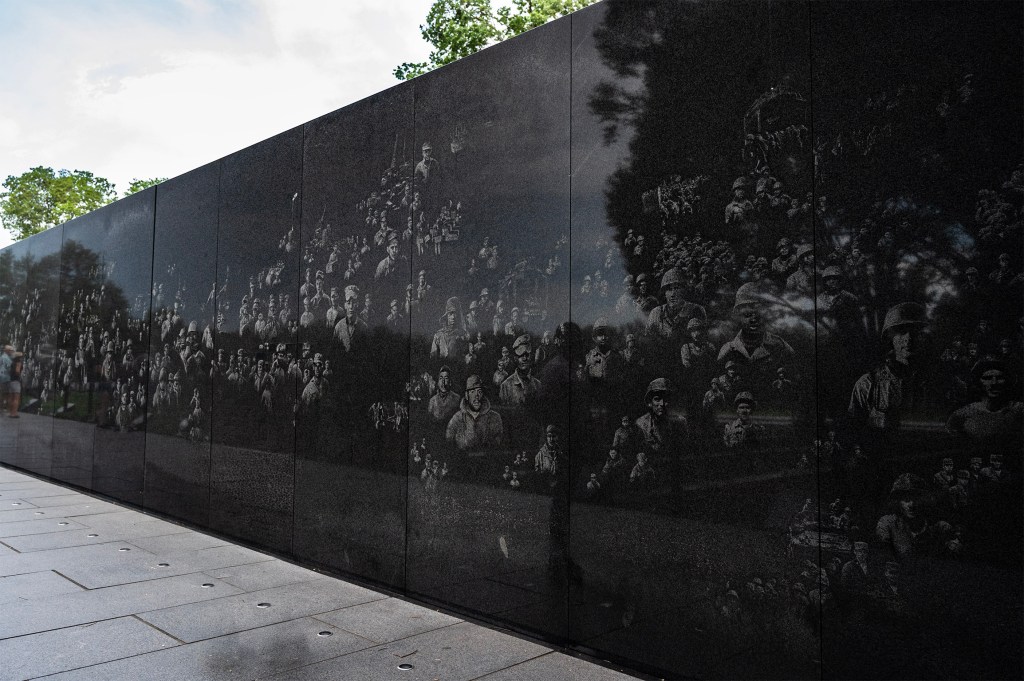
A few minutes’ walk southeast of the Lincoln Memorial brought us to the Korean War Veterans Memorial, where nineteen steel soldiers move warily through low juniper bushes and granite strips evoking the rugged Korean terrain. Alongside them stretches the Mural Wall, a sweep of polished black granite eerily alive with the faces of servicemen drawn from more than 2,400 Korean War photographs. The Wall also catches the reflections of the nineteen figures, turning them into thirty-eight—a reference to the 38th parallel along which Korea was divided. It is a remarkably thoughtful piece of design: the ghostly faces in the granite, the soldiers moving beside them, and the visitors passing before both are briefly brought into the same field of vision. The effect is sombre and strangely immediate.
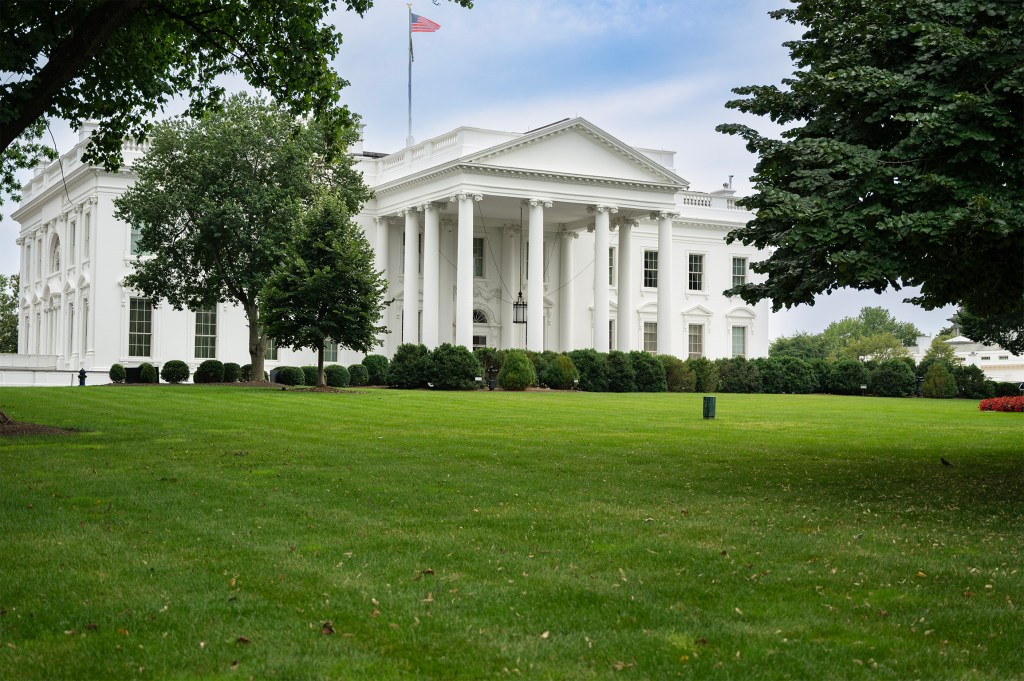
My account had better retrace its steps. The day, unlike Part I of this account, had not ended at the Lincoln Memorial. Somewhere between the Washington Monument and my eventual arrival at Lincoln, I had also made the obligatory pilgrimage to the White House.
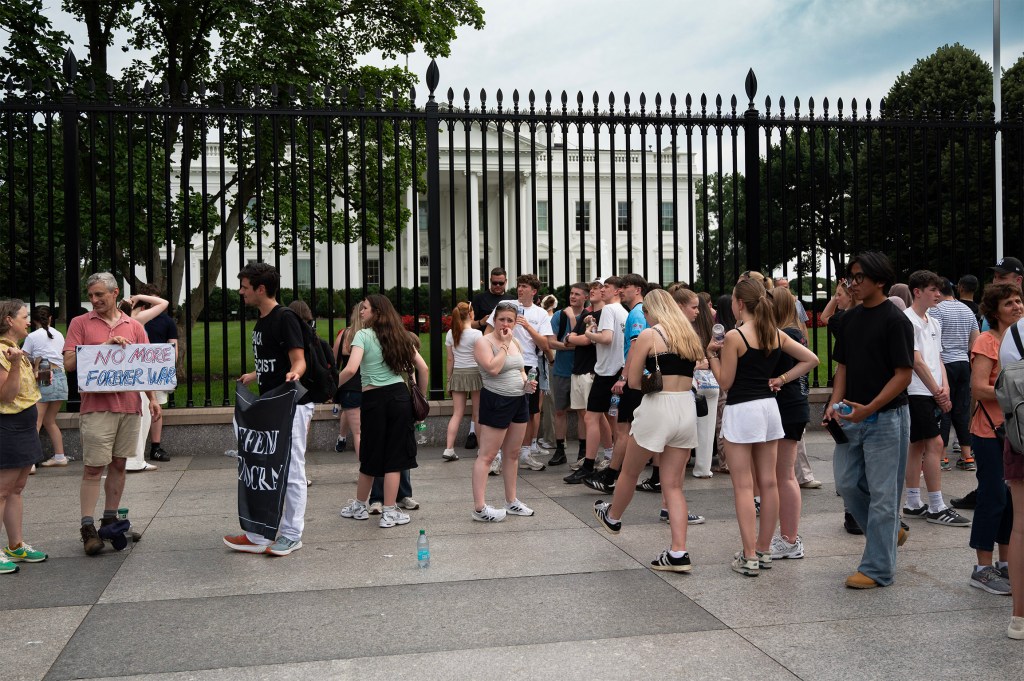
The White House did appear smaller than the image I had carried in my mind, though its silent, classical, all-white contours possessed just the right aura for a building that projects such extraordinary power across the planet. For much of the nineteenth century, it was known formally as the President’s House or the Executive Mansion. Theodore Roosevelt made the White House its official name in 1901. Plain vanilla though the mansion appeared from where I stood, decisions made within its walls have altered the course of American, and indeed world, history.
Across the barricades bordering the South Lawn, a motley gathering of protesters presented an interesting counterpoint. I did wonder if its most interesting resident might somehow make an appearance, though I had no particular reason to expect him to oblige.
By the time I eventually returned to my room, I felt obliged to heed my body’s call for rest. I had planned a quick nap, then to let myself loose on the streets of Washington for a solo late-evening, perhaps even nocturnal, sojourn. Instead, I fell into a sleep that would have done Sleeping Beauty proud and woke only at five the next morning.
Morning brought with it the sobering realisation of the complexity of the project at hand: the review of a foreign office using an ambitious new software platform, barely out of the workshop and now expected to prove itself in Washington. The objective had been clear for months. What worried me was the journey towards it. Until then, the exercise had been conducted manually, its findings laboriously compiled afterwards. The new software sought not merely to replace that process but to recast it.
The project itself had begun almost casually, prompted by a passing suggestion from our top boss, who remained its most steadfast supporter but retired before he could see it rolled out. Afterwards, it made few friends among the echelons in between, perhaps because my colleague GC and I persisted with it. There are hierarchies in which initiative from below is not always received as generously as obedience. No wonder our persistence earned us a fair measure of hostility and left a few scars.
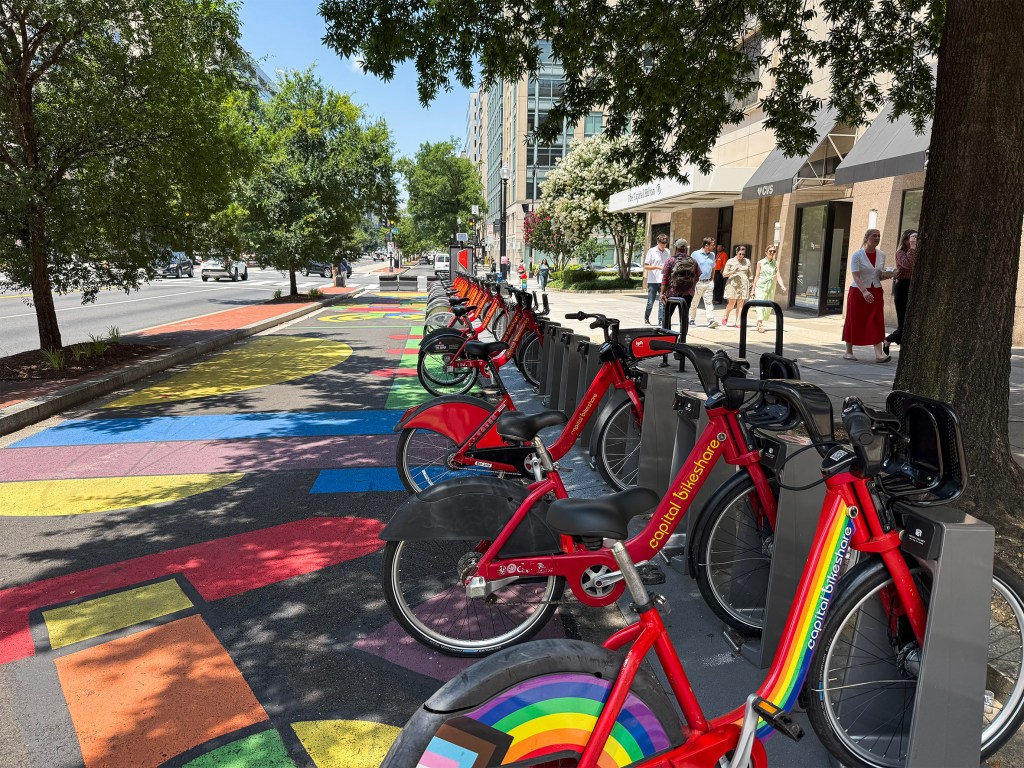
I watched Washington through the cab window as I travelled to the office at 1200 17th Street. The streets seldom seemed content merely to run ahead. Broad avenues arrived obliquely, cutting across our path, opening into circles and squares, or drawing the eye towards some distant dome, column or monument. Long vistas opened where an ordinary city might simply have offered another intersection. There was a sensible grid underneath it all, but Washington seemed forever to be breaking out of it.
It wasn’t long before the first major jolt arrived. The software module refused to load on the office intranet PC—or perhaps the office PC refused to load the software. Either way, Murphy’s Law had asserted itself with admirable promptness in the country of its birth. Fortunately, I had my official VPN-enabled iPad with me and managed to log in, but the expansive introductory sections soon proved too much for it.
GC had tested the module so thoroughly that she probably knew its flow like the back of her hand. Unfortunately, she was asleep in another hemisphere, as was the IT team that could tweak the code on her advice. There was little to do but carry a heap of documents back to the hotel and wrestle with the interface until I finally messaged her in the small hours of the Indian morning. Solutions eventually arrived, though sometimes only after agonising waits. Some required changes to the code; others were absurdly mundane—such as discovering that I could not scroll beyond a list without a mouse.
And so the pattern established itself for the next three days: a cocktail of Washington and Indian time, my working days seeping into GC’s nights and hers into mine, domain speak and code-writers’ speak, with problems and solutions travelling back and forth between the two hemispheres.
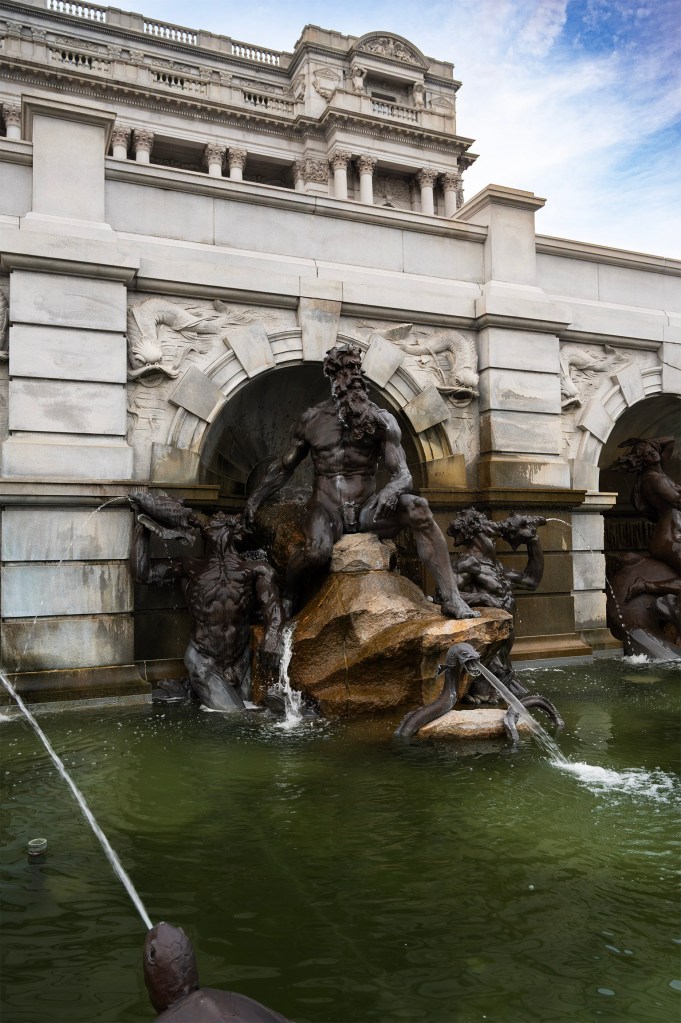
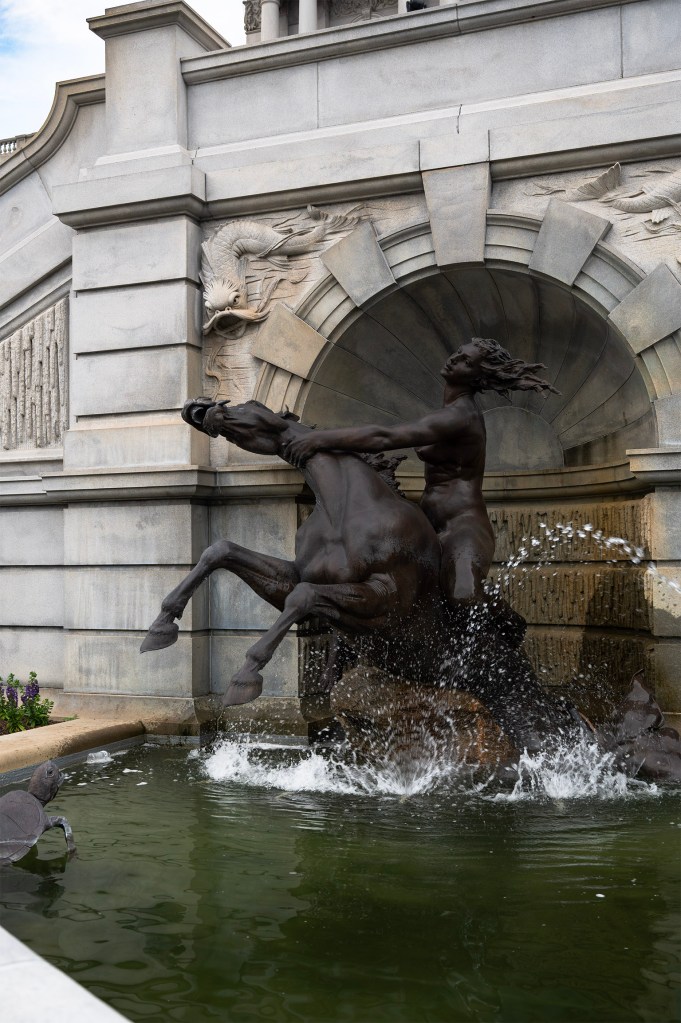
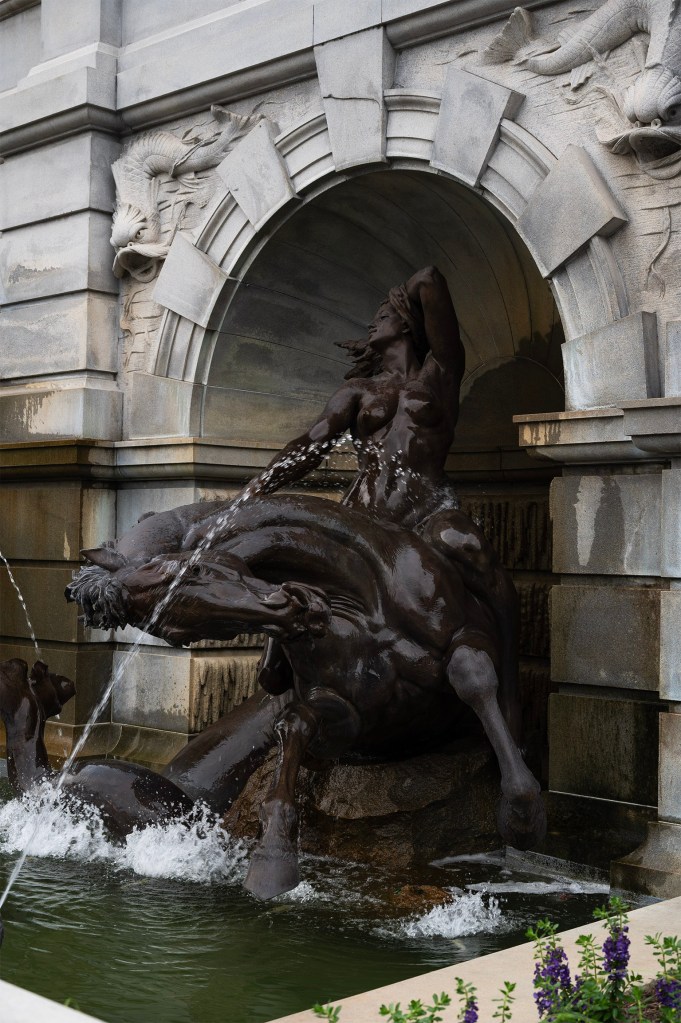
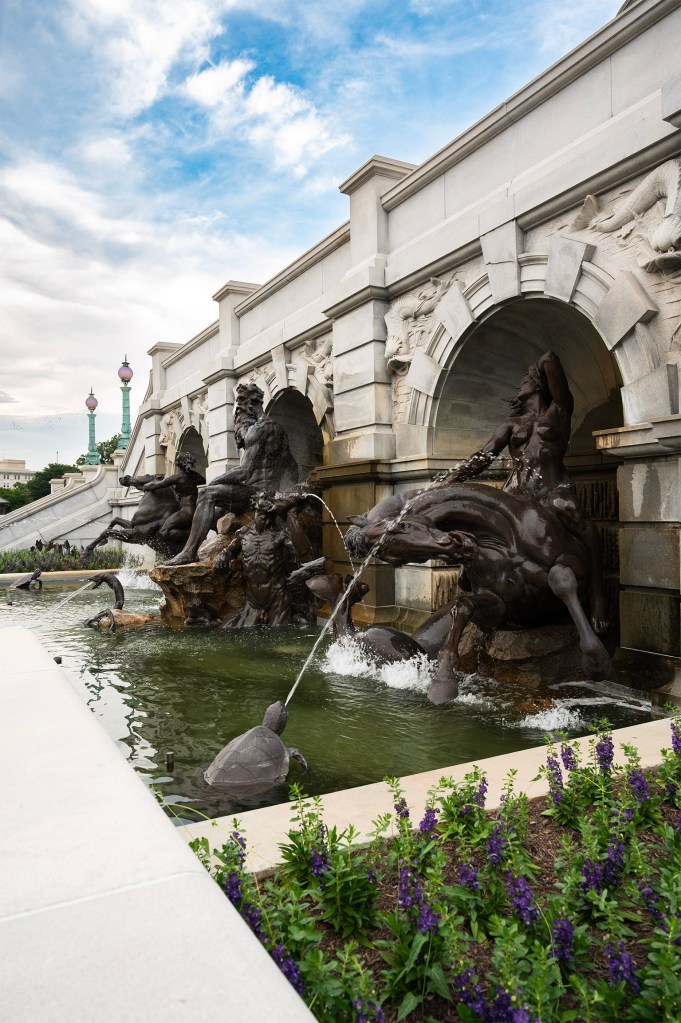
One afternoon, when the software had dug in its heels again, we abandoned it for the lunch hour and escaped to the National Mall. In front of the Library of Congress, the Court of Neptune Fountain detained me longer than lunch-hour arithmetic permitted. I framed it, reframed it, moved closer, stepped back—and remained dissatisfied. This was becoming dangerous. I could plainly spend the day doing the same thing, because Washington itself seemed to be one enormous monument, as though ancient Athens and Rome had somehow travelled forward through time and, somewhere along the journey, acquired lawns, traffic lights and federal departments.
Meanwhile, Washington itself was slipping through the hourglass. Except for brief escapes for coffee or lunch, there had been little time to see it.
I had therefore packed the free day rather ambitiously: a couple of Smithsonian museums in the morning, an organised tour of the Capitol in the afternoon, and then out to Great Falls for the evening.
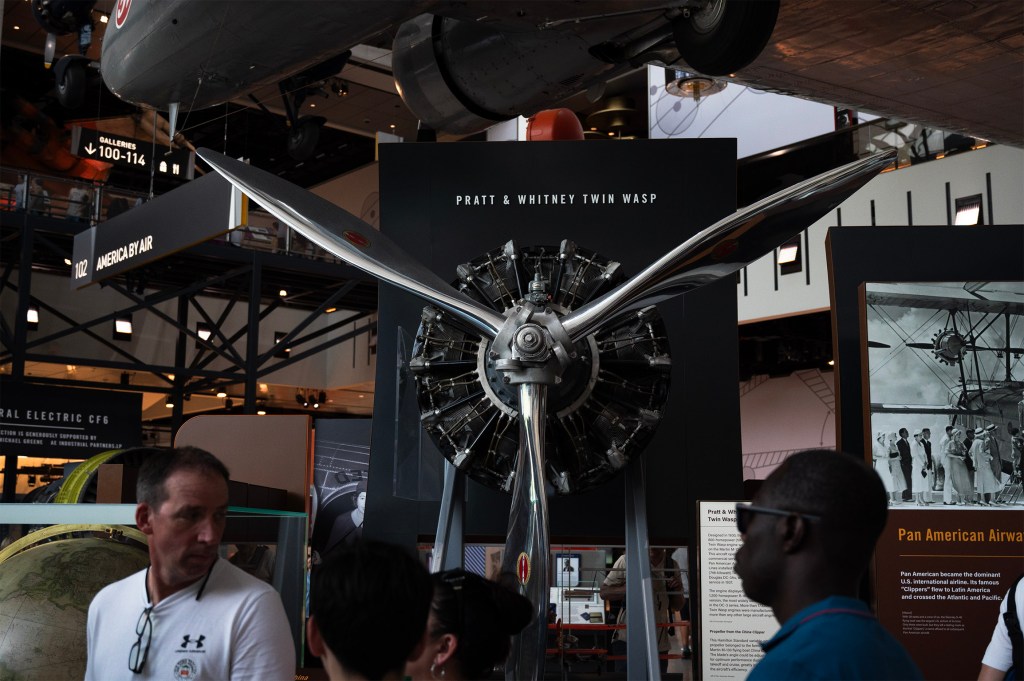
The Smithsonian National Air and Space Museum had been on my list from the beginning, and I was there almost as soon as its doors opened. For the next couple of hours, aircraft and engines kept yielding stories that were often more interesting than the machinery.
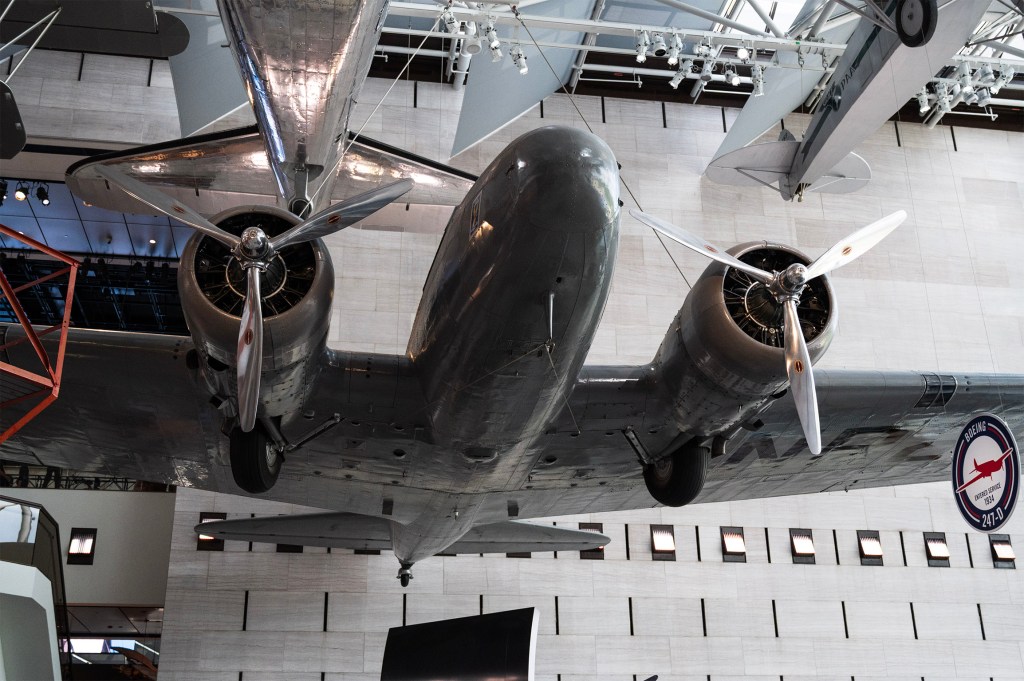
One was the Boeing 247, which helped establish the template of the modern airliner in the 1930s: all-metal, streamlined, low-winged, with retractable landing gear. More intriguingly, this particular aircraft had raced from England to Melbourne in 1934, finishing third in the MacRobertson Air Race.
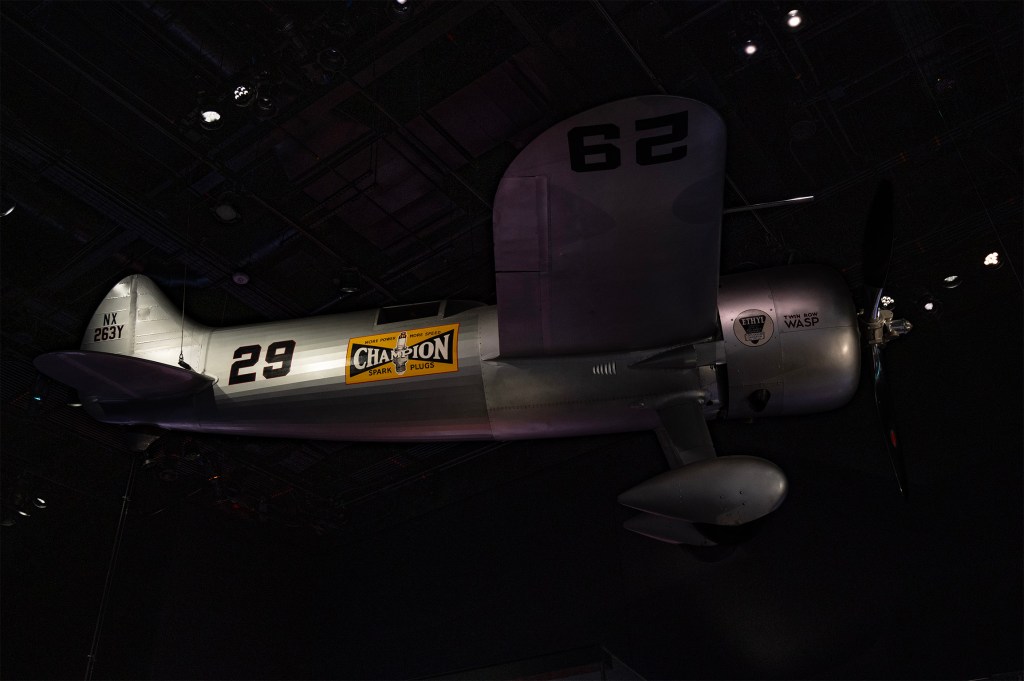
Then there was the Turner RT-14 Meteor, a racing aeroplane from an age when pilots were celebrities, aircraft had personalities, and apparently nobody objected to turning a fuselage into a billboard for spark plugs. Roscoe Turner flew No. 29 to victory in the Thompson Trophy races of 1938 and 1939. He was sufficiently colourful to travel with a pet lion called Gilmore, sometimes in the aeroplane. Aviation clearly had fewer committees then.
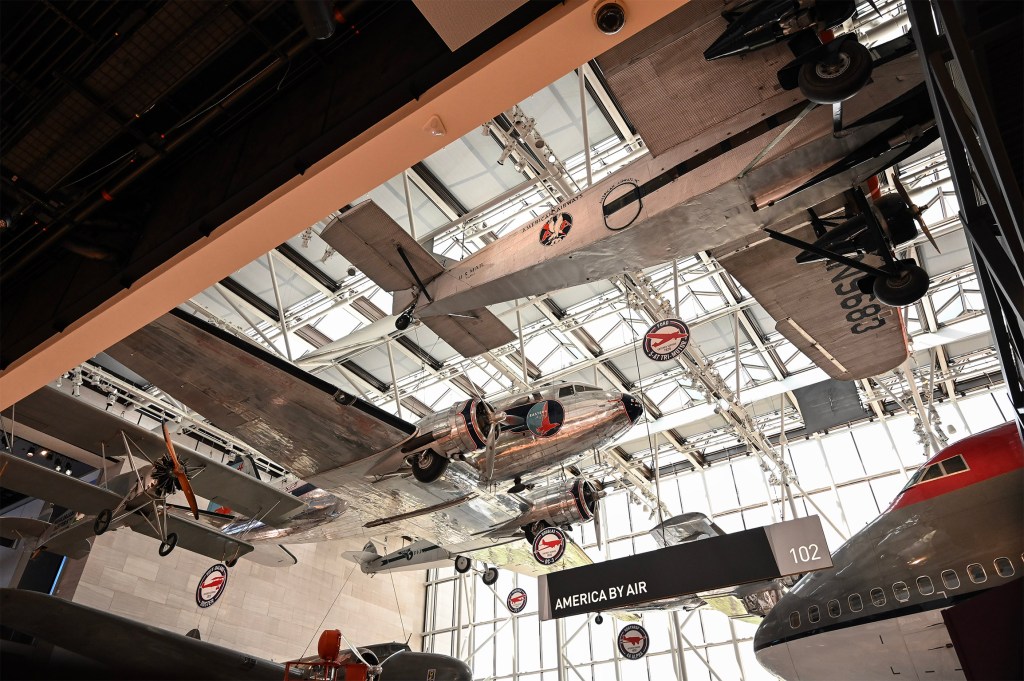
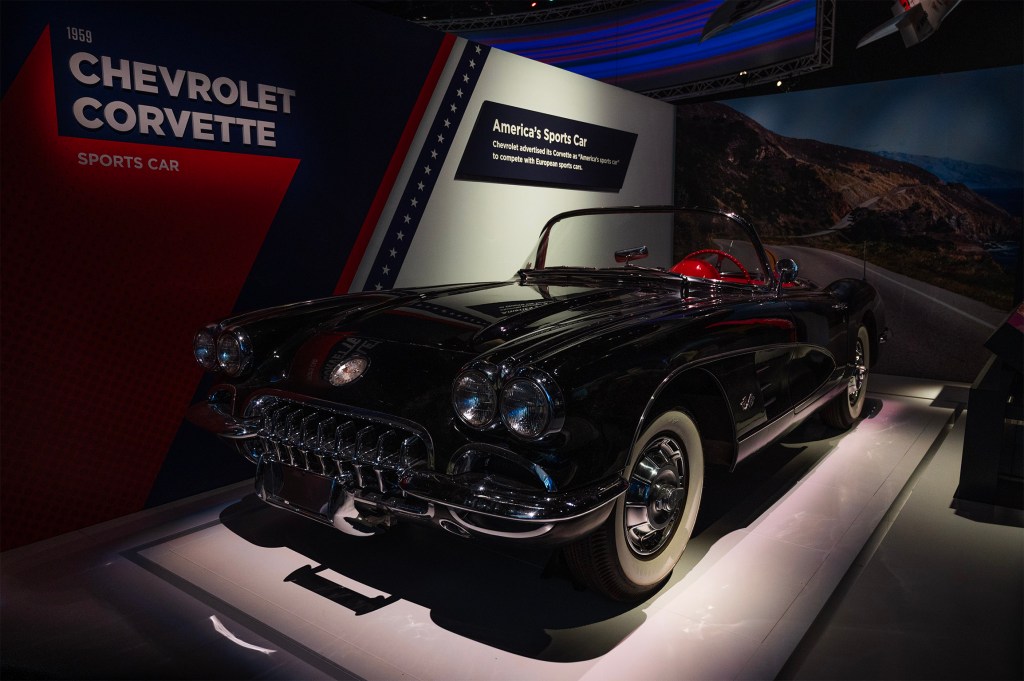
A gleaming 1959 Chevrolet Corvette seemed, for a moment, to have taken a wrong turn into the Air and Space Museum. It hadn’t. Nation of Speed celebrates the American urge to go faster on land, on water, through the air and eventually into space; the Corvette merely kept its wheels on the ground while sharing the ambition. The museum’s collection seemed, among other things, a chronicle of humanity’s steadily diminishing patience with getting from one place to another.
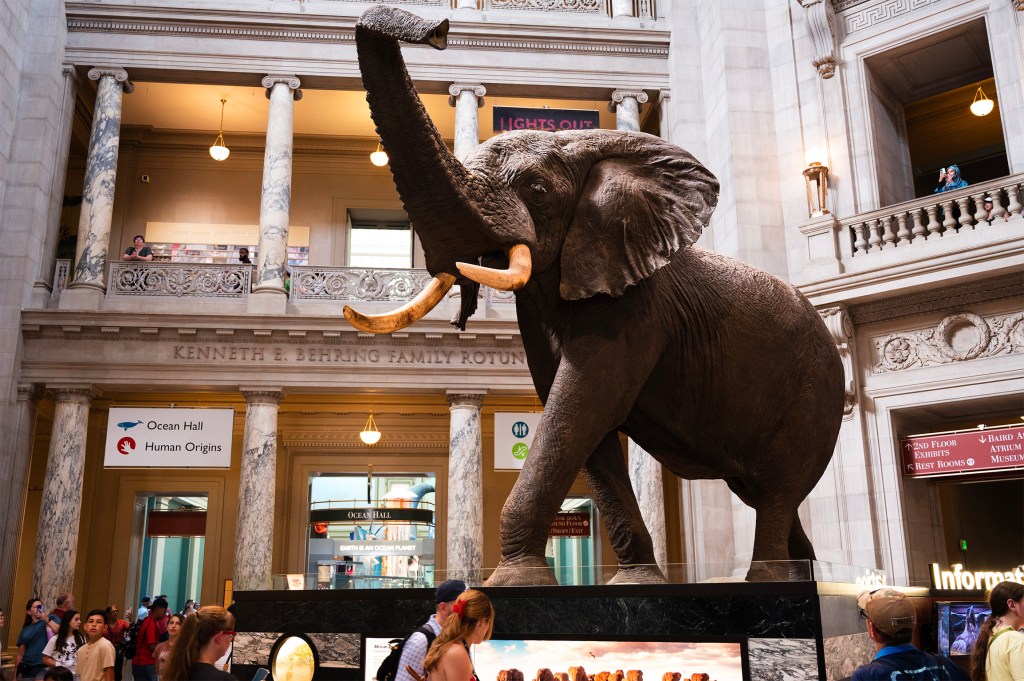
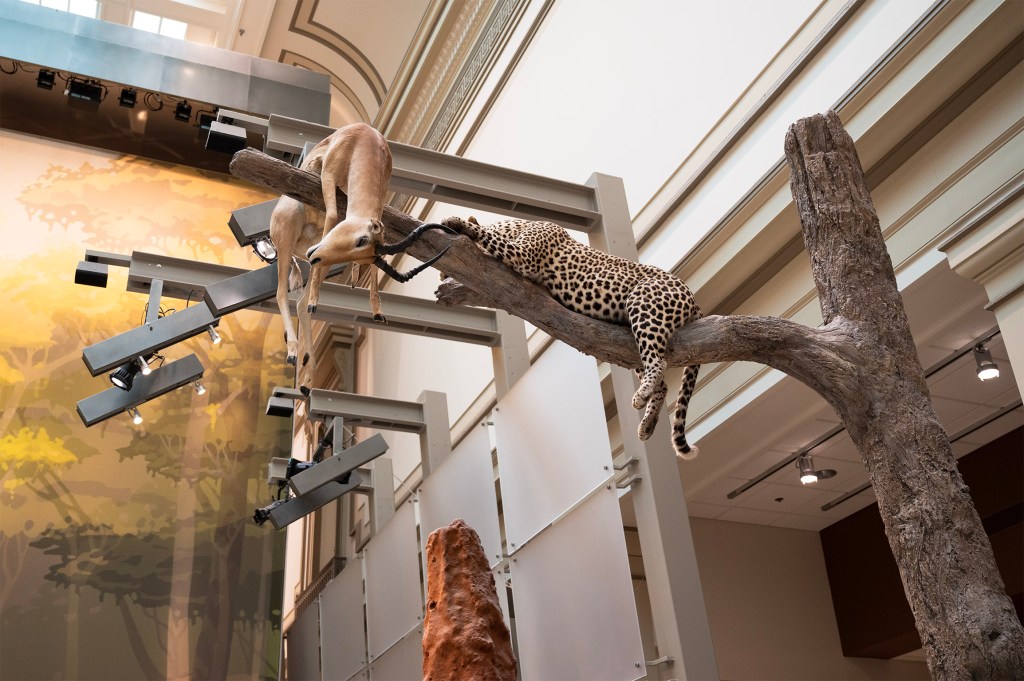
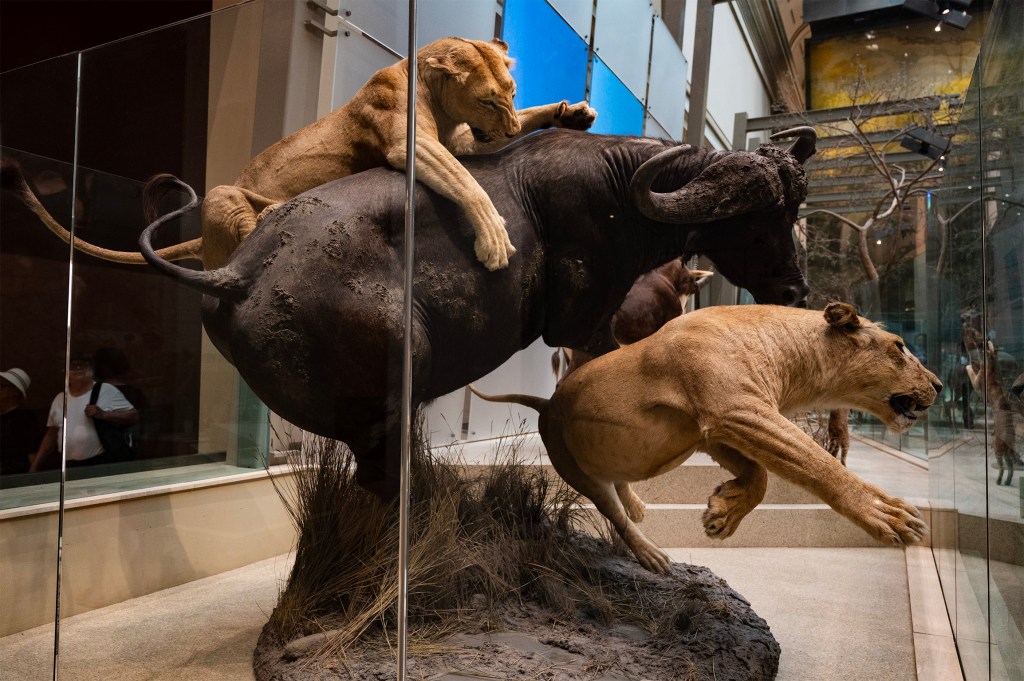
At the Smithsonian National Museum of Natural History, the Hall of Mammals turned out to be an exhibition of other people’s bad days. A buffalo was discovering the disadvantages of having lions simultaneously above and beside it; an antelope had already lost the argument and been hauled up a tree by a remarkably relaxed leopard. Presiding over everything was Henry, the gigantic African elephant who has occupied the Rotunda since 1959, trunk raised and ears spread, looking as though he had just remembered where he had parked.
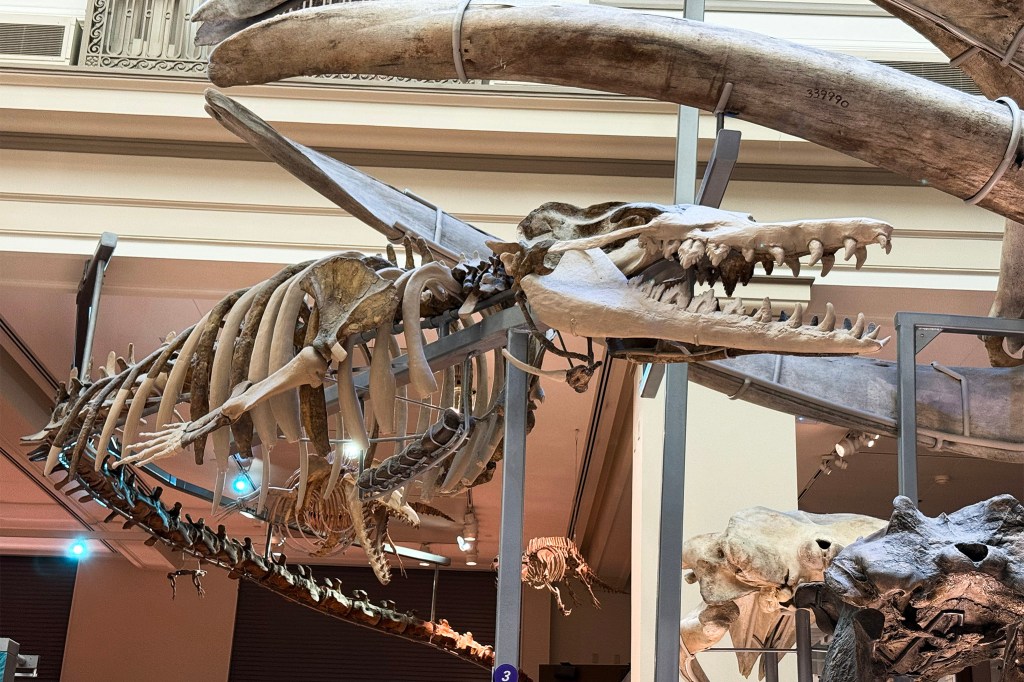
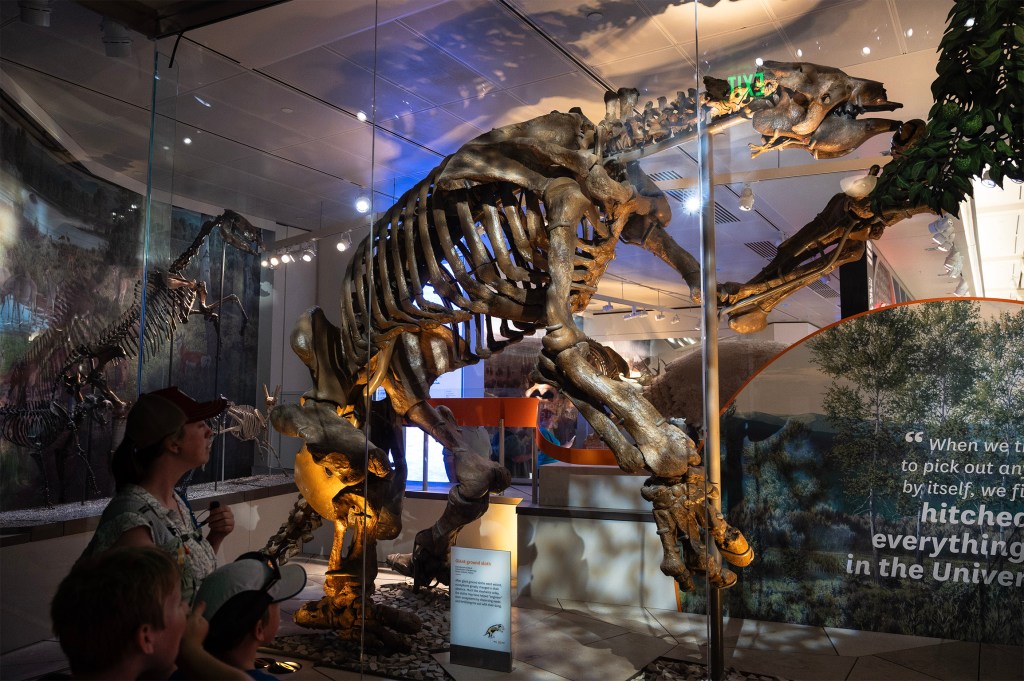
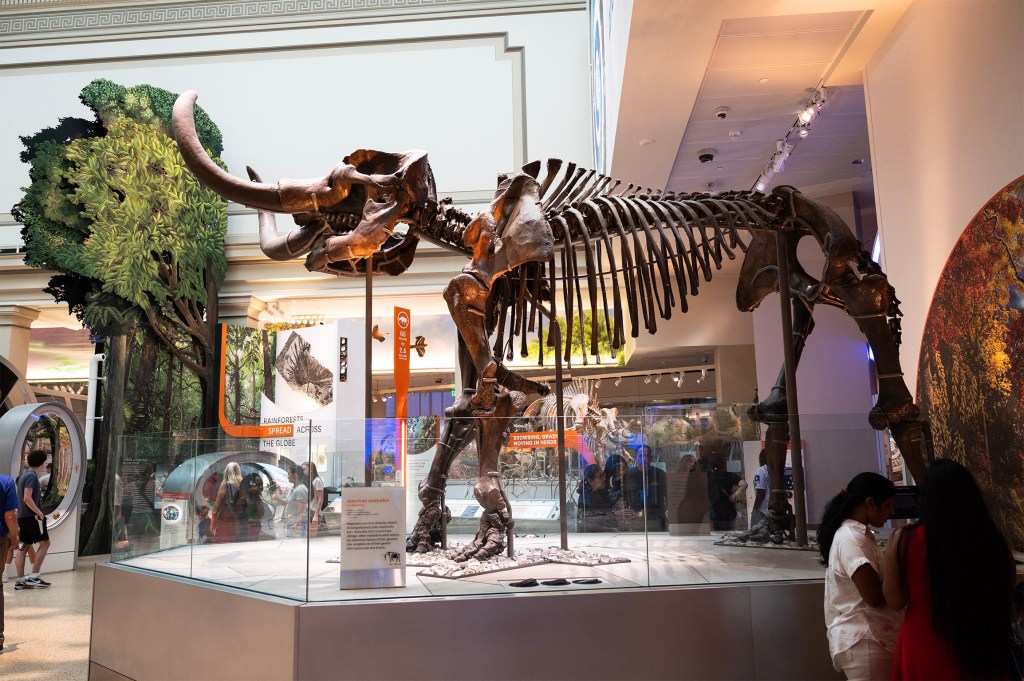
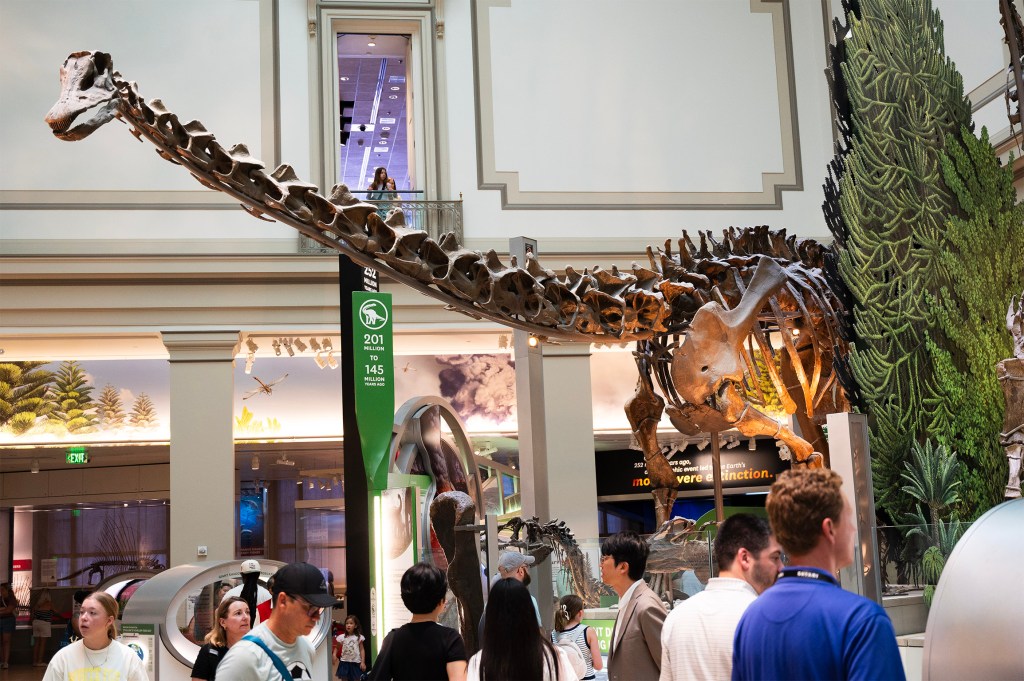
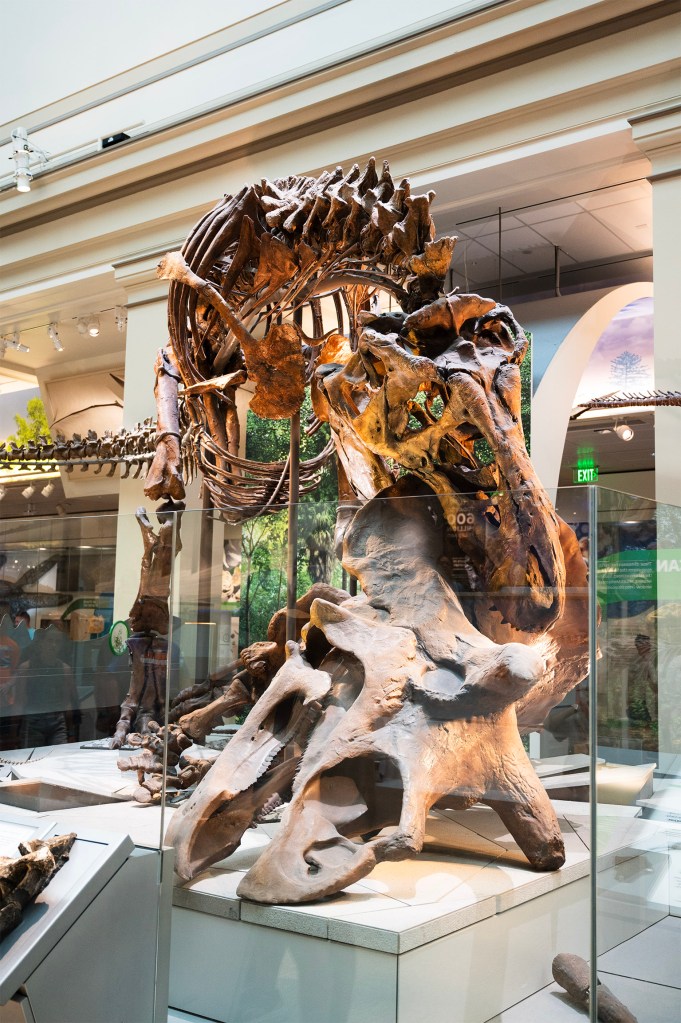
The David H. Koch Hall of Fossils, aptly called Deep Time, took me back a few million years. A Tyrannosaurus rex was caught in the middle of lunch, towering over a hapless Triceratops with the air of having been interrupted. Diplodocus presented a different problem: whoever designed the creature had clearly given no thought to photographers several million years down the line; there was simply too much of it for one frame. More curious still was an ancient whale from an evolutionary moment when whales were not quite whales yet—already creatures of the sea, but still equipped with tiny hind limbs, as though nature had neglected to dismantle the scaffolding.
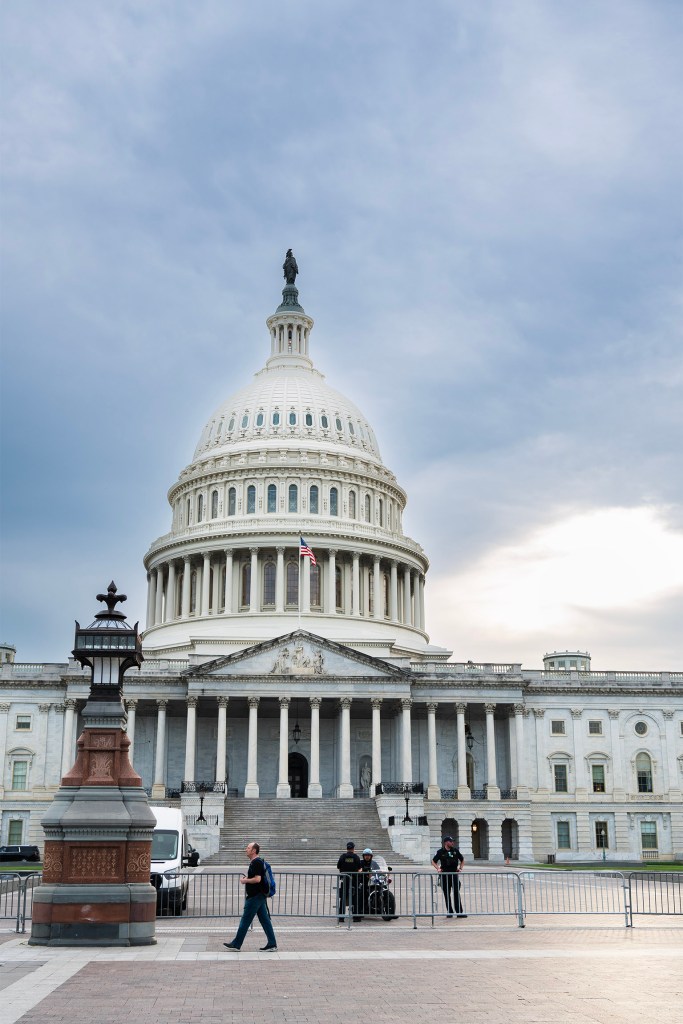
I had a Capitol tour to catch. At the Visitor Center we were provided headsets and assigned to a guide, while two or three other groups assembled around us. It had the faint air of several parallel tours through American history taking place at once. Our little procession drifted through the enormous building, obediently following the disembodied voice in our ears.
We passed first through the Crypt, whose name promised something more sepulchral than its handsome circle of sandstone columns delivered. George Washington was once meant to lie beneath the Capitol, we were told, but remained at Mount Vernon; the Crypt consequently acquired the distinction of being a crypt without its intended occupant.
Almost impossibly high above us, the Rotunda drew the eye upwards and held it there. In The Apotheosis of Washington, the first President was being received into the heavens. Back at human level, American history played out across gigantic canvases around the walls: independence declared, battles concluded, territories encountered and claimed. Even the sculpted frieze encircling the chamber was an illusion, paint made to pass for stone. The Capitol, I told myself, had little use for understatement.
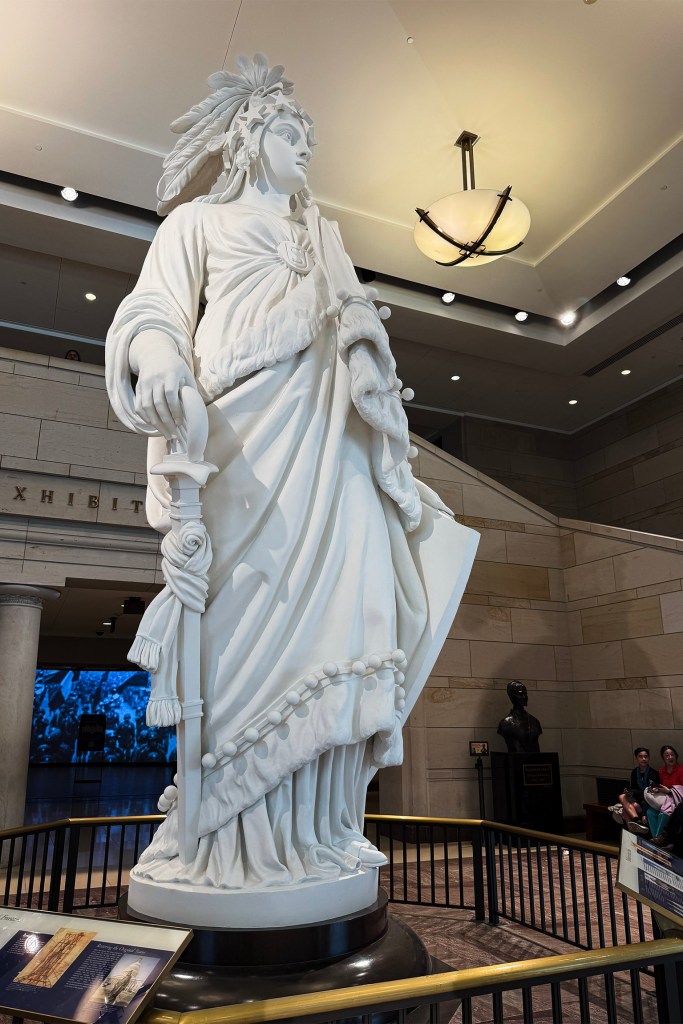
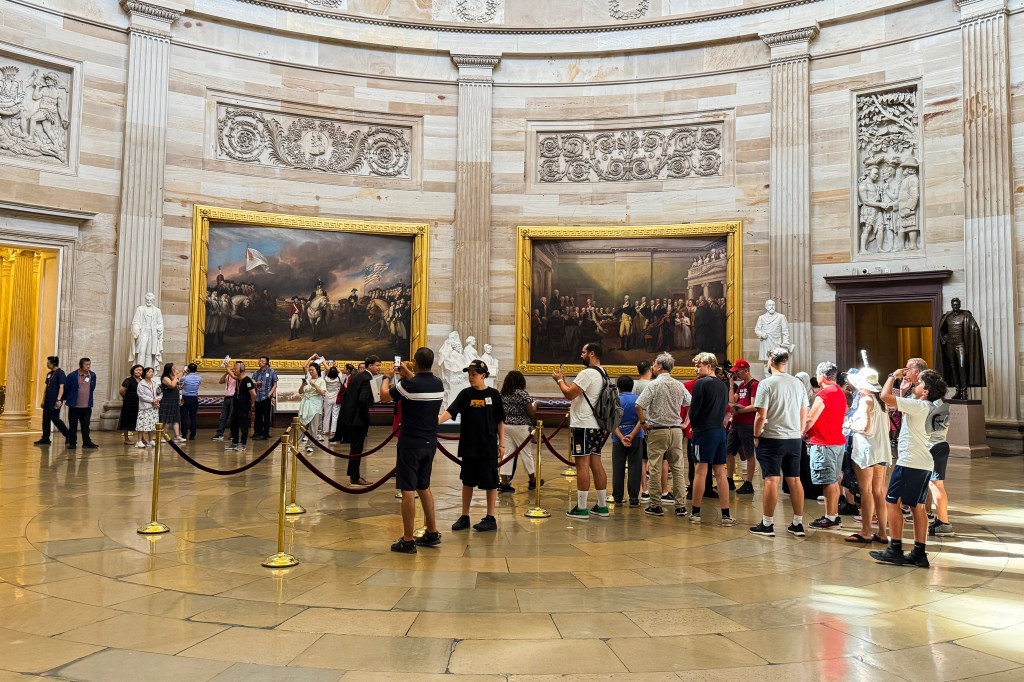
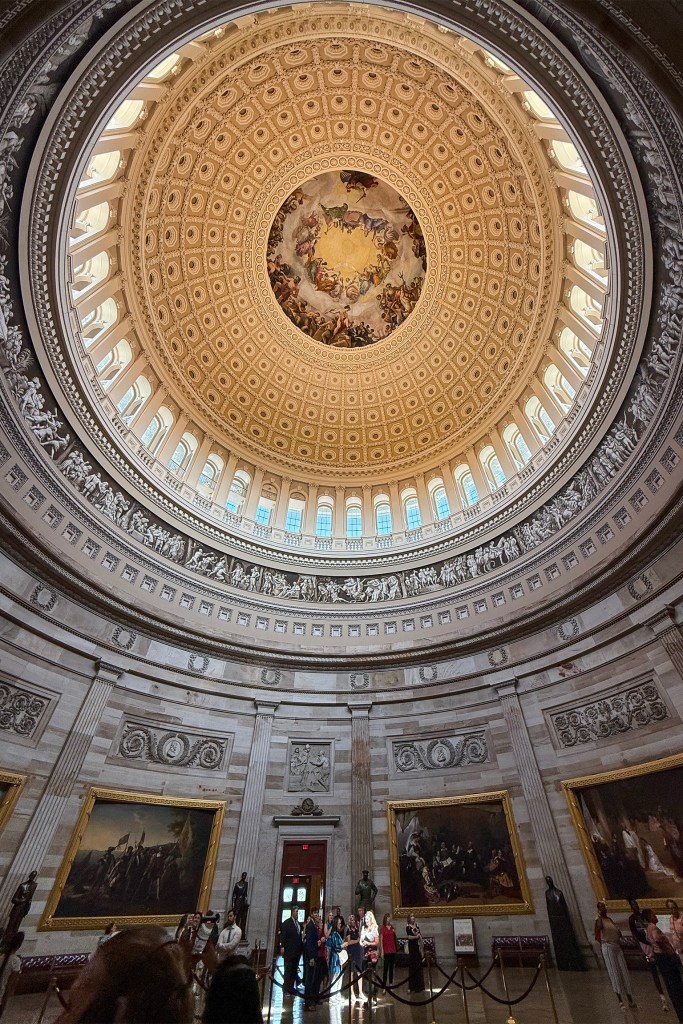
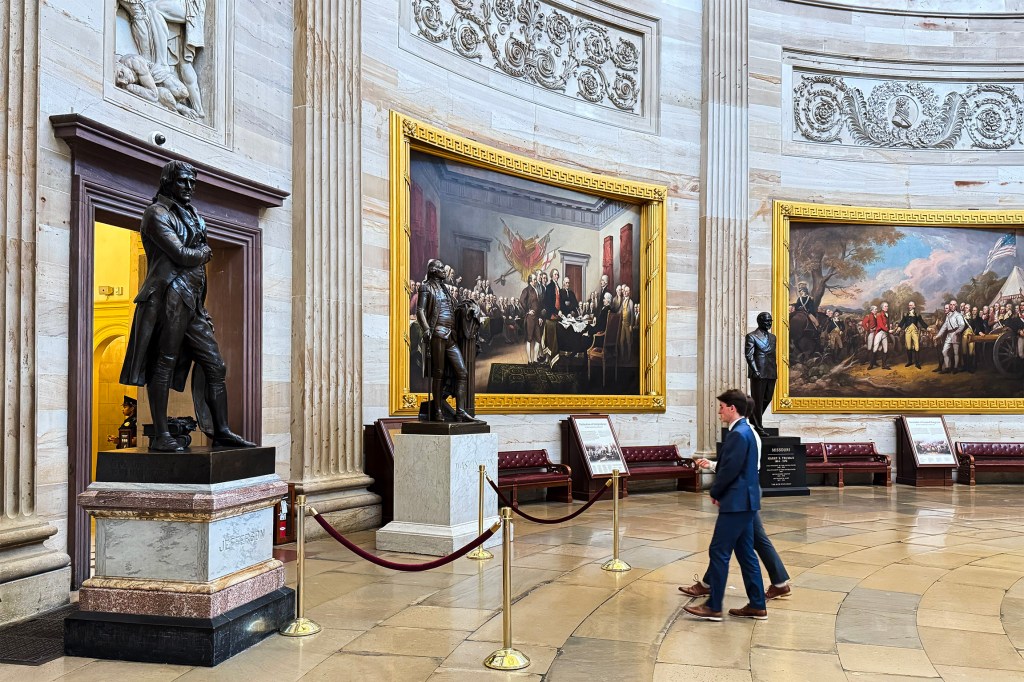
Our group eventually reached Statuary Hall, once the chamber of the House of Representatives. Its peculiar acoustics had once tormented the legislators who sat here; legend has it that John Quincy Adams turned the defect to advantage, positioning himself where he could overhear conversations across the chamber. Above the doorway sat Clio, Muse of History, recording proceedings from the chariot of Time. The legislators had departed long ago, their chamber had filled with statues, and Clio was still at her post.
My friend joined me again that evening for the drive to Great Falls. By then I was ready to exchange museums and monuments for the Potomac. The river narrowed between wooded banks before breaking over the rocks and plunging through the gorge in great masses of white water. We found a quiet lookout, settled down with our cameras and discussed the peculiar business of photographing a waterfall: how long an exposure was long enough, when flowing water became silk, and when too much silk stopped looking like water at all.
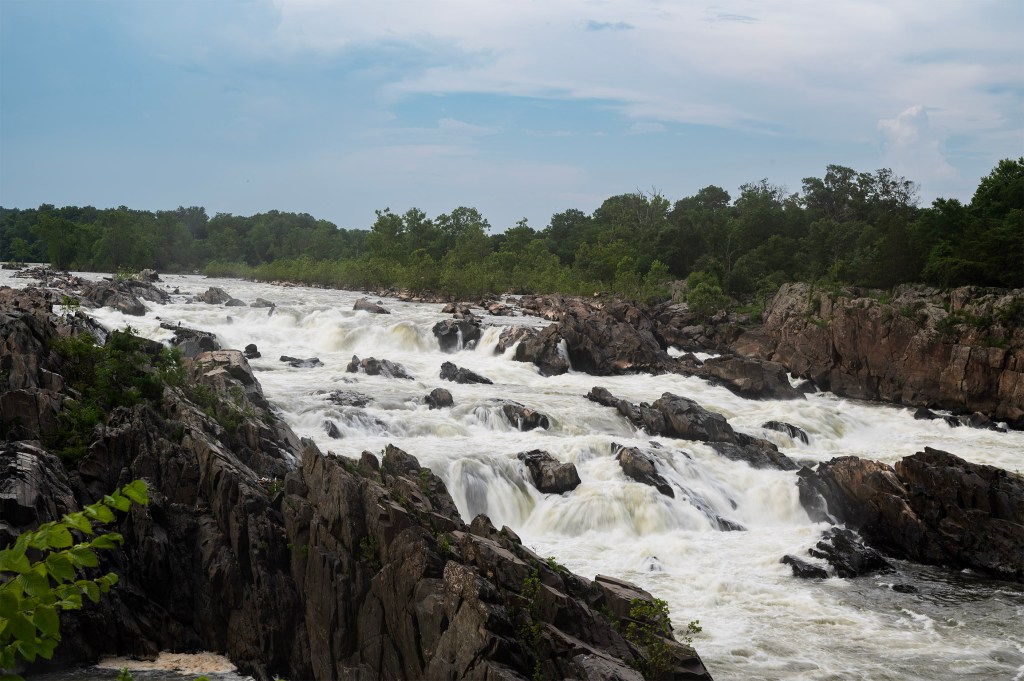
George Washington had looked at these same falls and seen not scenery but an engineering problem. In the 1780s he became president of the Patowmack Company, which attempted to make the Potomac navigable westward by improving the river and cutting canals around obstacles such as Great Falls. The enterprise never quite fulfilled his ambitions, but remnants of the canal survive beside the river.
It was late when I returned to the hotel. There was no time to reflect. Clothes, camera and the accumulated debris of travel had to disappear into suitcases for the morning flight from Dulles. Departure itself was almost disappointingly uneventful, and Washington receded with the aircraft.
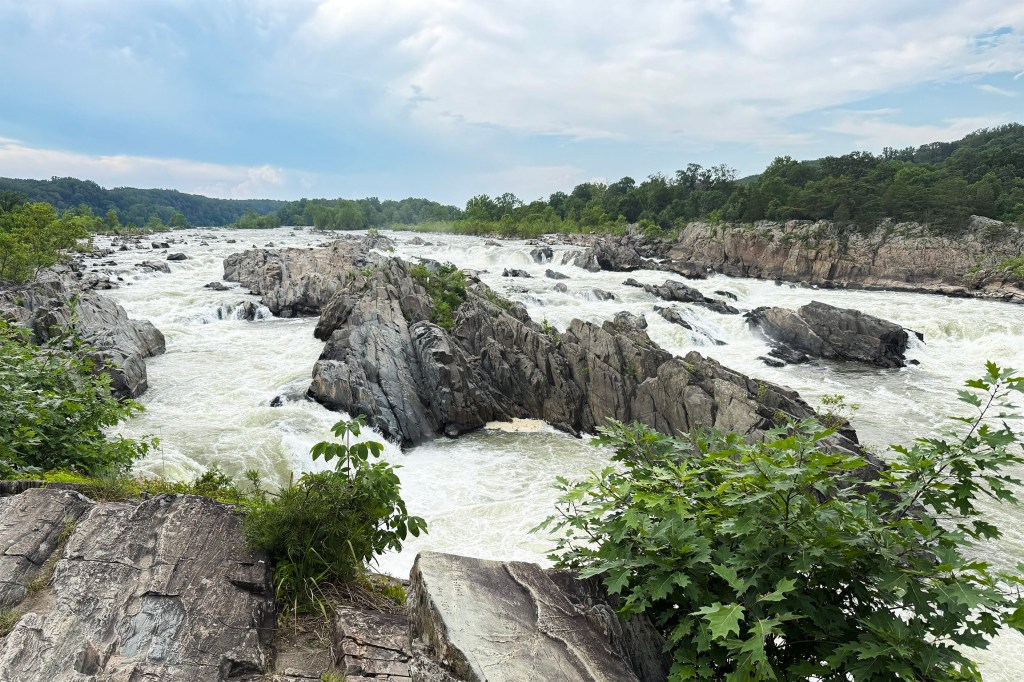
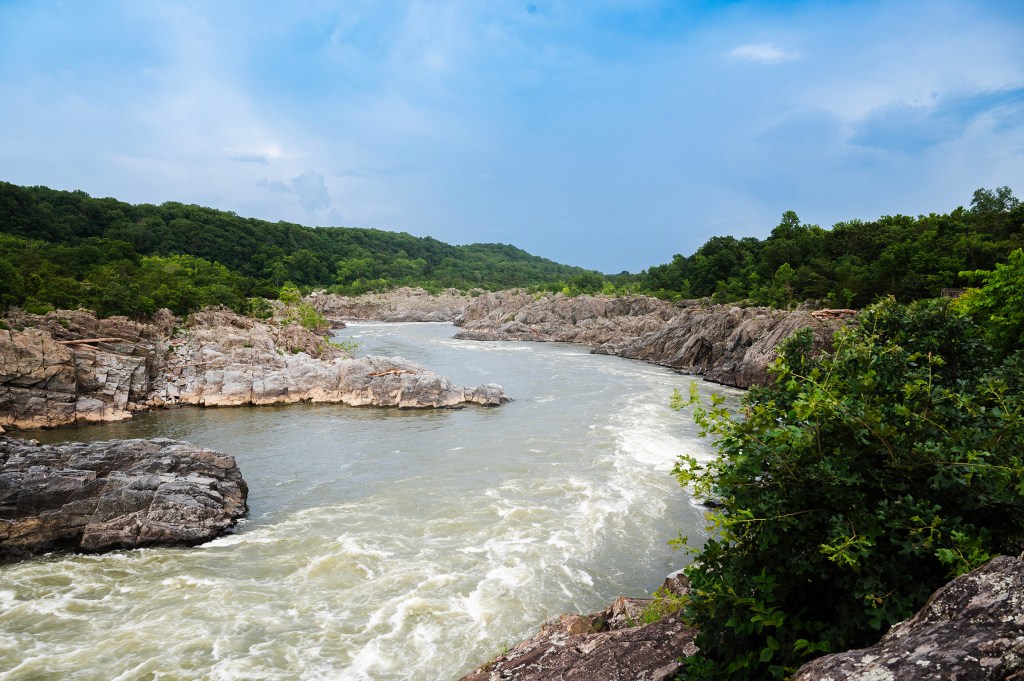
It was only at Doha, waiting for the connecting flight to India, that the past few days began to return to me in fragments: Lincoln in his marble chair, my father’s locomotive, an aeroplane bound for Melbourne, dinosaurs, the Capitol dome, white water on the Potomac—and somewhere among them, the software that had brought me there in the first place. There had scarcely been time to register one thing before the next arrived. Sitting in that vast airport between Washington and home, I wondered briefly whether I had actually been there at all, or merely hurried through an unusually vivid dream.


A wonderful tour of such an impressive use of a vast amount of space. You describe so much history, creation, and your thoughts and feelings as you go along. I appreciate that the stories can be more interesting than the flying machines; and the insightfulness of such observations as “humanity’s steadily diminishing patience with getting from one place to another.” I’m not surprised you needed that long sleep before tackling it all
Thank you for your kind words, Derrick. Those museums and monuments are so full of stories, I often wonder what the exhibits or structures would mean to us without them. The stories tell us not only where we have been, but also about the paths we are choosing for the future.
For me, the dilemma in writing about such places is always the same: how much history to bring in, how much to read into it, and how to keep the journey itself moving. I suppose that balancing act is part of the pleasure of writing a travelogue.
Your balancing act keeps us reading every word
I am honoured.
I greatly enjoyed all the photos and descriptions. You put it best when you said “Washington itself seemed to be one enormous monument.” Indeed. Did you know there was a White House Peace Vigil that stood with protestors 24/7 for 44 years, asking for the end to all wars, until Trump made them dismantle it last year. One of the many ways he’s destroying the city, and the country. I was lucky to meet a man at that vigil who had been protesting there since the Vietnam War, gently praying for an end to all war. We need that now more than ever.
I didn’t see the Court of Neptune Fountain when I was there last time, but now I wish I had. Looks incredible. Thanks for taking us on your incredible adventures through D.C.
Thank you so much. I am delighted by your approval of the piece.
I read more about the Peace Vigil and how volunteers kept it alive through summers, snowstorms and freezing nights, in what was little more than a makeshift camp. Quite an institution in itself, devoted to one of the noblest causes of humanity—peace, which seems among our most discounted virtues today.
I have only a modest understanding of United States history, but its current head will surely go down in history as none other.
I was so sad when the Peace Vigil was shut down, and yeah, he will surely go down as the worst president in history.
Sometimes, it takes only a day to destroy what has been cultivated over decades. I am thinking of relationships between countries, too.
I am trememdously moved by the Korean memorial. I haven’t seen a photo of that before.
The Vietnam memorial had a replica (smaller) that traveled state to state several years ago, and I was able to see it close up.
I still have not been to D.C. That travel must-do list gets longer and longer. Thank you so much for all your thorough stories. You open the city up for us in all the ways that I would want to see it Myself.
Thank you so much for your kind words. I found the Korean War Memorial deeply moving too. Both Korea and Vietnam left wounds on the American consciousness that went far beyond the battlefield, and their memorials carry some of that grief, remembrance and reconciliation even decades later.
How wonderful that you were able to see the travelling replica of the Vietnam Veterans Memorial. I hadn’t known that it travelled across the country, taking the Wall to people who could not come to Washington.
And I do hope D.C. moves a little higher on that ever-lengthening must-do list! I am touched that these stories made you feel that you were seeing the city in some of the ways you would want to see it yourself.
Watching MASH After learning a bit more about the Korean war made it more understandable As you know it’s not just humorous there’s a lot of serious stuff in there too
And it helps me to understand what my neighbors and buddies have been through Back then.
I grew up in a family that only traveled when somebody got sick or died. When our children moved away that gave us greater incentive. Before that we only went perhaps 1 maybe 2 states away. Now I want to see all of them. Although Alaska scares me a little.
I have only vaguely known MASH. I can see how knowing more about the Korean War would make both the humour and the serious parts mean much more.
Travel was rare in our childhood too. Summers usually meant a trip to our native village, and sometimes to our maternal grandmother’s village. They were beautiful, almost pastoral places in those days. Not that they have disappeared, but they have changed so much and become mundane and shabby, losing much of their old charm and people.
And Alaska does sound a little scary and not just because of the polar bears and all that ice and wilderness! As a child, I fancied going there, even to Greenland. I also dreamed of venturing into the Australian Outback. Not anymore! Somehow, with age, the romance of such extreme places is best enjoyed from a comfortable distance.
Like from a good reading chair.
Absolutely so.
I meant to ask if you saw ‘Born Yesterday’ ? An oldie that you might enjoy
Now that is a question answerable with a plain yes or no, but my memory is behaving like a pickpocket caught in the act, returning things one at a time.
Through the 1980s and into the early 1990s, I binge-watched English movies at ‘Mayfair’, a British-era living relic in the city. It showed three or four different films a day, regularly ran Hollywood film festivals, and ran heaps of trailers before the interval.
Every time my memory settles on a firm ‘no’, Judy Holliday’s face pops up clear as day, somewhere suspiciously Washington. But the memory refuses to furnish a ‘yes’ either.
Perhaps it’s time I should repair that delirium.
I really like how they let her character grow in this movie. And that would have been enough except they also show you pieces of Washington for real and it was very inspiring. I know it isn’t quite quite “Mister smith goes to Washington”, But in my mind it is close As far as the inspiration part of it goes.
It looks as though watching Born Yesterday has now become inevitable! And perhaps it will make me enjoy Washington all over again, this time in retrospect. 🙂