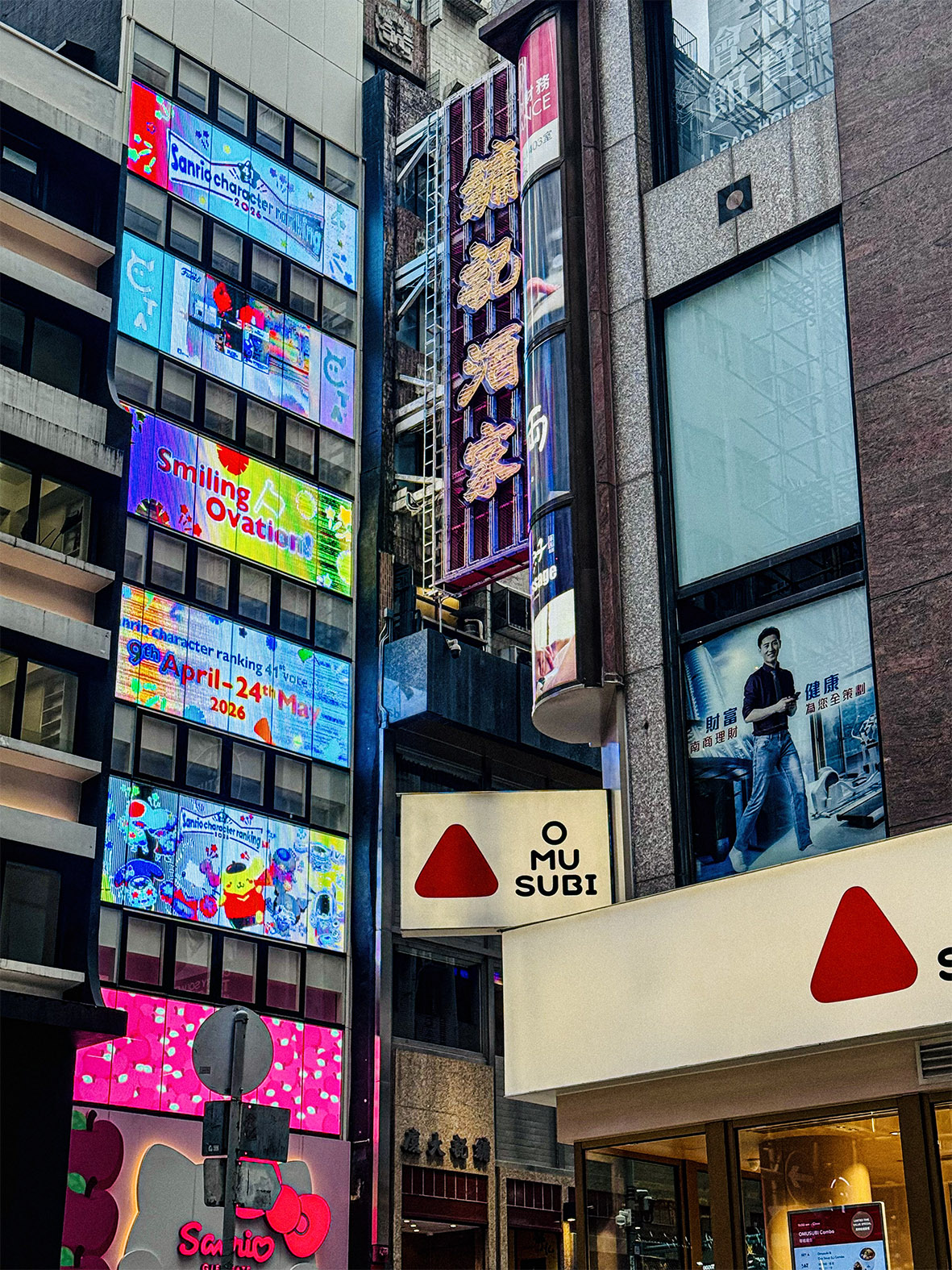
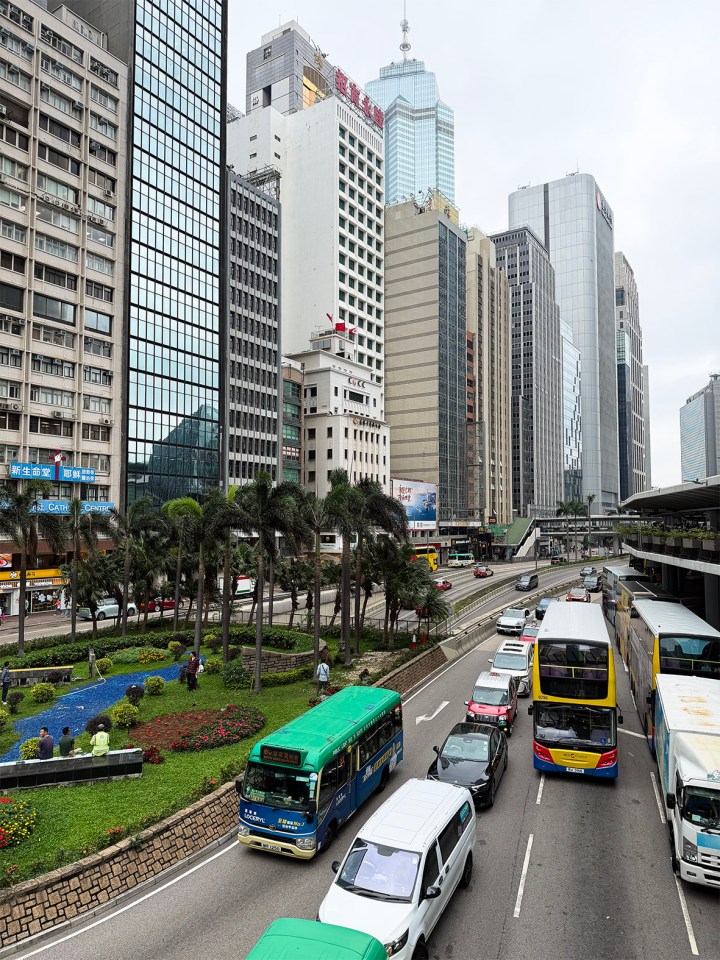
The first hint that our meticulously planned journey was about to abandon reason and embrace farce arrived the moment the aircraft’s wheels kissed the runway at Hong Kong. I felt a surge of relief. Our connection to Melbourne was barely two hours away, a layover so short it practically qualified as a technical pause. Since Cathay Pacific was operating both flights, the arrangement appeared foolproof. But history suggests that foolproof systems merely encourage fools to become more ambitious.
This assumption, like many cherished assumptions in life, came crashing down at the end of the airbridge where a delegation of Cathay Pacific personnel stood waiting for Melbourne-bound passengers. They had the purposeful air of people intercepting fugitives rather than greeting customers. Apart from our family of four, there were half a dozen other unfortunates. We were promptly gathered into a compact herd and shepherded away lest any of us stray into the wider airport and seek dangerous freedoms. Our boarding passes, which only moments earlier had appeared to be valid travel documents, were confiscated with startling efficiency and replaced with fresh ones whose significance was not immediately apparent.
Then came the opening question.
“Do you have any identity other than Indian passport?”
The wording was unsettling enough to make one briefly wonder whether one had inadvertently acquired a second nationality during the flight.
“No.”
The young Cathay Pacific agent, who appeared scarcely older than my daughters and entrusted with the impossible task of explaining the inexplicable, informed us that our Melbourne flight was now closed for boarding and that we had been rebooked on another service departing close to midnight.
My internal defence apparatus sprang instantly into action. Radar stations lit up. Surface-to-air missiles rolled from underground silos. Strategic bombers revved up their engines. Every warning siren in my head began wailing at once.
“Closed for boarding?” I demanded. “How can it be closed for boarding? Cathay Pacific flew us here. Cathay Pacific is flying us there. Did the left hand not file a flight plan with the right hand? By what constitutional authority has Cathay Pacific rearranged our lives?”
The young woman attempted an explanation in English. Unfortunately, the circumstances required a language altogether different. The more she explained, the less I understood, and the less I understood, the more elaborate my objections became. Soon I was raising concerns not merely about the flight but about our schedule, our hotel bookings in Melbourne, the integrity of Cathay Pacific and international aviation itself.
None of this was helping.
Sensing that diplomacy had failed and that military escalation was imminent, my family intervened. Much as a football manager might substitute an overexcited striker before he earns a red card, my wife, R, gently but firmly removed me from active operations.
My twins, T and V, assumed command.
This was a wise development, which unfortunately made no difference whatsoever. The universe had already reached a decision. our flight was either closed for boarding or already airborne, our schedule had collapsed, and the future was now being administered by Cathay Pacific. We were issued passes to the airline’s priority lounge, where we were invited to cool our heels until midnight, a generous arrangement that allowed us to enjoy our misfortune in considerably greater comfort.
The lounge lay only a kilometre away, which in airport measurements qualifies as “just around the corner.” We trudged towards it with the grim determination of explorers crossing an arctic wasteland. Upon arrival, we discovered a lavish display of culinary diversity sufficient to sustain a medium-sized principality. Unfortunately, anxiety had proved a more filling breakfast than anything the lounge could offer. We stared at the buffet with the detached curiosity of museum visitors observing exhibits behind glass.
At this point it became impossible to ignore a certain historical detail.
Before our departure from India, V had suggested that we obtain Hong Kong’s Pre-Arrival Registration (PAR) permits for Indian passport holders. The argument was straightforward: if something unexpected delayed us in Hong Kong, we could seize the opportunity to leave the airport and explore the city.
The proposal had been rejected by the Chairman of the Expedition. The Chairman was me.
My reasoning had seemed impeccable at the time. We had only brief layovers both ways of the voyage. Why burden ourselves with planning for a contingency that would almost certainly never occur? The very perfection of the logic should have warned me that we were already in the crosshairs of Murphy’s Law.
Now, at eleven o’clock in the morning, we found ourselves facing eleven hours of involuntary residence inside an airport lounge. A precious day had been extracted from our Melbourne pilgrimage and fed directly into the machinery of international aviation. Matters were made worse by the fact that our Melbourne itinerary had already survived a tussle involving leave applications, work schedules, and competing destinations. While I was free to rearrange my time with relative impunity, the twins stood rooted in the pavement of corporate life. Every day of leave had been negotiated, defended, and accounted for. The family tribunal therefore convened at once. The proceedings bore a striking resemblance to the undoing of Julius Caesar, except that the daggers arrived disguised as questions.
“Who sabotaged the PAR?”
“You sabotaged the PAR.”
“Why was the PAR sabotaged?”
“Because you were absolutely certain it wasn’t needed.”
“And what made you so certain?”
“Years of unwavering faith in your own judgement.”
Et tu, everybody!
At the height of this constitutional crisis, I thought of Kulwant, an expatriate colleague from a previous chapter of my professional life. I dispatched an SOS.
His response was as immediate and decisive as the United States Air Force responding to a downed F-15E crew. Within an hour, Kulwant had navigated the mysteries of Hong Kong immigration, facilitated PAR applications for all four of us, and transformed us from airport detainees into potential tourists.
Thus, even as Cathay Pacific ruthlessly appropriated a day from our Melbourne itinerary, it had, with equal inadvertence, bestowed upon us an unexpected day in Hong Kong. But that, as every travel writer says when attempting to manufacture suspense, is a story for another chapter.


I cannot understand how calm you seem to be. I understand it is now in the past. But have received an answer to you letter of enquiry. “Dear Cathay, What made you spoil my holiday. On what grounds did you change the rules?” I would be furious. But it must have been orchestrated by AI. That little capitalized pair of apocopations is going to be the end of civilisation as we knew it.
Trust me, for a moment I wondered whether the International Court of Justice might hear a case titled Pandey vs. Cathay Pacific.
Yet anger seemed unlikely to produce an aircraft. The first clue was the young lady’s enquiry about whether we had any identity document other than an Indian passport. That suggested that, thanks to the less-than-cordial state of Sino-Indian relations, we were not exactly free to roam Hong Kong Airport at will. Had we possessed some suitably exotic Hong Kong credential, we might have been whisked across the tarmac to the original flight.
So I settled for stoicism. The Hague will just have to wait.
I am reading during an interval between sleep and not-sleep, and my interest is fully engaged! I will await part two of your adventure.
Your description of head of household as Caesar set the scene perfectly.
Thank you. I suggest you slip into sleep from the state of non-sleep. Next, I suspect it’s going to be a long series, something like five parts!
To hell with the travel inconvenience. You made it all sound so exciting! An adventure! What is great about your travel log is that it’s not so much about a place, as about U, R, T, & V – real people on the journey. I’m looking forward to lots of further installments.
Trust me: you are in interesting company! And yes, people always come before places. They are the soul of the old haunts and spirits of fancy destinations. Thank you, Bruce.
This was delivered straight into my inbox, so I shan’t worry about missing any episode of “Can this family holiday be saved?”
You’re a clever story spinner, Uma.
It’s a blessing to be in safe inboxes. As for spinning of tales, I’ve been following some clever weavers over ages. Thanks!
It is so good to read another story from you. Uma. “Unfortunately, anxiety had proved a more filling breakfast than anything the lounge could offer.” is an insightful sentence. I look forward to the next episode
The expression accurately described our mood at the time. As it turned out, in our eagerness to get out and salvage something of the day, we got no further than a cup of coffee.
More stories will follow. Thank you so much.
Ha! At least the story has a ‘semi-happy’ ending. The stress hormones that had flooded your bloodstream would have made you wary of every turn you took on the HK streets, having survived the nightmare of every international traveller—being accosted by an unfriendly and a paranoid ‘gatekeeper’ to the country of your intended visit. You were fortunate to get out of the claustrophobic confines of the unfriendly airport terminal after being detained for no sane reason, other than perhaps, commercial.
Cathay Pacific, like any other airline would have overbooked and swapped your family with four other passengers (same may apply to the other unfortunate fellow travellers) who had paid a higher airfare. Else, I don’t see any reason for accommodating you in a late flight, with understandably no documentation demanded from you nor offered by the ‘authorities’.
But, the peace prize should go to Mrs. Pandey for her deft handling of the situation and de-escalation without any collateral damage, by dispatching the twin goodwill ambassadors!!
I fear there may be some truth in what you say about stress hormones coursing through my veins. Towards the end of my banking career, I did attract more than my fair share of unwarranted flak. In an ideal world, I might have considered making Cathay Pacific answer for its conduct, but I had little desire to add further fuel to the toxins already taking up residence within.
We were fortunate to have experienced yet another of the world’s great historic metropolises which might otherwise have remained unknown to us for the rest of our lives. The opportunity, however, came at the cost of losing a day in Melbourne, a destination we had long cherished and looked forward to visiting.
Thank you for your kind words and thoughtful overview. I hope to hold your interest throughout the rest of the series.
What a delightful read! I loved the blend of humor and storytelling. The PAR episode and the cross-examination by the family tribunal were particularly entertaining. Glad the story had a happy twist in the end. Looking forward to the Hong Kong chapter.
As it turned out, the family tribunal had reserved its judgement, but by the end of the day I was acquitted of all charges. We had a fulfilling day in Hong Kong, and that chapter will soon appear in this space. Thank you so much for reading, Nisha. I’m glad you enjoyed it.
Quite an adventure from the get-go. Happy it worked out for all of you.
Thanks. We were glad to salvage something out of the dreadful situation.
Oh, I’m so sorry! We had a similar experience when flying into Budapest, Hungary for a Danube river cruise. Just as we were lining up to board our connecting flight from Munich to Budapest, they announced our flight was cancelled and that we had to go to the airline’s counter to find an alternative. We managed (just) to get on a flight that was leaving seven hours later…..getting us into our Budapest hotel after midnight instead of at 3 in the afternoon. Airlines truly do not care about the comfort or convenience of their clients. I’m glad you were at least able to see a little bit of Hong Kong, but still…..that was not what you had been promised when you bought the tickets!
So true. Airlines resort to a variety of unscrupulous practices to bolster their profits—overbooking flights, cancelling underbooked services, and the like. They count on passengers’ reluctance to venture into the legal quagmire. In our case, the day was saved by the skin of our teeth.
You must have been thoroughly exhausted by the sudden cancellation of your flight.
Enjoyed the narration. Your misfortunes on the way brought a few chuckles, though.
I am glad you like it. Thank you so much.
Just imagining the situation when a certainly sabotaged PAR plan into South China sea somehow sailed to shores of Hong Kong city. The sigh of relief on the face of chairman of expedition would have been precious.
Absolutely! I suspect relief was the dominant emotion that afternoon. Hong Kong felt less like a planned stop and more like a generous reprieve from the troubled sea.
Thank you, Tushar, for reading so thoughtfully.