
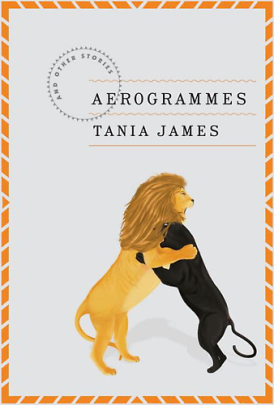
Tania James is a quiet writer of human disquiet. Her stories are peopled by the scarred, the alienated, the damaged and the bereaved. Many are émigrés, often Indian, caught between identities and struggling with the demands of assimilation; others are simply people displaced from the lives, relationships or certainties they once inhabited. Yet James rarely allows their suffering to erupt into melodrama. Hers is a world of contained turmoil: grief, estrangement and betrayal held beneath the surface, gathering their force precisely from the restraint with which they are told.
Treachery and trauma recur throughout these stories, but James seldom places the moment of crisis at their centre. Critical events often happen offstage or are approached obliquely through their emotional aftermath. This allows her narratives to proceed with an outward calm even as despair, grief or estrangement deepens. The restraint does not diminish the trauma; it allows its consequences to reveal themselves slowly.
Lion and Panther in London, the first story in the collection, takes us to London in 1910. Gama and Imam are Indian wrestlers of formidable strength, brought to England by Benjamin, an avaricious broker, ostensibly to challenge the reigning world champions. The brothers train with almost religious discipline, fired by national pride and the hope of defeating prospective opponents. From the English newspapers that Imam can read, they gather something of the sensation their presence has caused. But pride and anticipation gradually give way to disillusionment as they encounter match-fixing, fraud and an agent determined to shortchange them. James resists turning their predicament into open confrontation. The greater drama lies in the humiliation they absorb and the anger they contain, an early and striking example of her preference for inward drama over outward spectacle.
In What to Do with Henry, James brings together a betrayed wife, an orphaned child and an uprooted chimpanzee. Pearl travels to Sierra Leone to adopt Neneh, a young girl whose mother has died of malaria, and returns to America with not only the child but also Henry, a baby chimpanzee rescued from a market. Each, in a different way, has been wrenched from an earlier life and must negotiate an unfamiliar one. As Neneh grows up and Henry grows increasingly difficult to accommodate within the human world, belonging itself becomes uncertain. James draws an unlikely emotional kinship between them without forcing the parallel. Particularly memorable is her rendering of Henry’s experience, which gives the story much of its strangeness and poignancy.
Elsewhere in the collection, displacement assumes more intimate forms. In The Gulf, time and distance open a gulf between husband and wife, and father and daughter, after an Indian man working for a sheikh in the Gulf falls in love away from home. The title story, Aerogrammes, turns to ageing and abandonment, as an Indian father discovers that filial bonds are no protection against loneliness in America. Most poignant, perhaps, is Ethnic Ken, in which Amy, a young Indian-American girl growing up in Kentucky, encounters racism and isolation while her bereaved grandfather retreats into a world of confused memory and make-believe. In Light and Luminous, an ageing exponent of classical Indian dance confronts the fading of youth and the identity built around it. Across these very different lives, James returns repeatedly to the fragile ties of family, memory and belonging, and to what remains when those ties begin to loosen.
James’s protagonists are marked not merely by grief but by a persistent sense of dislocation. Their struggles arise as much from within families as from the unfamiliar worlds around them. As one character describes helplessness, it is like “the stars slipping farther and farther away, like everyone I loved.” James is deeply attentive to such private crises, yet she maintains sufficient distance from her characters to avoid sentimentality. She neither amplifies their suffering nor explains it away; instead, she allows grief, estrangement and loneliness to accumulate through gesture, memory and circumstance.
This restraint is central to the intensity of her stories. James has a knack for underplaying trauma without diminishing its force. Her characters may be bruised by betrayal, bereavement or displacement, but the narratives seldom become heavy or angst-ridden. She enters scenes quickly and lets precise details establish both atmosphere and emotional temperature: “On the table between them rest a rose marble chessboard, frozen in play. Raindrops wriggle down the windowpane. It is a mild June of 1910 and their seventh day in London without a challenge.” The stillness of the scene is deceptive; beneath it lies the frustration and uncertainty that James so often prefers to suggest rather than declare.
Her language is spare but expressive, particularly when capturing the passage of time or fixing a relationship in a few sentences. “In later years I will come to avoid him, but for now, I am eight years old, and the man everyone says is my father is sitting in the living room.” Her imagery can be equally economical: “Saffa gathered the baby into his large, awkward hands, its terror reverberating through his palms. Its head was smaller than mango, and its eyes were liquid and searching.” Occasionally, dry, restrained humour breaks through the melancholy: “My dad listened to Sister Lorraine’s concerns, stroking the ends of his mustache between thumb and forefinger, something I occasionally mimicked during class, though there was a single tentative whisker on the corner of my lip.” Such moments keep the collection from becoming oppressively sombre and remind us that James’s characters, for all their wounds, remain vividly alive.Aerogrammes is not a collection that propels the reader breathlessly from one page to the next. Its stories work more quietly, their effects accumulating after the immediate drama has passed. Tania James writes of people separated from countries, families, former selves and sometimes even from the lives they had imagined for themselves. Yet she resists both melodrama and easy consolation. The contained turmoil of these stories gathers quietly in the mind, its hold on the reader becoming apparent only after the pages have been closed.
Aerogrammes
Author: Tania James
Publisher: Random House India
Pages: 180


The way you have written the review, itself makes an interesting read. Congratulations!
Thanks Meenakshi. I strive to ignite interest in the book even as I put it under the lens.
The way you wrote that is elegant indeed.
Many thanks for stopping by, Big D.
Wish you had kept off reviews for a while, Uma! Having just written one reluctantly I could have done without being brought face to face with what an excellent review really should be like 🙂
Suresh, reviews have come to stay on my blog. If anything, your review of “Dark Pursuit: The Lost Shinmahs” has steeled my resolve. Thank you for the kind words.
Thank you so much, sir. Those are rampant human dilemmas. Welcome to the blog.
Wonderful review Uma!
I am quite intrigued by the underlying theme of these stories. “Toxic Grief’ seems to me to be indeed a very difficult thread to pull an anthology together. By what appears from the review, I am assuming that the author has remarkably succeeded in doing that. Also, the span that the settings of these stories have is considerable. What about the places that the author takes the reader to? Have they been aptly taken care of in the descriptions?
I don’t know when will I get to read this book, but I am surely very very interested in doing that asap!
Relationship and inner turmoil are the author’s forte and focus. It is more the inner landscape of the characters that she has on her mind. Her description of the places is sparse but adequate. And yes, the thread of isolation runs across the book. Many thanks for the kind input.
That sounds a very interesting book indeed, thanks for the review.
It is an absorbing book, Lily. Welcome to the blog.
I love these kind of book where you have to pause and think, mull over and then carry on. A book has to make you savour the charecters and this book seems to be in that category.
It is precisely that kind of book, Amit; thought-provoking, poignant and persistent.
every writer should get their books reviewed by you. they will get few additional readers for sure. mail me the entire story :D.
I am thrilled to have you back, Deb! Thanks for that and you need to mail me your address for the rest of the story.
Well as usual I am amazed at everyone who gets all the time to Read books , and then write reviews on them ..
Bikram, in olden days people would set out across continents on foot, on horses and on boats across the oceans, and all those journeys seem so godforsaken and unimaginable. I believe I am doing nothing of the sort by reading books and posting my views about them: there is nothing weird or unusual about it. Also, I hope you understand, I cannot be made answerable to ‘everyone’. My book reviews are as in order as are posts about Punjab and Punjabis, or etiquette and women’s rights, or the national politics for that matter. The trick is not to lose one’s peace of mind over annoying matters by bypassing the scum.
I am not sure what you mean by scum or who you pointing towards..
I am also very sure of the fact that I did not say you are doing anything wrong by reviewing or reading books..
I said I am amazed at how people do it as I am unable to do it..
I also did not hold you answerable for everyone..
My posts on Punjab and Punjabi are my personal experiences and they are no way comparable to what you write.. I hold you on a much higher pedestal than myself.. and have always said that I learn a lot from your posts..
So not sure what the reply is in context with..
Bikram, I have moved my reply to a post.
I really like your blog. It has a very professional feel to it. Though sometimes I find it difficult to read. Yet I try my best to keep up, That’s why I have nominated it for the Liebster blog award.
If you find some spare time, check the details here: http://www.coralsandcrimsons.com/2012/10/first-blogger-award.html
I am indebted forever, Khushbu. Maybe I don’t deserve it because of all things, I feel less inclined to write a tag post at the moment. May your path be lighted by a hundred suns in the Blogsphere!
Another outstanding review of what seems to be a fantastic book. As I have told already (and I wouldn’t mind repeating again and again), you are a master at bringing out the brilliance of a book and highlighting every aspect, emotion and shade that lies inside the story and in the mind of the author. I feel each one of your reviews is as (or more) mesmerizing as the book itself. The style of Tania James and the uniqueness of each story are very captivating and I think it is going to make an enthralling read. Thank you very much for another excellent recommendation.
Raj, you overwhelm me every time with your praise. Coming from an exquisite wordsmith like you, I especially savour the words. I can never stop thanking and being grateful to you but I believe the appreciation has started making some people very uncomfortable.
Tania James is a master of capturing storms quietly, as I have tried to project above. I am sure you are going to enjoy her stories greatly.
Thank you, yet again, my friend!
Thanks for the review. I had to organize a contest and before doing that I wanted to know about the book. Now I am well informed. 🙂
My post is just a brief snapshot of the book. I am glad you found it useful. Thanks for stopping by.
Nice review! have added to my reading list
It is a fine collection of memorable stories.