(Further to Along the Great Ocean Road)
Considering the relentless race against time during our Melbourne visit, we did manage to see and do more than seemed reasonable. Yet the experience had left us gasping for breath. It was not unlike listening to a magnificent album on an old audio cassette player. Sometimes the music flowed magnificently; sometimes it whirred past in fast forward on a deluxe minibus. It seemed only befitting then that the next instalment of our expedition should be quieter.
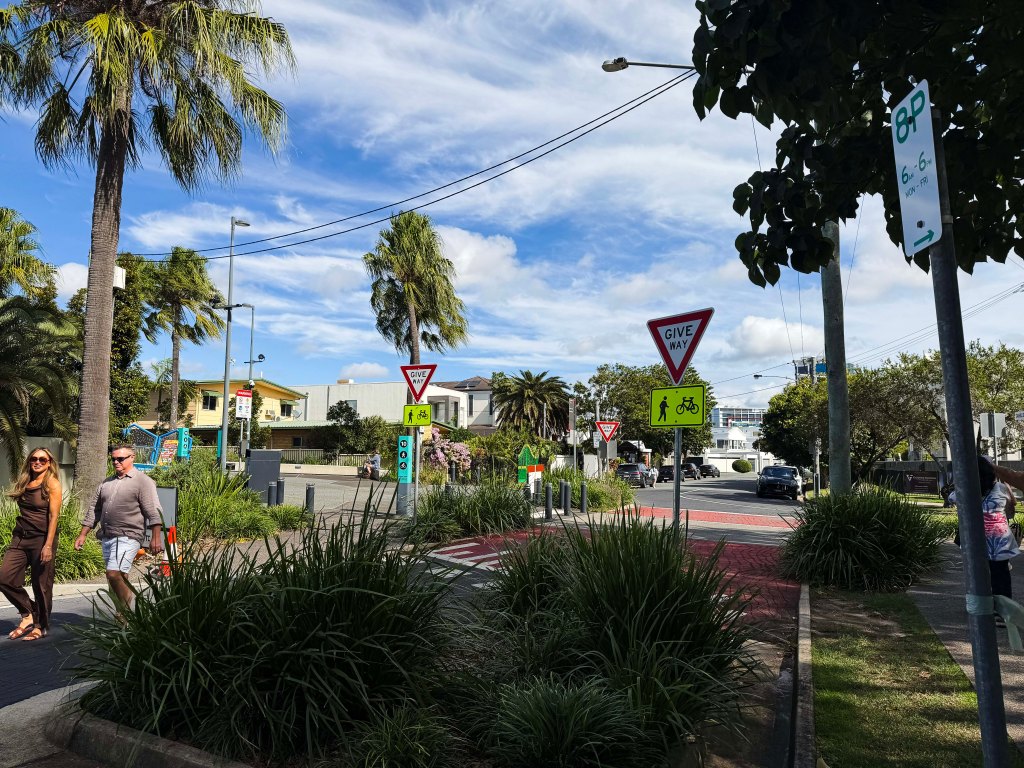
The Virgin Australia flight touched down shortly after midday. On the way to the Airbnb, the Gold Coast looked exactly as we had hoped it would. Broad avenues threaded their way through greenery, while parks appeared with such regularity that one wondered whether they were issued along with the house keys. Low-rise houses sat comfortably amid gardens, and everything looked improbably new, clean, and sunlit. Beneath a brilliant blue sky brushed with wisps of cloud, the Gold Coast seemed less like a city than a collection of spacious neighbourhoods sharing the same name.
Our Airbnb occupied a prominent position within the Paradise complex. Acquiring the keys, however, proved considerably more challenging than booking the accommodation online.
V began confidently enough at a bank of key lockers in the lobby, only to discover that confidence was not among the items stored there. Somewhere during the frenetic key-punching, a bored individual materialised from nowhere and directed us towards another key bank in the basement.
Only one lift in the building appeared willing to descend to the basement, and it seemed to regard the journey as a personal favour rather than a regular service. The doors opened onto a dimly lit cellar containing another bank of key lockers and a collection of miscellaneous objects whose purpose was not immediately apparent. By this point, the operation had acquired the atmosphere of a low-budget Hollywood thriller.
The basement locker proved more cooperative than the first. The moment the correct code was entered, it surrendered the keys without resistance, bringing our espionage mission to an abrupt conclusion.
The apartment itself was not burdened with excessive dimensions. The kitchen appeared to occupy a conceptual existence. Fortunately, the bathroom had made the transition from concept to reality, even if only just. Had any of us suffered from claustrophobia, the apartment might have offered an intensive treatment programme.
The unit did not directly overlook the celebrated Surfers Paradise foreshore. Nevertheless, between the towers and the familiar silhouettes of the Norfolk Island pines, we could glimpse a sliver of the Pacific.
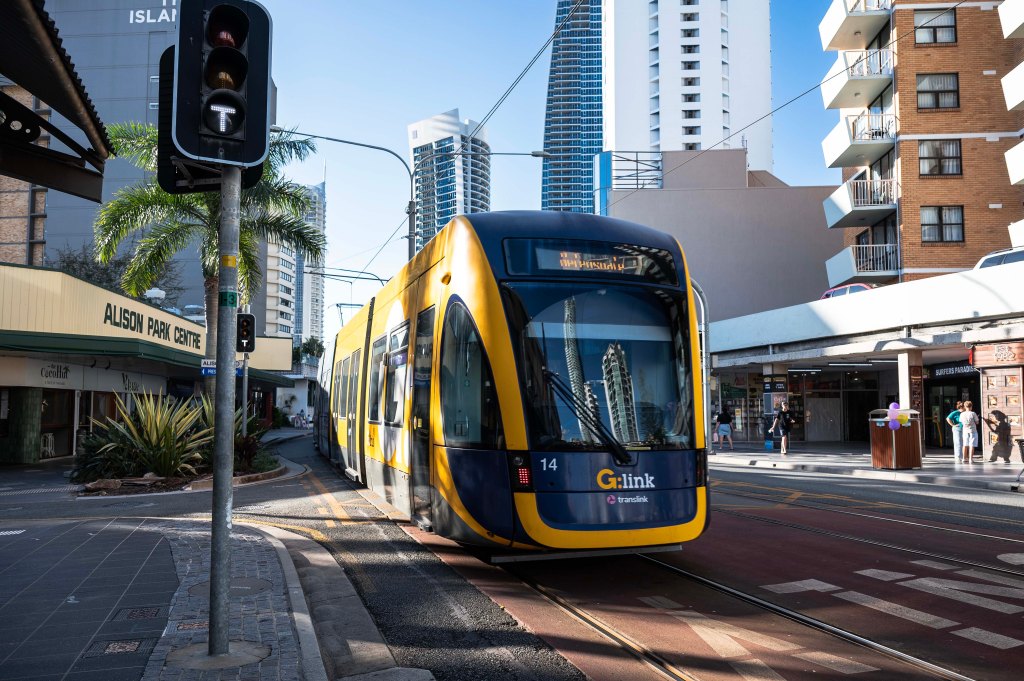
We didn’t take long to venture outside. Tram tracks ran directly past our building, while cafés and restaurants appeared in such abundance that one suspected local planning regulations required at least one eatery per square metre. We selected one at random and found the food entirely innocent of any wrongdoing. Refreshed and refuelled, we browsed the neighbourhood before heading towards the sea.
Falling back on our now established method of finding a place by checking with both Google Maps and the ever-friendly Aussies, we proceeded on a broad pedestrian avenue leading towards the beach, flanked by cafés, restaurants, palms, and subtropical greenery. Despite the presence of high-rise towers nearby, the ownership of the street remained with the pedestrians. The trees felt as though they belonged to the place, as though Surfers Paradise had grown around them rather than importing them afterwards.
Cavill Avenue rolled towards the sea, as though unable to resist its pull. Behind us rose the gleaming towers of the Gold Coast; ahead lay the Pacific, its horizon drawn with ruler-like precision beneath a cloudless Queensland sky.
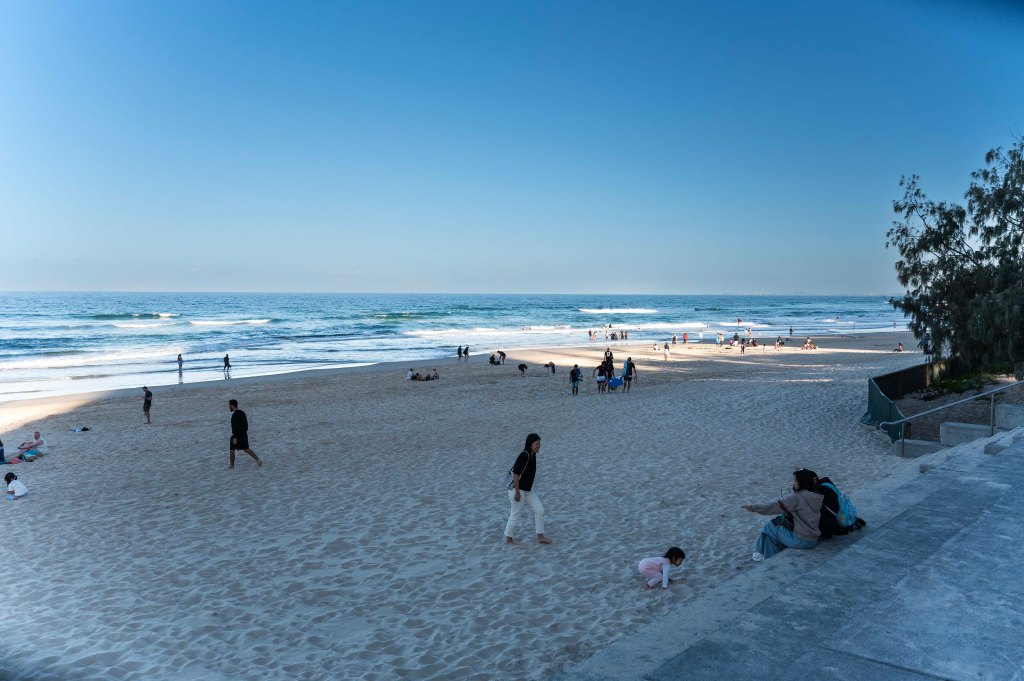
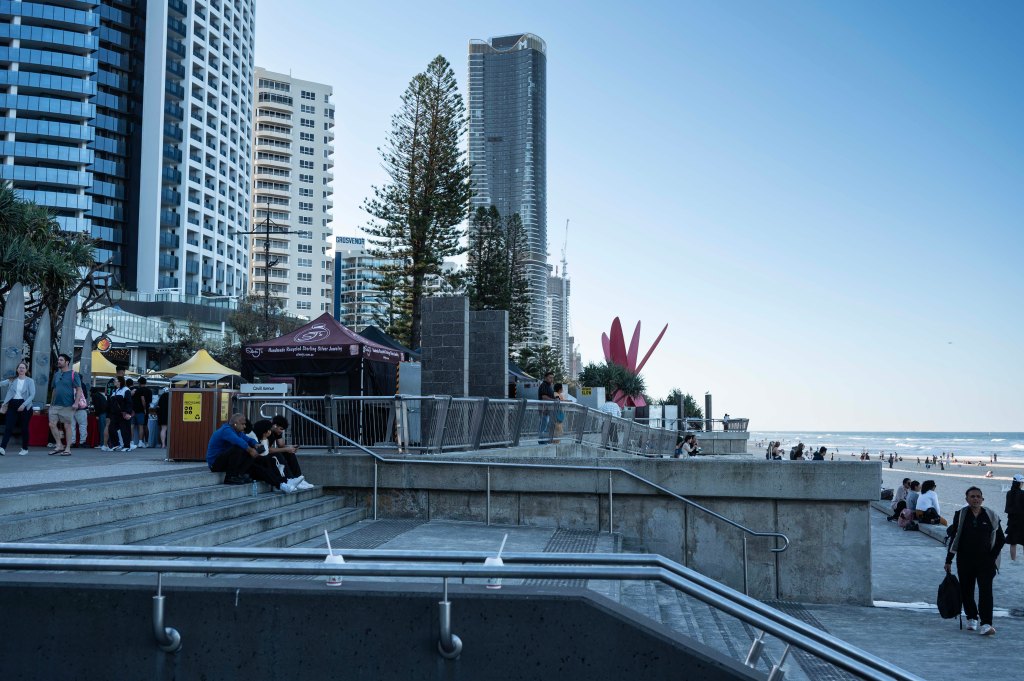
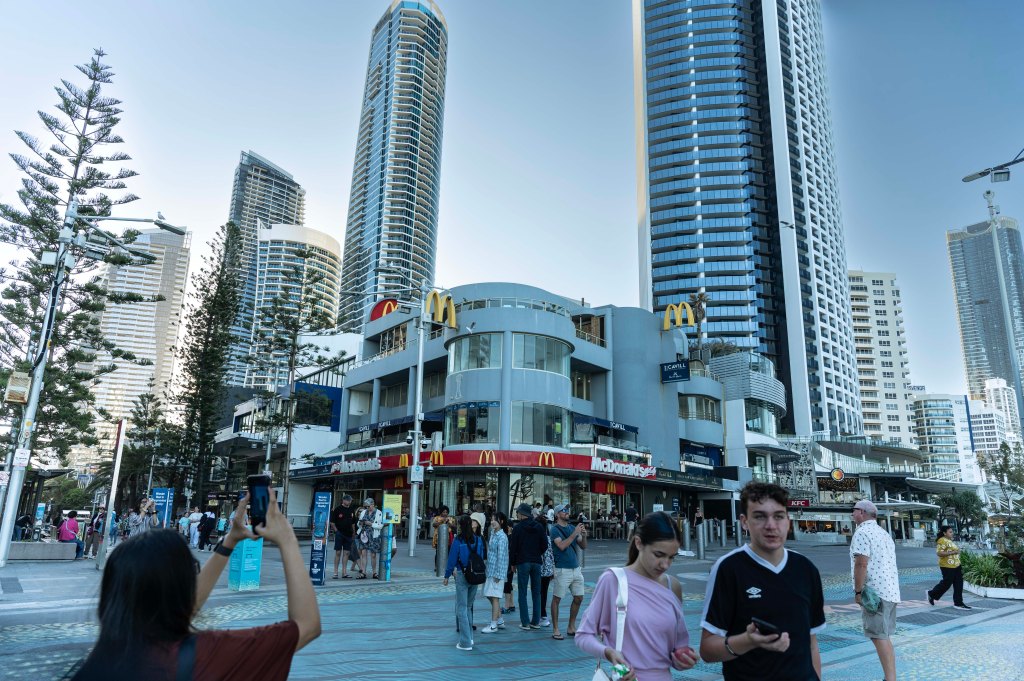
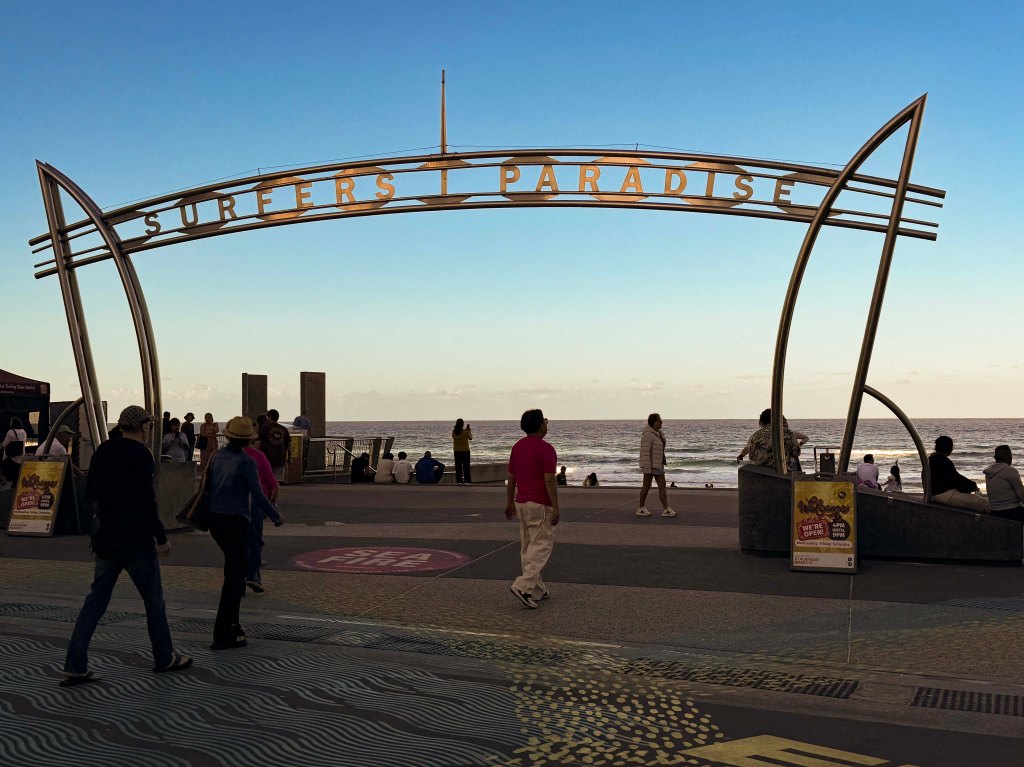
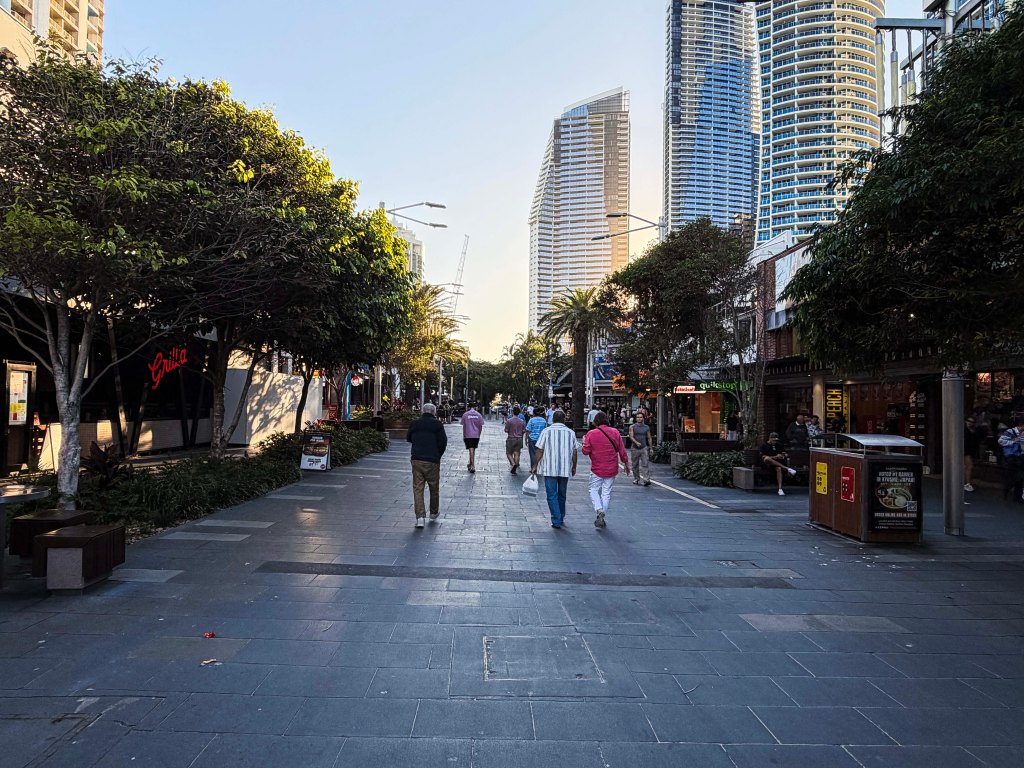
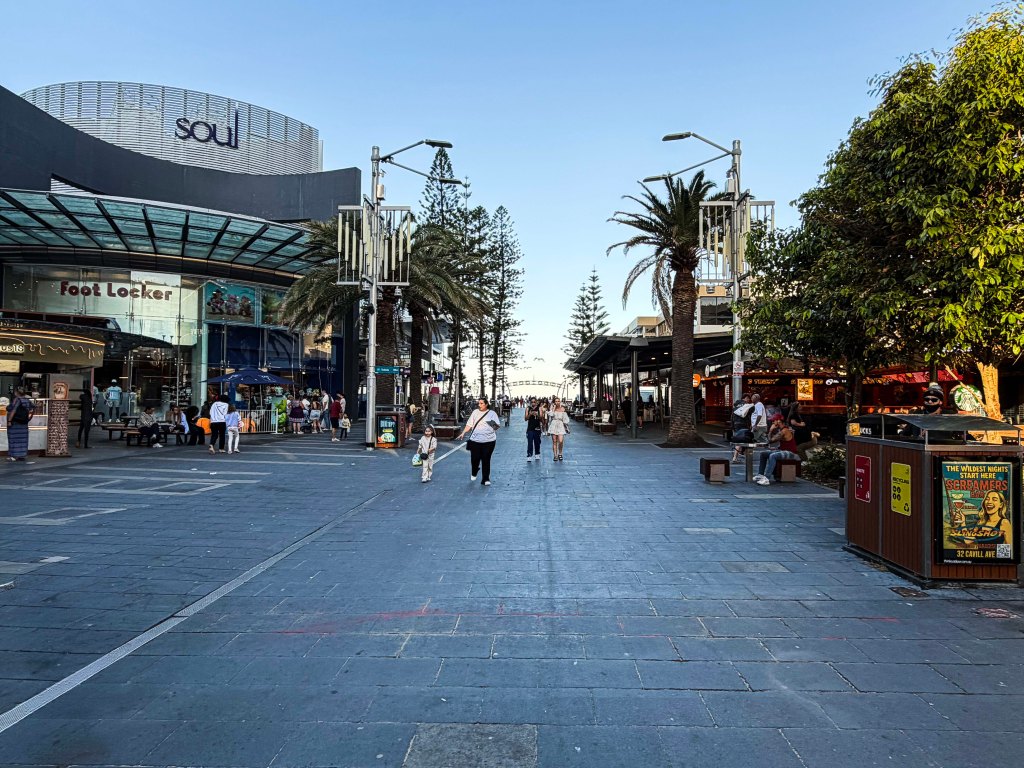
Popular tourist attractions occasionally disappoint by failing to live up to their reputation. Surfers Paradise was not one of them. The beach is extraordinarily broad, with a vast sweep of pale sand separating the promenade from the water. The horizon remains uninterrupted. There are no piers, harbours, industrial structures, or commercial clutter competing for attention. The Pacific simply occupies the entire eastern horizon and seems perfectly content with the arrangement.
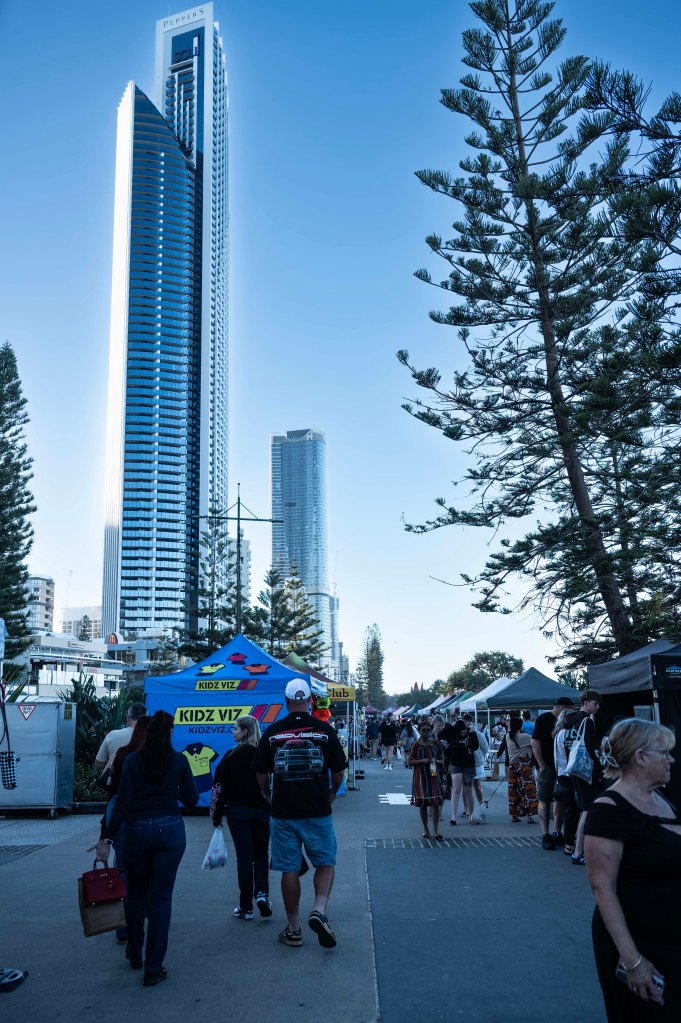
Despite being one of Australia’s best-known tourist precincts, the atmosphere felt remarkably restrained. Nobody appeared particularly interested in impressing anyone else. People walked, cycled, surfed, lingered, watched the ocean, or simply occupied themselves with the agreeable business of doing very little. There was no indication that anyone felt compelled to hurry.
I found myself reflecting on the relationship between the ocean and the skyline. In many places they seem locked in a perpetual struggle for attention. Here they appeared to have reached an amicable settlement. On one side rolled the long surf lines of the Pacific; on the other stood the glittering towers of Surfers Paradise. Between them stretched a broad promenade shaded by Norfolk Island pines and pandanus trees, where swimmers, surfers, cyclists, and pedestrians went about their business with no visible urgency.
The Gold Coast appeared to have elevated leisure into a civic virtue. The city has spent decades building itself into one of Australia’s most recognisable destinations, yet the ocean continues to enjoy top billing. The towers are impressive enough, but they never quite succeed in stealing the scene. The eye keeps drifting back to the surf, the trees, the immense blue sky, and the people sitting quietly facing the horizon. The Gold Coast seems to understand that its greatest asset is not what has been constructed beside the water, but the fact that the water is still allowed the final word.
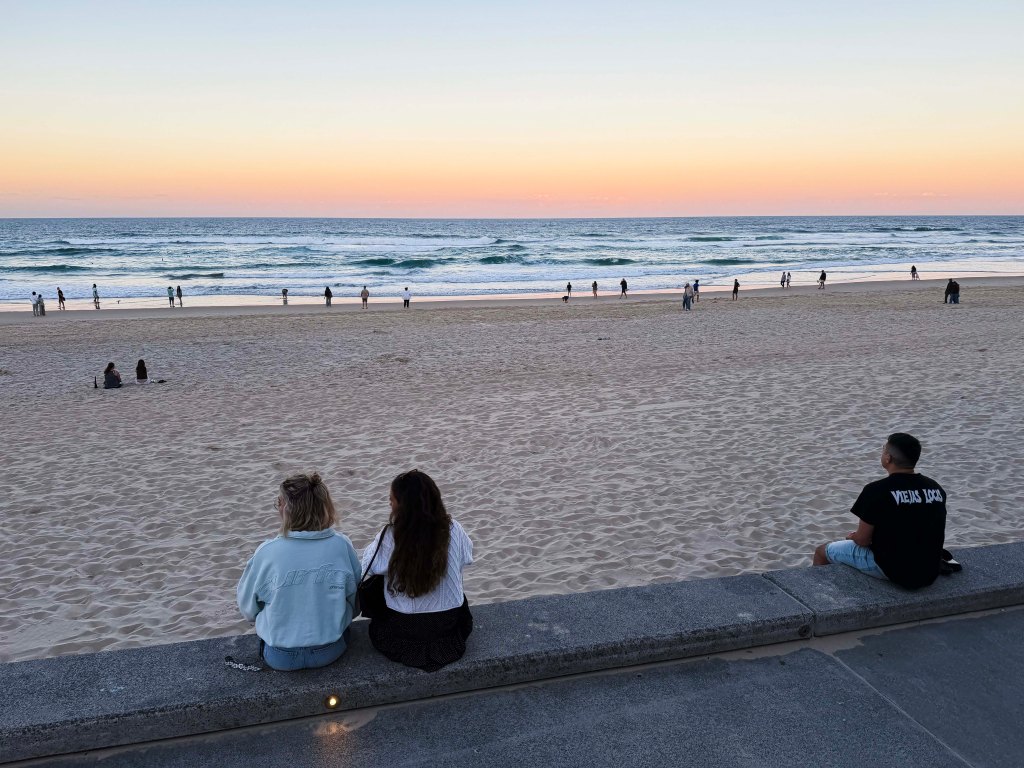
We found our place on the seawall and turned our attention back to the ocean. Judging by those around us, there appeared to be no prescribed duration for the activity.
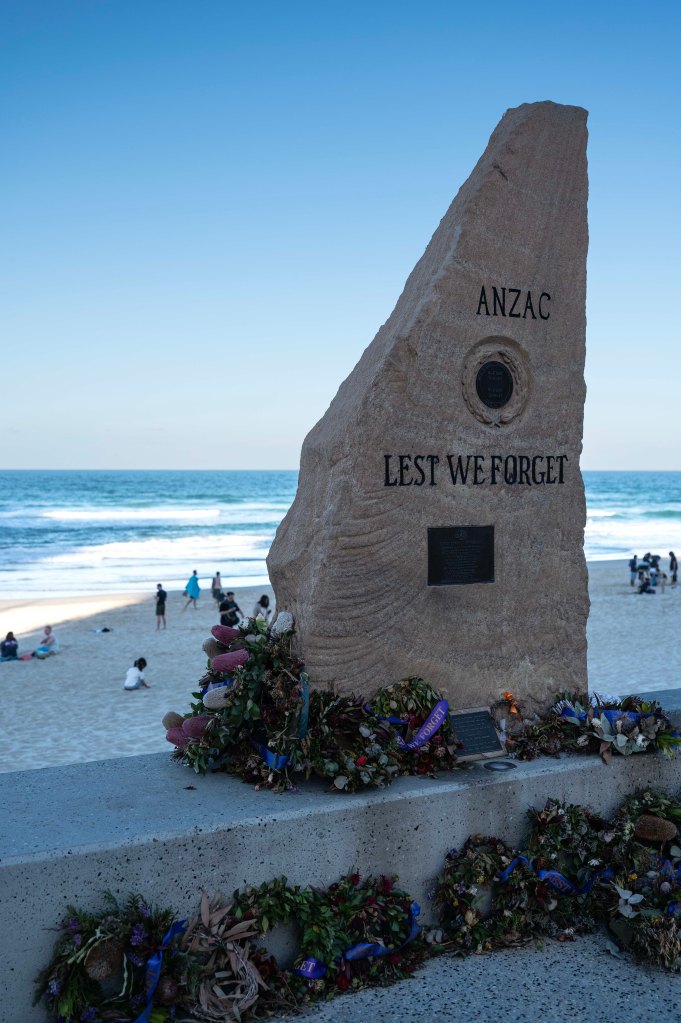
Dusk arrived early, shortly after five, and we had scarcely moved from our perch facing the sea. Although the sunset was unfolding somewhere behind us beyond the hinterland to the west, the horizon refused to surrender entirely to darkness. A faint pearly glow lingered where the sea met the sky, as though the Pacific had borrowed a little of the departing day and was reluctant to return it.
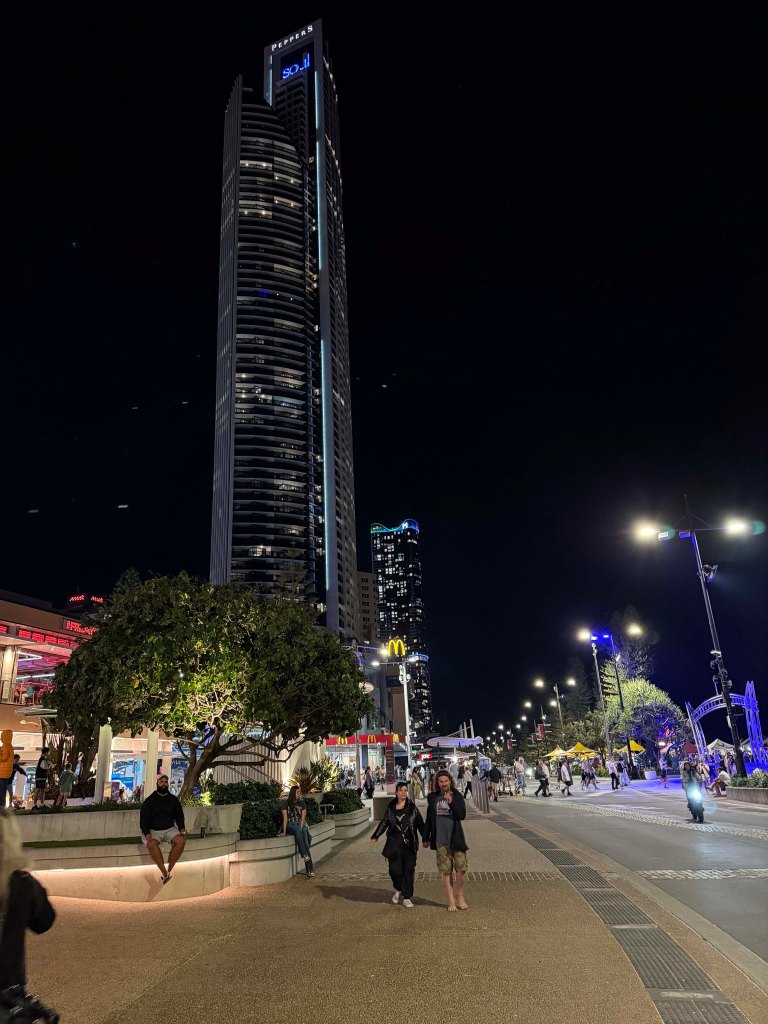
Eventually we rose and wandered along the foreshore. The Esplanade was settling into its evening rhythm. The beachfront market had sprung to life beneath neat rows of white tents selling a surprising assortment of things that travellers discover they cannot live without. Above the skyline, the twin-spired Soul lit up against the evening sky. The high-rise that by day resembled a sail turned towards the Pacific had become a beacon above the coastline by night.
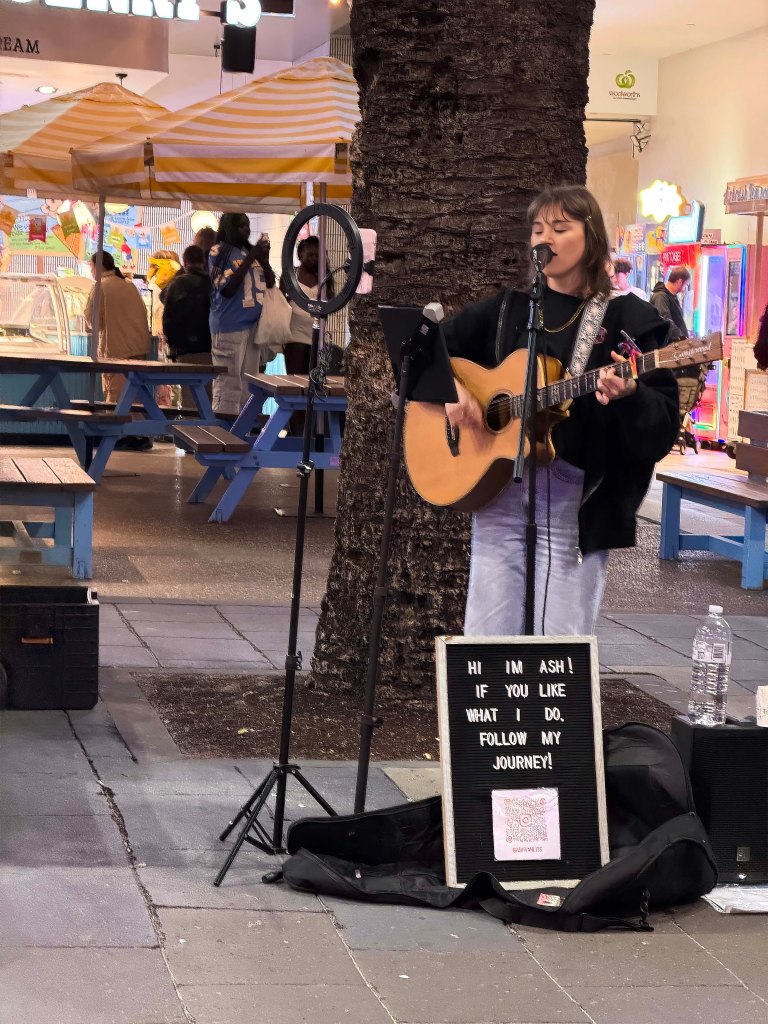
A fire-juggler challenged both gravity and common sense near Cavill Avenue, while a busker named Ash serenaded passers-by from beneath a palm tree and simultaneously recruited followers on social media. Surfers Paradise appeared determined to keep boredom at a safe distance.
We sought refuge in a place called Healthy Burger. The name raised questions that hunger advised us not to pursue. The staff received us warmly. As closing time approached, however, a certain ambiguity entered the relationship. Whether either side considered the arrangement ideal was never conclusively established. The burgers, however, were excellent, and they also introduced me to a miniature bottle of Henkell Piccolo Trocken, a German sparkling wine. We found our way back to the Airbnb fairly late in the evening without once consulting a map or a local.
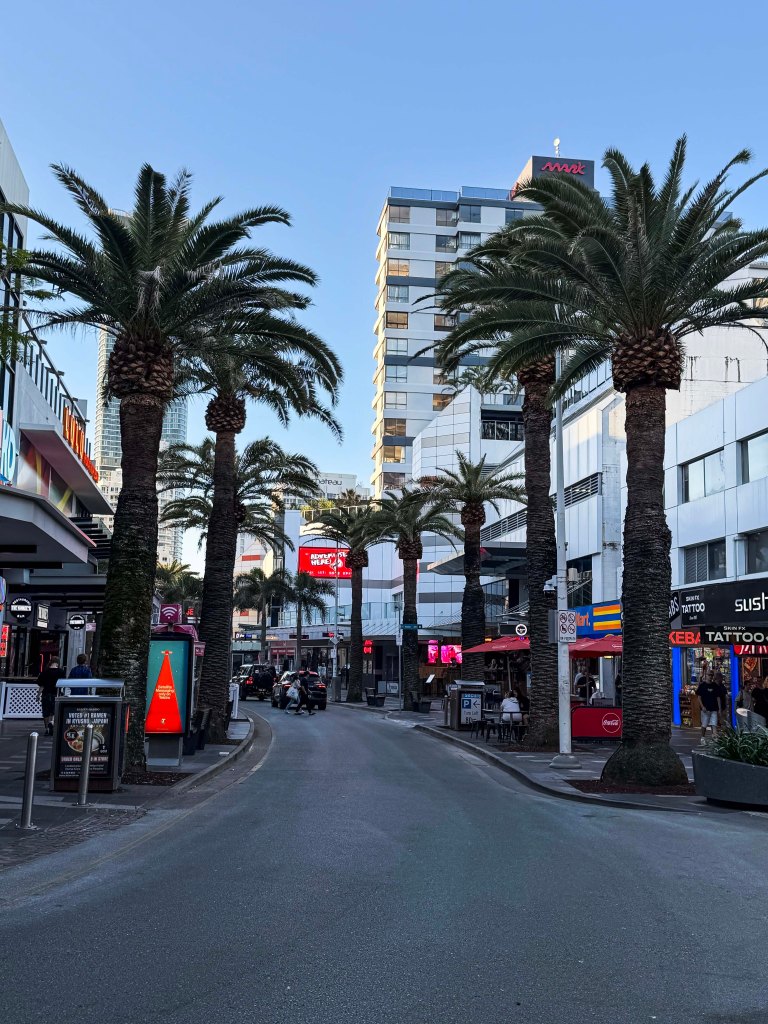
V had lobbied hard to include the Gold Coast in our itinerary and was quietly accumulating evidence in support of her position. At this point, however, T entered the proceedings armed with research. Her findings were delivered the following morning with considerable authority.
“We are going to HOTA.”
The announcement was followed by supporting details. HOTA, short for Home of the Arts, was apparently the cultural heart of the Gold Coast, the venue for a celebrated Sunday market, and a popular picnic destination. The afternoon, she informed us, had already been allocated to Burleigh Heads for a sunset vigil and a walk around the headland. The schedule appeared comprehensive and, more importantly, non-negotiable.
As we gradually discovered, Sundays occupy a special place in the Gold Coast way of life. Families gather in parks overlooking canals and beaches, cyclists and joggers claim the waterfront paths, markets spring to life, and people linger over food and coffee with a dedication that suggests they have wisely identified the purpose of weekends. HOTA appears to have elevated this practice into an institution. Around its lake and parklands, residents browse artisan stalls, stroll beneath the subtropical sun, settle onto the grass with coffees, and generally behave as though hurrying would be a breach of local custom.
Under a brilliant Sunday sky, bright enough to make one grateful for sunglasses, we set off to investigate the phenomenon for ourselves.
The journey involved a tram from Cavill Avenue. By now we were deeply attached to Australian trams. Melbourne had started the affair and the Gold Coast was doing nothing to discourage it. They had the charm of toy trains and none of the self-importance of larger forms of transport. They did not thunder through cities or rush past neighbourhoods. Instead, they glided quietly between destinations, as though convinced that life would proceed perfectly well without unnecessary haste. At fifty cents a ride—and sometimes free—they seemed almost too good-natured for modern economics.
We alighted at Broadbeach and continued on foot through increasingly tranquil quarters of the city. The towers gradually surrendered their dominance. With every few blocks the skyline diminished until little remained but clusters of low-rise dwellings nestled comfortably amid gardens.
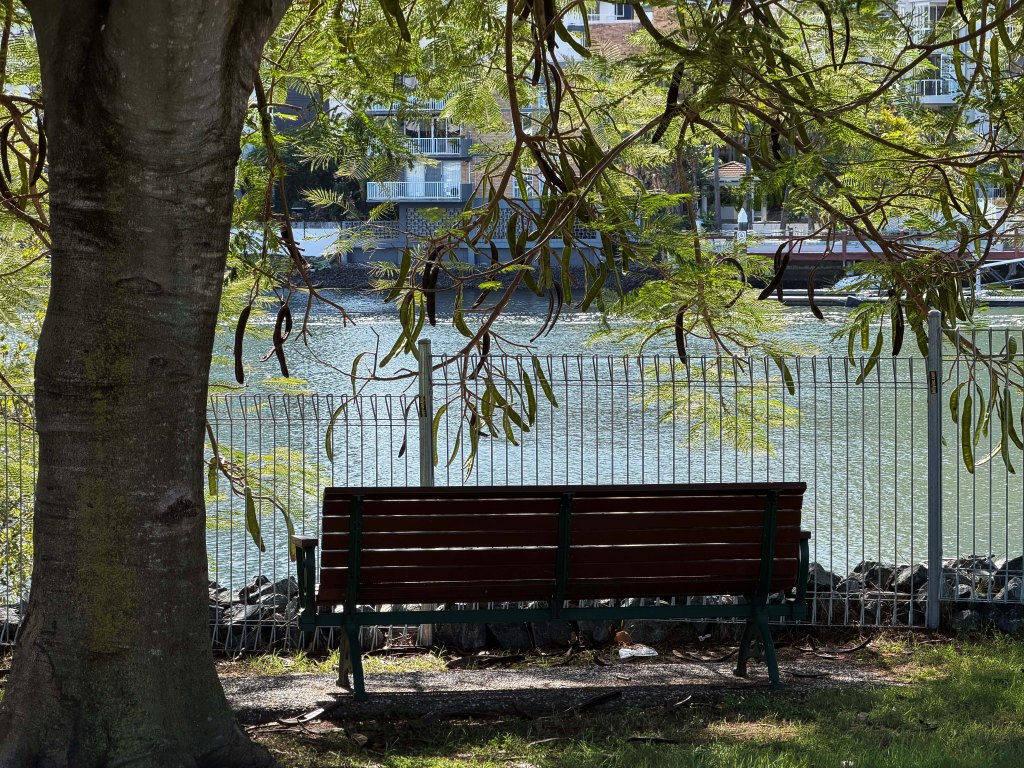
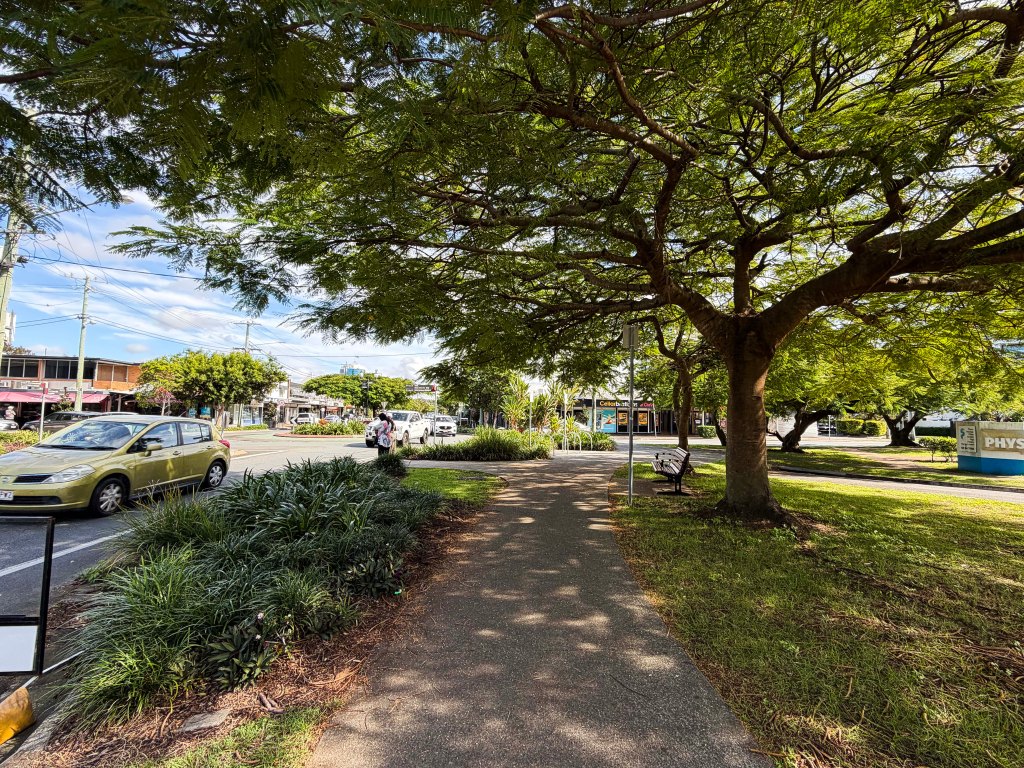
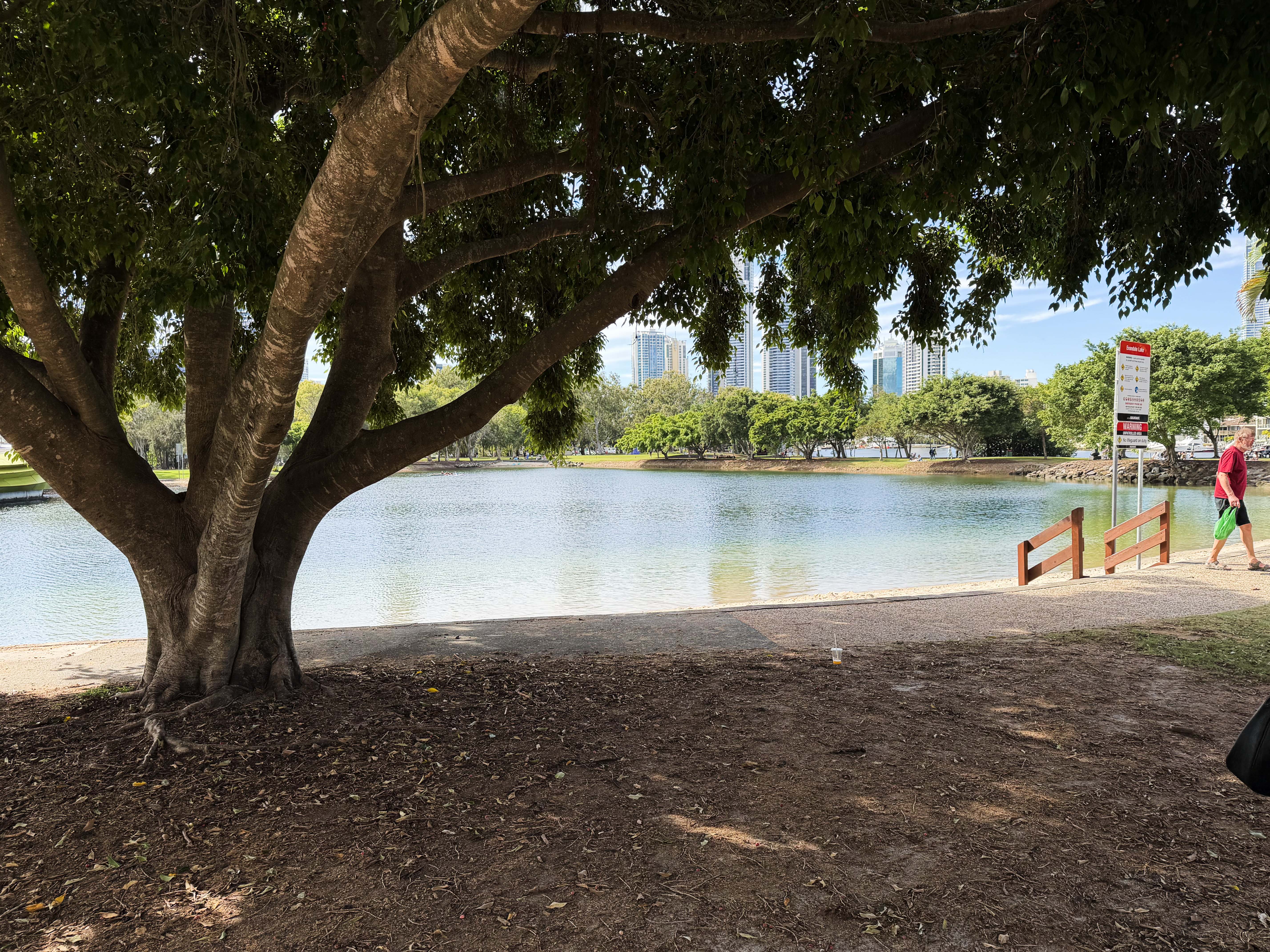
Crossing the Nerang River into Chevron Island, we walked beneath broad canopies of local trees, some bearing a striking resemblance to the gulmohar and peepal back home. Benches nestled in the deepening shade, while lomandra and palms reinforced the city’s subtropical character. The streets possessed a quiet residential charm, making Surfers Paradise and its towers seem part of a different world altogether.
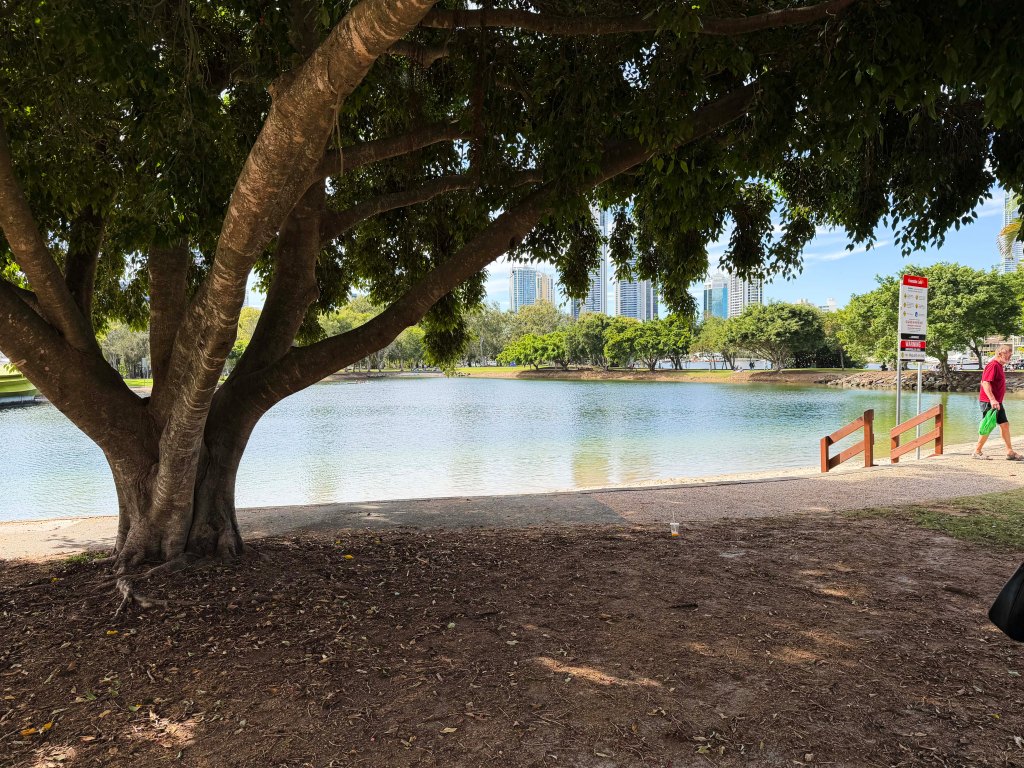
Crossing over a bright blue pedestrian and cyclist bridge, we emerged into the Sunday Market by Evandale Lake, which I learned later was only an extension of the Nerang River.
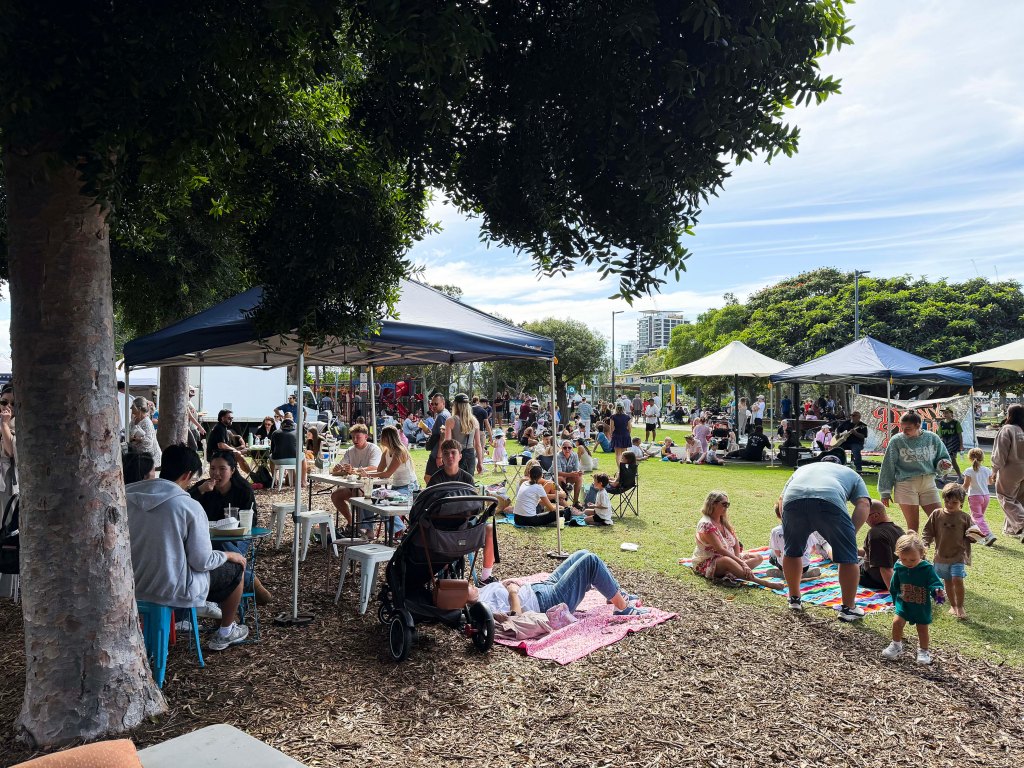
The HOTA Sunday Market felt less like a marketplace and more like a communal picnic that had expanded to encompass several hundred people. Sunlight filtered through the dense canopy of mature shade trees, dappling the lawns with shifting patches of light and shadow. Families lounged on picnic rugs, children drifted between playground and grass, and prams appeared in remarkable abundance. Food stalls occupied temporary marquees, musicians supplied an unobtrusive soundtrack, and the entire gathering moved at an unhurried pace. The atmosphere was unmistakably Australian: outdoors, family-oriented, informal, and conducted as though nobody had anywhere more important to be.
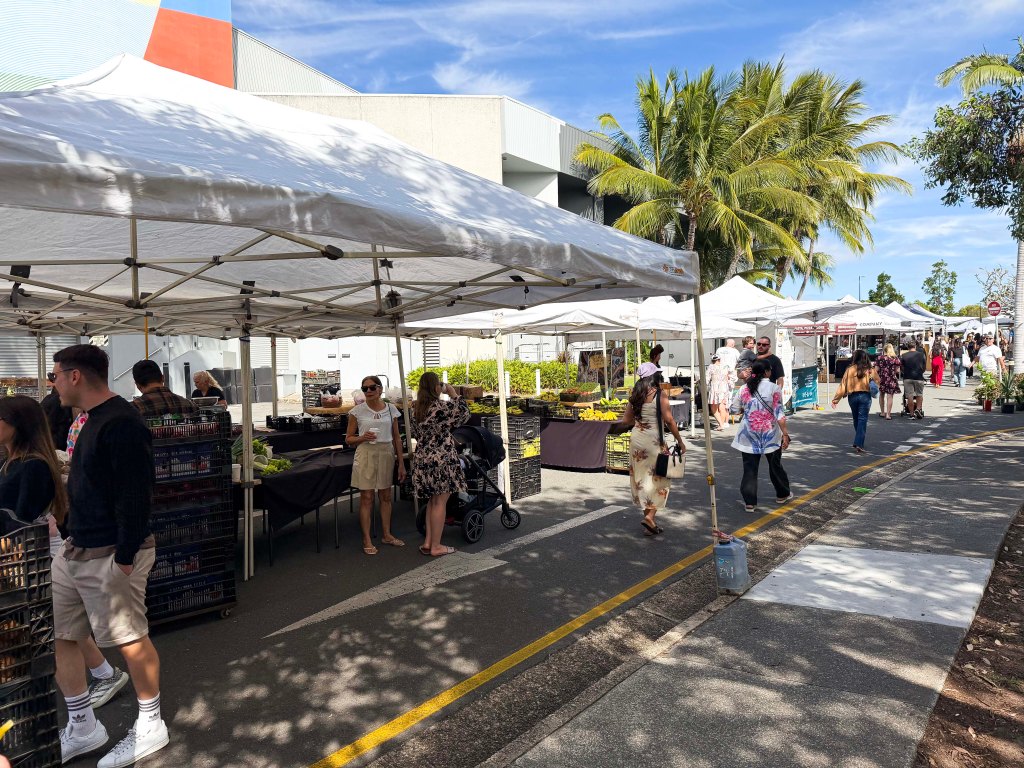
We surveyed the proceedings with generous quantities of excitement and curiosity. The air was thick with the aromas of food being grilled, fried, baked, and otherwise prepared for immediate consumption. As a matter of established family policy, our first task was to locate a suitable vegetarian offering for the lone adherent of a plant-based diet among us.
Our search led us to a stall displaying photographs of Japanese delicacies above the counter. We ordered korokke, a potato croquette served with tonkatsu sauce, shredded cabbage, a wedge of lemon, and a reassuring dollop of mayonnaise. A sushi taco followed shortly afterwards. Encouraged by this success, we expanded our investigations to other stalls and assembled a collection that included sweet crêpes, a chicken dish, and several coffees whose names possessed considerably more syllables than seemed necessary.
Having secured provisions, we discovered a few vacant stools beside a bench and settled into the spirit of the gathering. Around us flowed the agreeable soundtrack of a Sunday morning: conversations, laughter, the occasional shriek of delight from children, and music drifting across the lawns from somewhere unseen. It struck me that whatever worries awaited these people in the week ahead had, for the moment, been granted a temporary holiday.
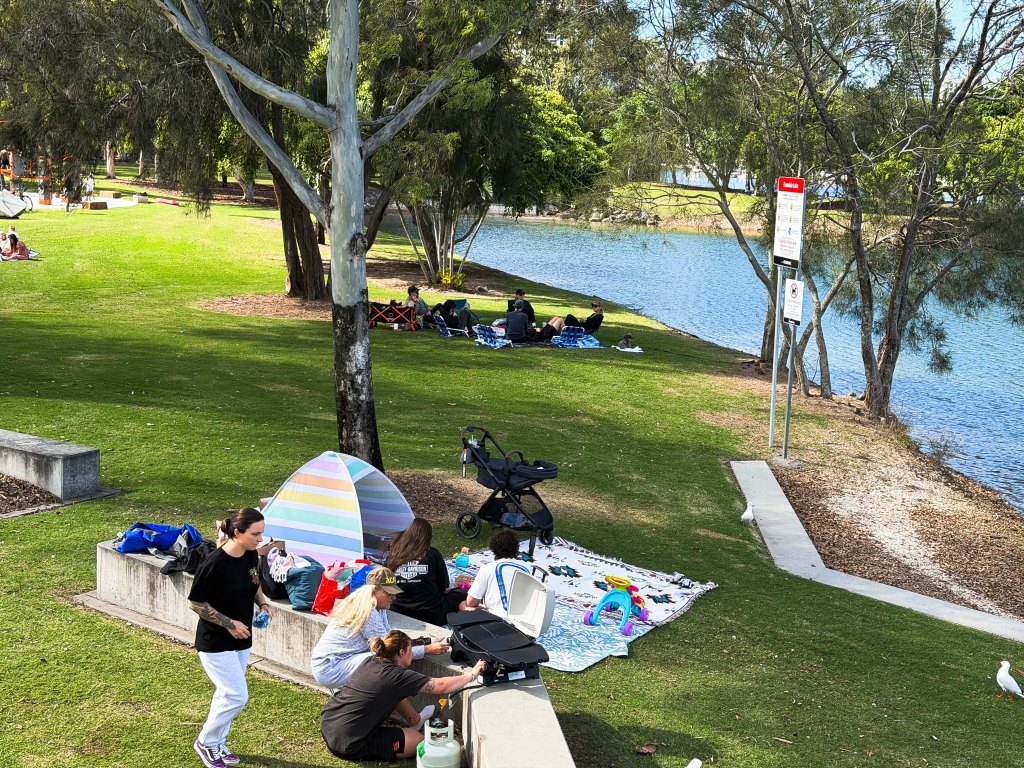
One stall in particular kept drawing my attention. An elderly lady sat patiently painting delicate floral patterns on the faces of young girls, transforming them into willing canvases for a few minutes at a time. The expressions of concentration on her face were matched only by the seriousness with which her tiny clients submitted to the process. More than once I was tempted to seek permission to photograph one of them. In the end, however, discretion prevailed over enthusiasm, and the scene remains preserved only in memory.
Soon after eleven, subtle signs began to appear that the market’s allotted time was drawing to a close. A few vendors started dismantling their stalls, organisers collected chairs and benches where they could, and the temporary village that had occupied the lawns began the slow process of packing itself away. We took the hint and moved on to the HOTA Gallery.
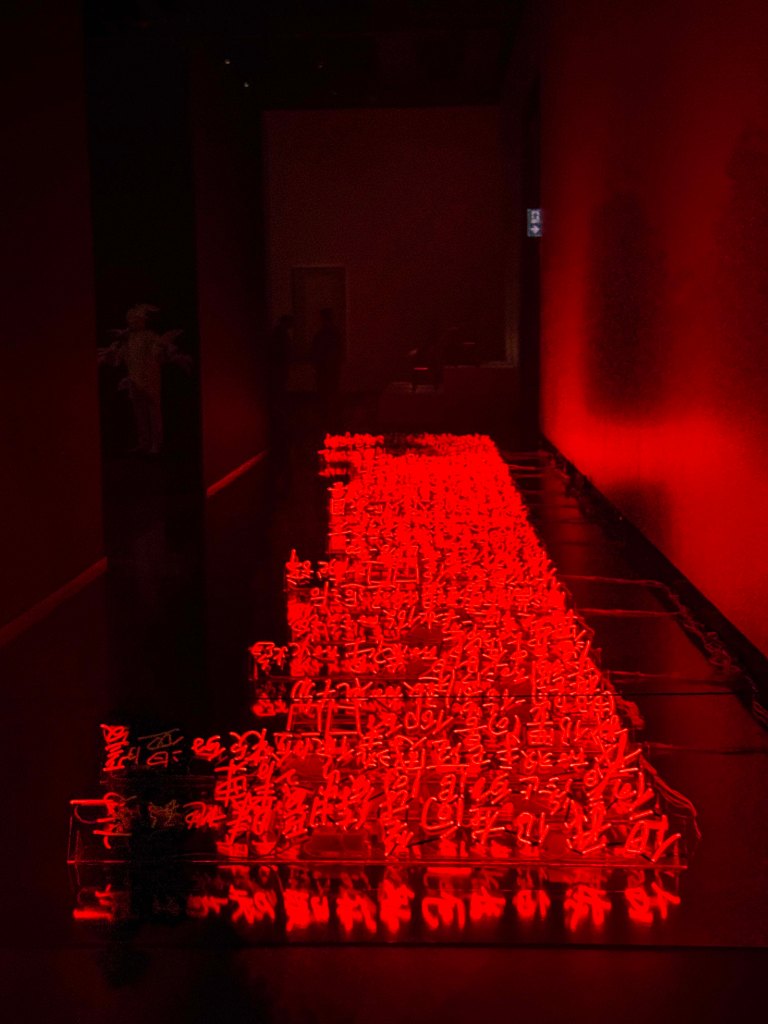
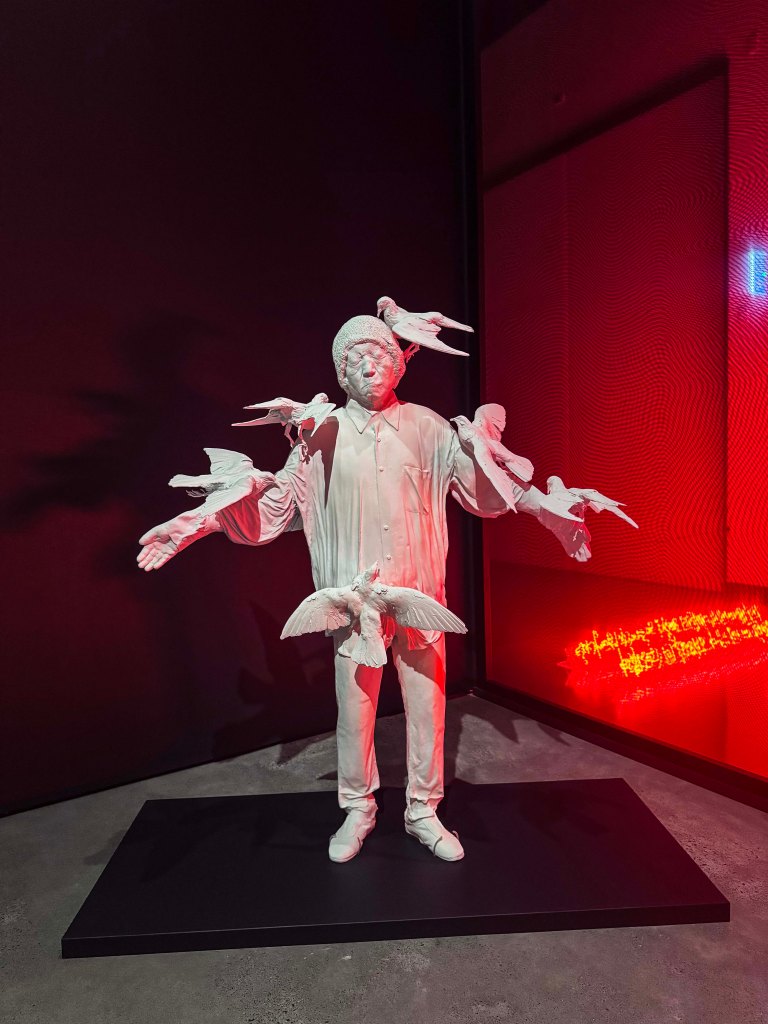
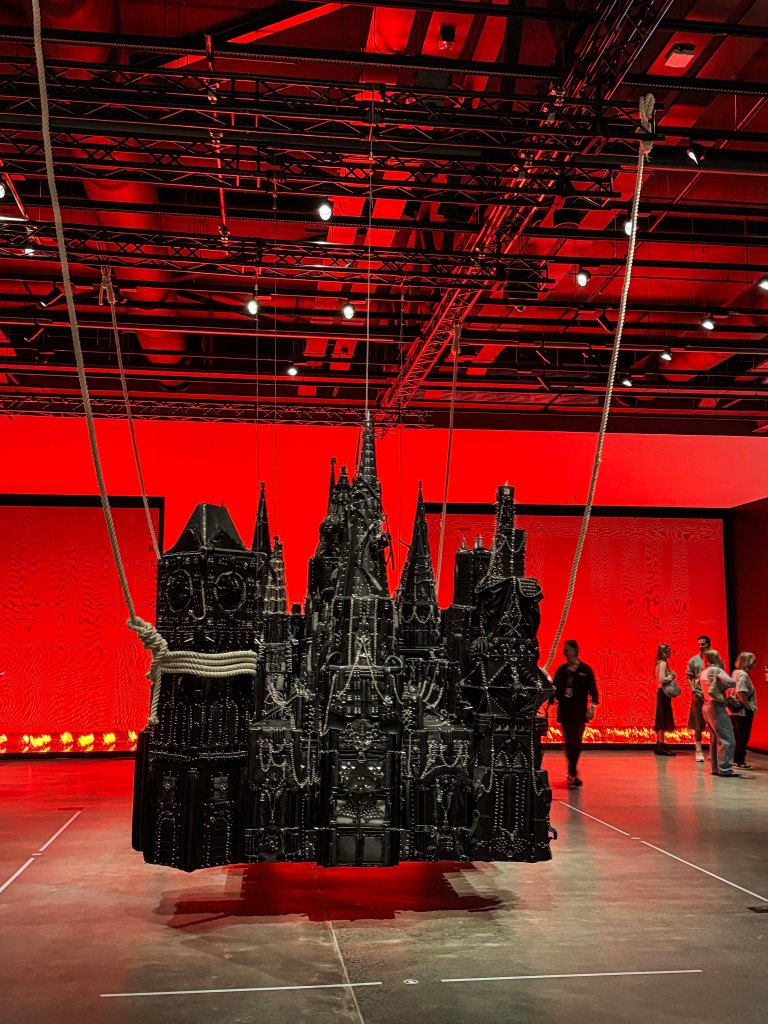
The gallery featured a striking collection of local and international works, including an exhibition from the White Rabbit Collection of Chinese contemporary art. Much of it explored power, memory, conformity, identity, and the anxieties of modern life. Among the many compelling works, one stayed with us: a dark city of towers and spires suspended by thick ropes, both grand and precarious, as though history and human ambition hung by threads stronger than they appeared.
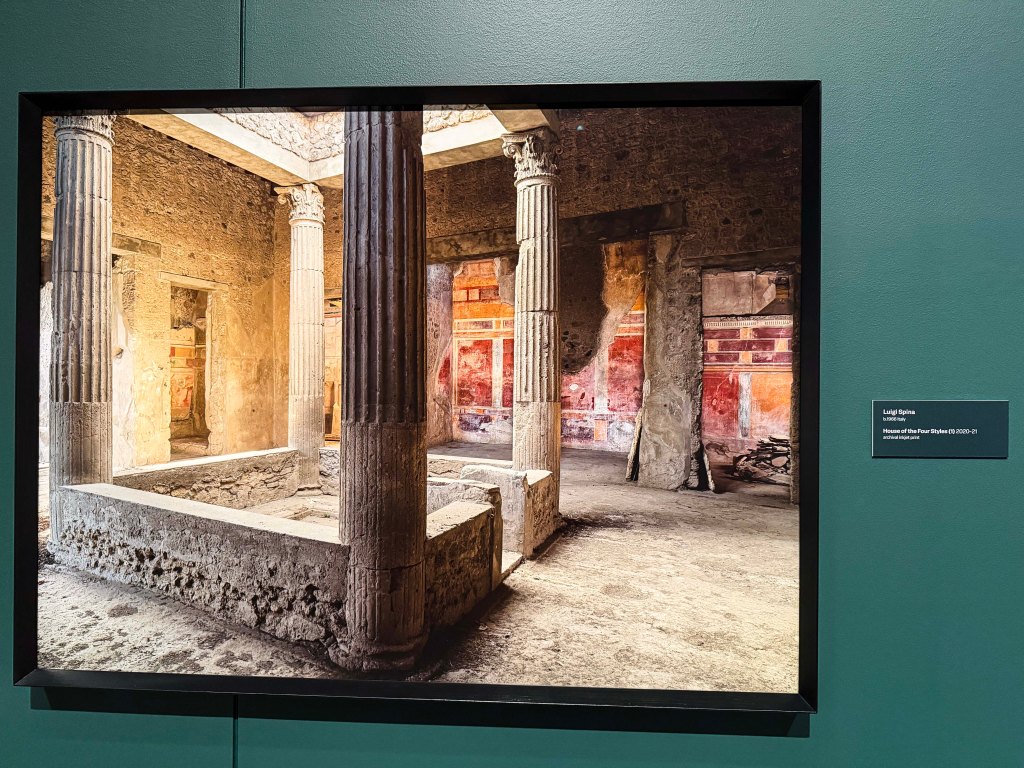
Elsewhere, photographer Luigi Spina offered a quieter meditation. Renowned for his meticulous large-format photography, he brought remarkable clarity and stillness to the preserved spaces of Pompeii. Through luminous detail and restrained composition, he transformed archaeological remains into something more than historical artefacts. The past felt not distant but quietly present, as though two thousand years had folded into a single moment.
At this point, the narrative requires an unexpected detour to Pacific Fair. The reason was photographic rather than commercial.
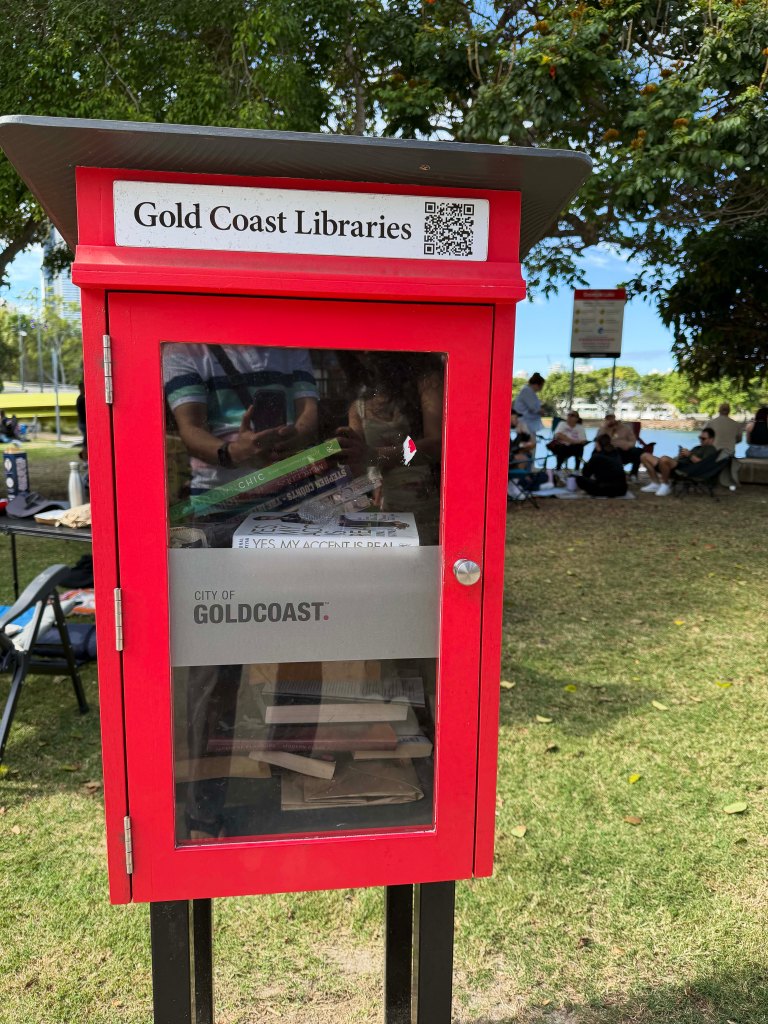
During one of the journeys between the Airbnb and the outside world, I was stepping out of the lift when a group of tourists hurried in. There was a sharp plasticky clang. Fearing for the safety of the lens hood, I turned around, only to discover that the casualty was the lens cap. As I stood with one foot in the lift and the other in the lobby, I conducted a frantic visual search around the shoes of the new arrivals, who appeared blissfully unaware that a photographic emergency was unfolding in their midst.
It did not take long to discover the truth. The slim lens cap had slipped neatly through the gap between the lift and the floor and departed for regions considerably deeper than the basement. Thus ended its Australian holiday.
In the hope of finding a replacement, I sought advice from the gentleman selling binoculars at the beachfront market. He directed me towards Pacific Fair, assuring me that the mall possessed a respectable assortment of camera shops.
A taxi delivered us to the famous shopping centre. Pacific Fair proved to be far more than a mall. With its lagoons, palm-lined walkways, bridges, and open-air plazas, it resembled a subtropical resort where shopping appeared almost incidental to the experience.
At this point my companions departed on matters of retail significance, leaving me alone with an uncapped lens and a mission.
Google Maps and I have occasionally enjoyed differences of opinion concerning geography. On this occasion, my search for Ted’s Cameras produced a route that led me to a car park, back through another entrance, and to approximately the same location from which I had started. The excursion covered no less than 750 metres and greatly expanded my knowledge of Pacific Fair without bringing me noticeably closer to a lens cap. As I approached my original starting point, I looked up and found myself standing directly in front of Ted’s Cameras. The store was no more than twenty-five metres from the spot where I had originally been appealing to Google Maps for assistance.
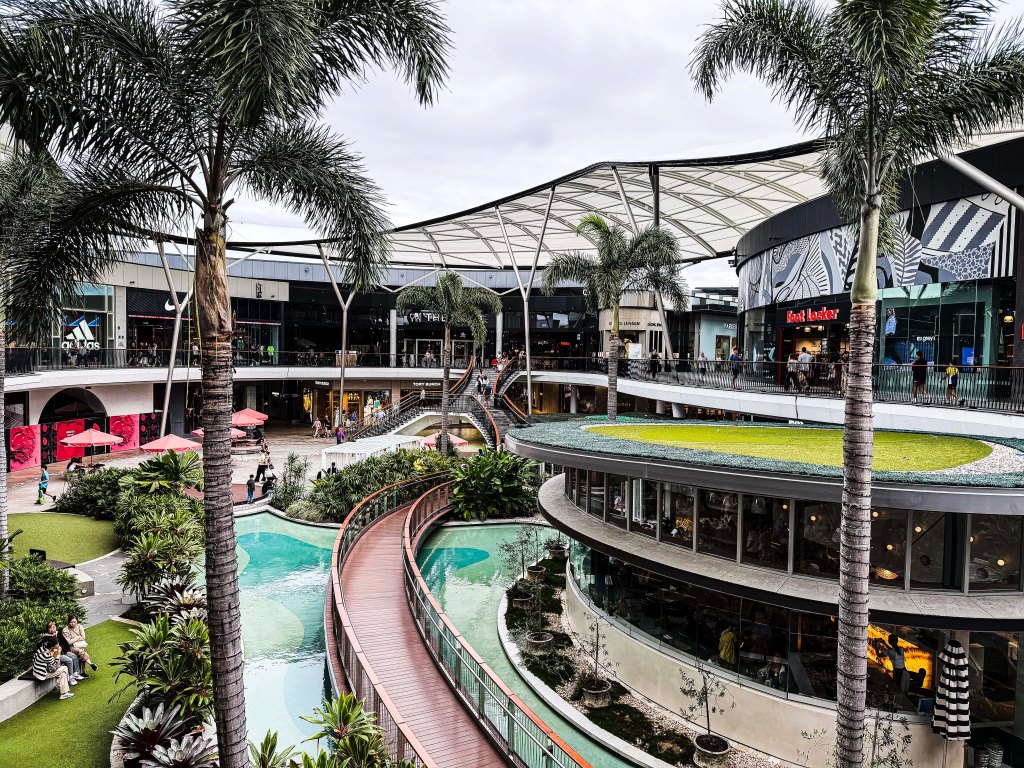
Ted’s did not have the Nikon lens cap I was seeking, but they produced a third-party replacement that fitted perfectly well. The crisis was therefore downgraded from tragedy to inconvenience. I was reunited with the rest of the squad in the food court.
From Pacific Fair, we booked another cab for Burleigh Heads. We thought little of it when Uber informed us that Julianna would be our driver. It therefore came as a pleasant surprise to find a septuagenarian behind the wheel.
With four of us travelling together, the front passenger seat naturally fell to me. Before long, Julianna and I were chatting like old acquaintances. Perhaps I flatter myself. More likely, she was one of those genial souls who can strike up a conversation with anybody.
At one point she proudly pointed out her home in Broadbeach, marked by a large house symbol on the map displayed on the console. She was pleased that the entire family was travelling together. The conversation drifted easily from the Gold Coast to her son in the United States and the shortcomings of what she described as the country’s “broken medical system”. Throughout the journey she punctuated minor surprises with a cheerful “O, Shivers!”—whether prompted by a changing traffic light or an impatient pedestrian testing the boundaries of civic discipline. She quickly grasped our plan for the evening: complete the Oceanview Walk and then settle somewhere overlooking the beach to watch the sunset. Concerned that we might run out of daylight, she proposed dropping us near the top of the route so that we could work our way downhill.
As we approached a steep side road branching off to the left, she reconsidered the logistics and decided to deliver us even closer to our objective. What followed was an ambitious turn on a gradient that appeared to have been designed as a challenge rather than a road. The car came to an abrupt halt at an angle that suggested gravity had suddenly become a participant in the proceedings.
“O, Shivers!”
Julianna immediately announced that she would never attempt such a manoeuvre again. A series of careful back-and-forth adjustments followed, after which the vehicle was restored to a more conventional relationship with the road. We all seemed relieved by the outcome.
Just then, a pair of wild turkeys wandered uncertainly across the street. Julianna chuckled, observed that she would quite like them for Christmas dinner, and drove off.
“O, Shivers!”
This time it was our turn to say it.
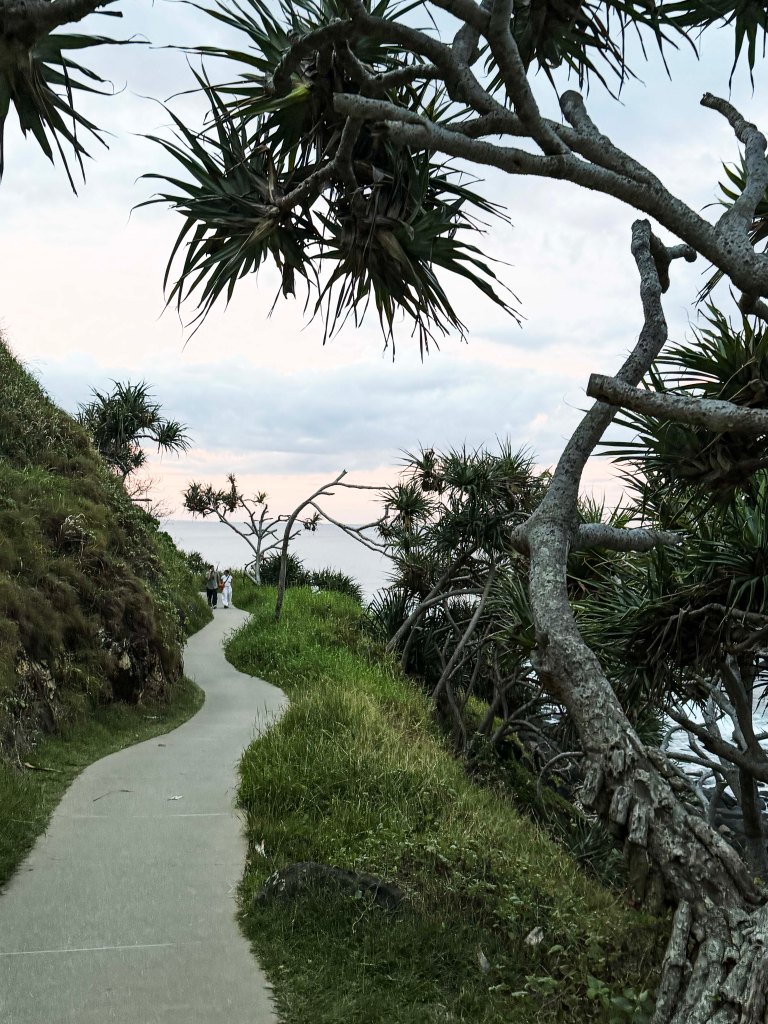
We began the Oceanview Walk from the grassy slopes near the northern side of the headland, where locals and visitors alike had settled themselves facing the sea. The path climbed gently through pandanus groves, revealing intermittent glimpses of the Pacific beyond. To our left, surfers rose and fell with the swell, appearing from a distance as dark specks adrift upon a vast sheet of blue-grey water. Absorbed in the easy rhythm of a holiday evening, we wandered on for perhaps the better part of a kilometre, scarcely conscious of either distance or time.
It gradually dawned on us, however, that the real theatre of the evening lay behind us. The broadest sweep of ocean, the gathering crowd, the Surfers Paradise skyline, and whatever colours the evening still had to offer were all concentrated near the headland. We therefore turned back.
The decision proved a fortunate one. Even as we retraced our steps, distant towers caught the last rays filtering beneath the cloud cover and began to glint across the water, while the sky softened into shades of pink and amber. Surfers drifted beyond the break. Along the grassy slopes and rocky shoreline, people took up their accustomed vantage points as though awaiting a performance they knew by heart. The evening unfolded in delicate layers between light and darkness. There was no dramatic sun sinking into the sea, only glowing clouds, silvered waves, and a skyline gradually dissolving into silhouette.
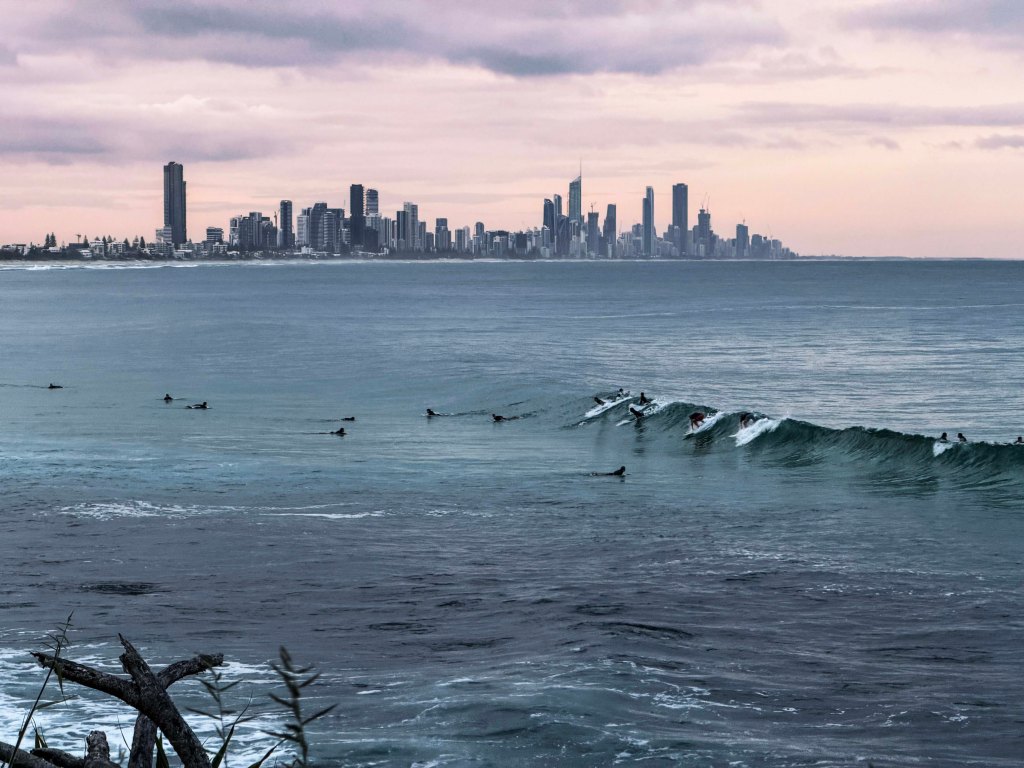
Afterwards, we lingered at a café near the point where the beach begins, reluctant to bring the evening to a close. By then, the day had settled into that agreeable languor peculiar to holidays. To our surprise, someone wished R a happy Mother’s Day. A little later, a young couple accompanied by two children stopped to compliment her.
The compliments directed towards R remained something of a mystery until we examined the available evidence. The most convincing explanation was the substantial shopping bag she carried from Pacific Fair. It lent her the air of someone who had recently returned triumphant from Pacific Fair.
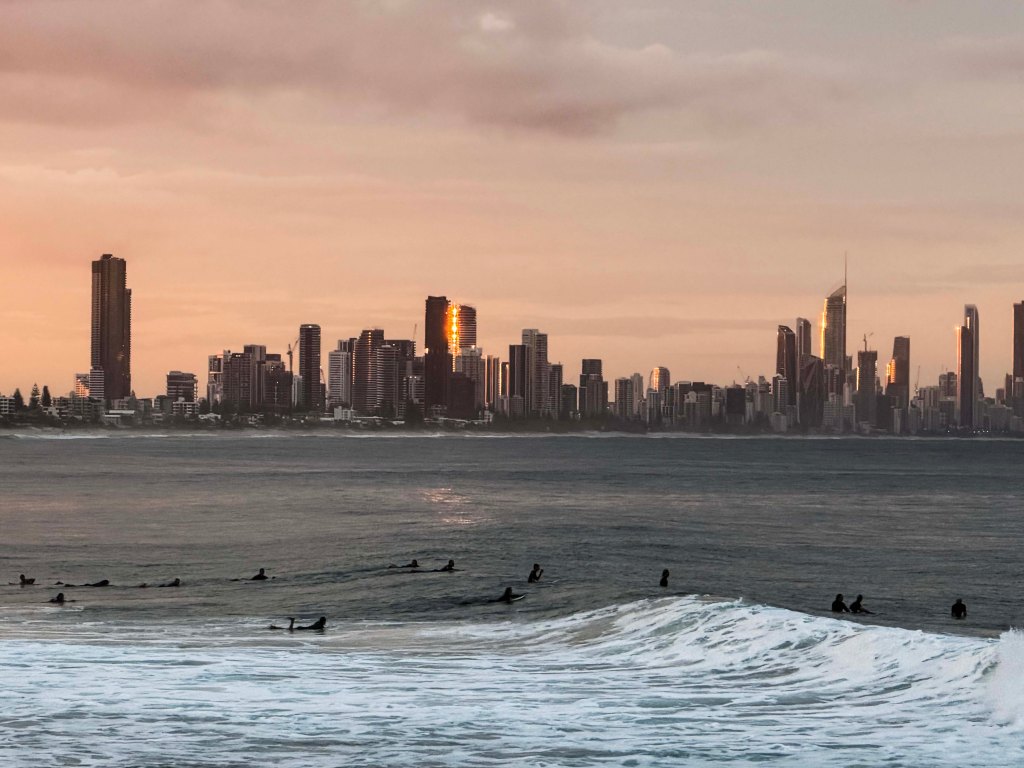
Over coffee, we struck up a conversation with a group of locals who seemed genuinely pleased that we had chosen to explore their corner of the Gold Coast. Later, we wandered back towards the headland and watched the last traces of colour fade from the sky as the lights of the coast began their nightly ascent.


Another beautifully written travelogue. Despite the unwelcome nature of the Airbnb and the lens cap inconvenience a good time, and no shivers, was had by all.
We truly had a glorious and peaceful stay at the Gold Coast. As Julianna would say, “No shivers!”
Thank you so much, Derrick.
Such a wonderful read. My favorite photos were the White Rabbit Collection art piece (the contrast of color was striking) and those gorgeous skyline shots at the end.
Thank you. The exhibits from the White Rabbit Collection were thought-provoking. Particularly memorable were the Korean River of Language and the suspended city of spires. Afterwards, the skyline of towers viewed from Burleigh Heads at sunset seemed to possess a similarly dreamlike quality.
O, Shivers! What another literary-visual treat!
Mr Pandey is at his evocative best once again.
It is not always WYSWYG—What You See Is What You Get—when one books accommodation online. The photographs invariably showcase the best angles, the most flattering lighting, and occasionally even the most ‘non-existent’ views, all designed to lure unsuspecting travellers in search of the perfect bargain. It was therefore reassuring to know that, despite the apartment’s rather conceptual dimensions, the Gold Coast itself more than compensated for any shortcomings.
The finest part of this travelogue—indeed, there are two such parts. O, Shivers! How could I almost overlook one of them?
The first is Mr Pandey’s beautiful reflection on the relationship between the ocean and the skyline. That passage resonated deeply with me because I hail from—and continue to live beside—one of India’s most celebrated coastlines, the Marina in Madras (now Chennai). Standing on the shore with the waves gently washing over one’s feet while contemplating the distant horizon—wondering where the ocean ends and the sky begins—has always been one of my favourite philosophical pastimes.
O, Shivers! I seem to have interrupted this review with a little autobiographical indulgence.
Perhaps that is precisely what a fine travelogue ought to do: awaken memories that the reader did not realise had been quietly waiting to resurface.
Spending an unhurried evening gazing at the Pacific, followed by a Sunday immersed in the easy rhythm of HOTA, the cheerful cacophony of the Sunday market, and the unexpectedly dramatic mission to replace the Nikon lens cap—these are the moments that truly define a family holiday. Long after the famous landmarks fade from memory, it is these seemingly insignificant episodes that will be retold to the third generation with laughter and affection.
Now comes the second highlight. O, Shivers! “Second” refers only to the order of mention—not to its rank.
Who would expect to find a cheerful septuagenarian lady driving an Uber with such confidence, engaging complete strangers in warm conversation, punctuating every minor surprise with her delightful “O, Shivers!”, and then casually expressing her culinary interest in the wandering wild turkeys? Julianna became far more than a driver; she emerged as one of those unforgettable characters whom every memorable journey somehow manages to produce.
Although this chapter unfolds at a gentler pace than Melbourne, it demonstrates how Australia’s landscapes—and experiences—transform effortlessly with every passing day. The frenetic rhythm of Melbourne gives way to the contemplative cadence of the Gold Coast, proving that a memorable holiday is not measured by the number of places visited, but by the quality of moments absorbed.
A wonderful literary-visual treat, once again.
Looking forward eagerly to the next chapter of Mr Pandey’s Australian odyssey. Thank you, Mr Pandey.
P.S.: May I suggest that once you are through with your posts on your Australian vacation, you publish this series into a book!!
Mixing economics with adventure when choosing accommodation online can sometimes lead to surprises that are not altogether pleasant. Fortunately, we had no intention of dropping anchor indoors. Given the beauty, tranquillity, and sheer richness of the Gold Coast, we could almost have spent our nights in the trenches and still considered ourselves none the poorer.
I am delighted that my reflections set you brooding. I could almost picture you standing at the water’s edge of the Marina, your eyes fixed on the distant horizon.
Julianna has fused with our memories of the Australian tour at an almost genetic level. We were fortunate to spend considerable time interacting with several people on the Gold Coast, thanks to the leisurely pace of our stay there, and we emerged all the richer for it.
Thank you for your effusive praise of both my writing and the photographs. It will do my confidence a world of good.
Once again enjoyed the narration.
It required a second read to get all the nuances and the hidden humour. The challenges you faced to get entry into the house remind me of our tour to Milan a couple of years back. Of course the fault was ours. It was a digital key and I was too impatient to wait for my wife to retrieve my spectacles from her hand bag that contained a million items.
The photos too are great. Some of the plants look familiar in the sense they resemble plants found in India. I am not sure. The one on the winding mountain road looks like a famous plant found in plenty in Odisha. It is called Kia in our language and its flower is raw material for a kind of perfume.
However, your narration is more interesting than the photos. Maybe the saying that a picture is worth a thousand words is not always true. And good that you did not photograph the work of the artist.
I am grateful that you reread the travelogue and reached its heart. Your Milan experience is deeply relatable—the excitement of landing in a scenic destination suddenly pitched against the loss of your glasses somewhere inside the mysterious assortment of objects in a lady’s handbag. The completely hands-off approach of Airbnbs can indeed be unsettling in a crunch.
The Australian Pandanus possesses a rugged, windswept elegance. It appears almost like a natural sculpture, perfectly suited to Australia’s open beaches and brilliant skies. The kewra, or kia, by contrast, offers a subtler beauty. Its greatest charm is not visual but olfactory. They are close relatives who differ in species, appearance, habitat, and cultural significance.
That is a touching compliment you have paid my writing. Thank you ever so much.
A great read Uma, from the beginning horror of the basement to the wide ocean and skies of Surfer’s Paradise, you have transported us beautifully.
It has been but my humble ambition to transport my readers to the places and moments I recount. Your comment couldn’t have rewarded me more. Thank you, Andrea.
A most delightful and detailed description. I am always fascinated by descriptions of places in Australia that I have avoided, especially when the visitor is from another world. Thank you.
I am delighted to have offered you a new perspective. Thank you for reading.
Shiver me timbers – the classy, wonderful tour continues!
It was indeed a wonder to us. Thank you.
My first comment would not post, so I shall try this again.
‘The kitchen appeared to occupy a conceptual existence.’ That is a great sentence, as well as those that followed.
Perhaps the airbnb accomplished one thing, to ensure that no one would be tempted to stay indoors and cocoon in its opulence.
I always love your photography, especially the shots of the sky and the horizon, which never let you down.
The accommodation on the Gold Coast was something of a let-down and did little to encourage staying indoors, though we hadn’t planned to do much of that anyway. Thank you for stopping by and leaving your comment.