(Further to Conversations with Sydney)
To understand Sydney fully, one must eventually leave it.
It is not how you reach the Blue Mountains that matters, but simply that you do. Few great cities are privileged to have such an immense wilderness at their doorstep: a vast World Heritage landscape of blue-hazed eucalyptus forests, sheer escarpments and deep valleys. Once the sandstone barrier that confined the infant colony to its harbour, these mountains have since become Sydney’s untamed companion, shaping both its history and its soul.
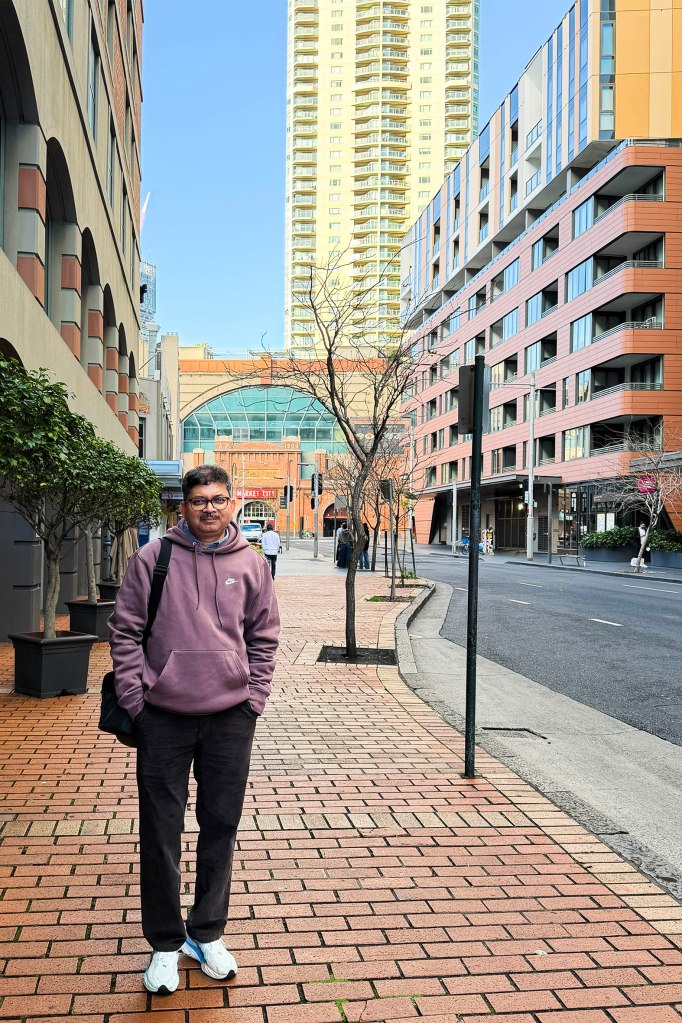
We chose to reach the Blue Mountains on a guided tour, leaving Hurstville at dawn. By eight o’clock we were at the pick-up point on Harbour Street near Haymarket. In my eagerness not to miss the coach, I had paid an unnecessarily hasty visit to the restroom before leaving Hurstville. Faced with a long journey ahead, I was already beginning to regret it. A kind concierge at the nearby Oaks Goldsbrough Suites unlocked a staff-controlled washroom with her swipe card and wished me a pleasant journey. It was a small courtesy, but one I remember as warmly as the day’s grander experiences.
I was mildly disappointed to discover that there was no passenger seat beside the driver. On earlier journeys, I had often found that the seat beside the driver offered both the best conversations and a cinematic view of the passing countryside. Somewhere between the miles, maps and anecdotes, strangers became acquaintances. This time, Alfie’s commentary drifted from the front of the coach while I sat several rows behind with my family. That easy companionship never quite had the chance to grow.
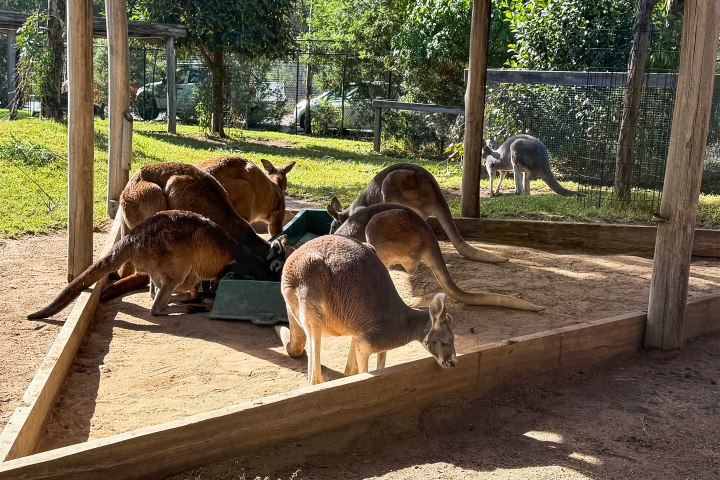
V, who had booked the tour, had quietly kept the itinerary to herself, so I was pleasantly surprised when our first stop turned out to be Sydney Zoo at Bungarribee. The unexpected detour awakened the child in me. The twins, meanwhile, looked forward to another rendezvous with koalas and kangaroos, the poster boys of Australian wildlife, and they were not disappointed. Beyond these celebrated ambassadors of Australian wildlife, an equally intriguing supporting cast awaited us—lizards, turtles, snakes, fish and other native creatures that seldom feature on postcards. Particularly fascinating in a faintly lit enclosure was a congregation of emerald frogs, motionless upon a fallen log. They looked as though they had been waiting since the age of dinosaurs for visitors to notice them.
Alfie ensured that none of us should leave Australia without becoming minor experts on koalas. “Koalas,” he declared, “were Australia’s most dedicated specialists.” They survived almost entirely on eucalyptus leaves, slept for most of the day, and left an astonishing quantity of dry pellets beneath their favourite trees. It was difficult to tell whether he admired them or simply delighted in recounting their eccentric habits, but his enthusiasm was infectious.
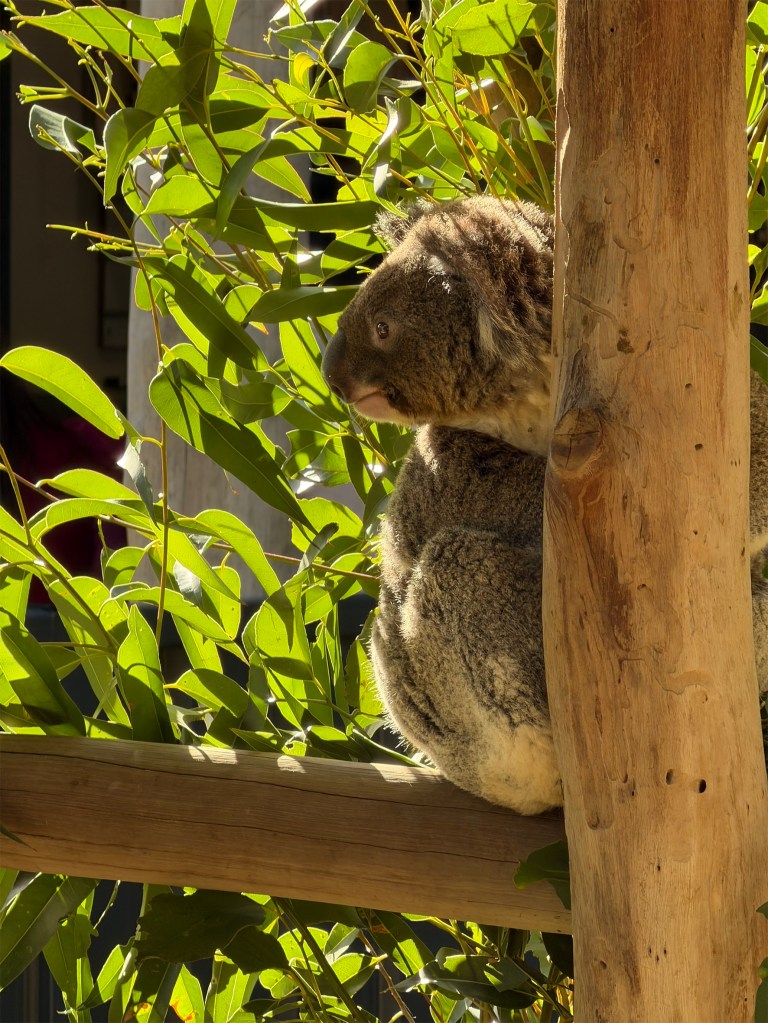
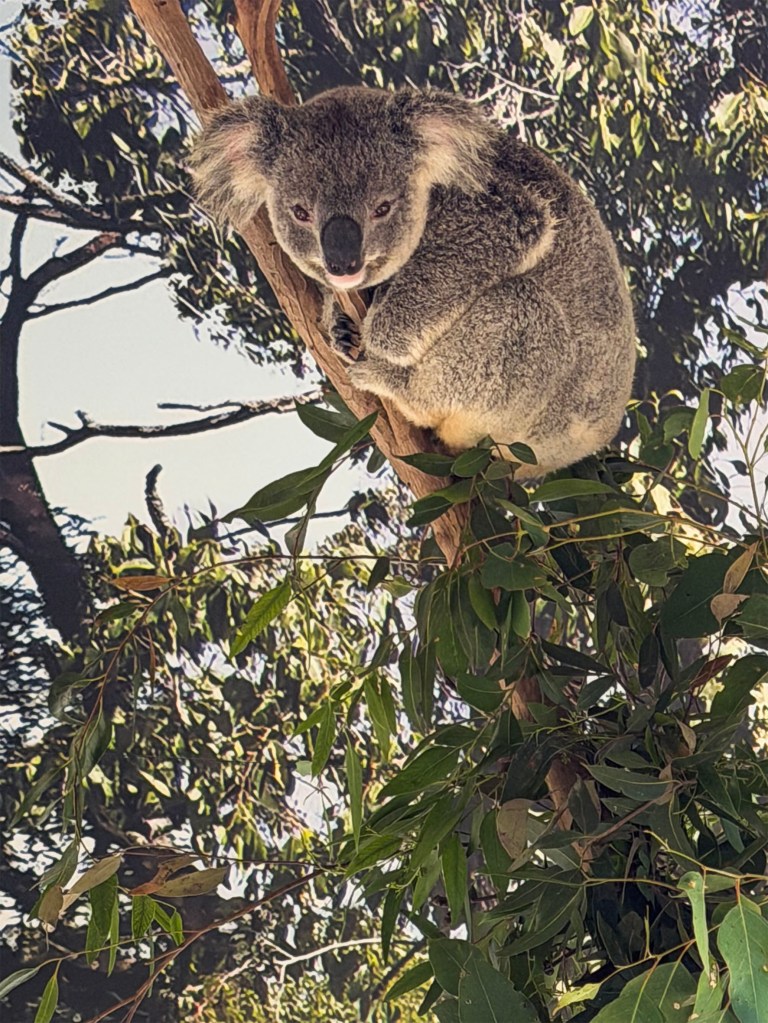
We also learnt that, in New South Wales, admiring a koala was perfectly acceptable—touching one was not. We settled instead for a photograph beside a remarkably patient koala perched upon a branch. Since it was included in our tour package, each of us took a turn beside the celebrity.
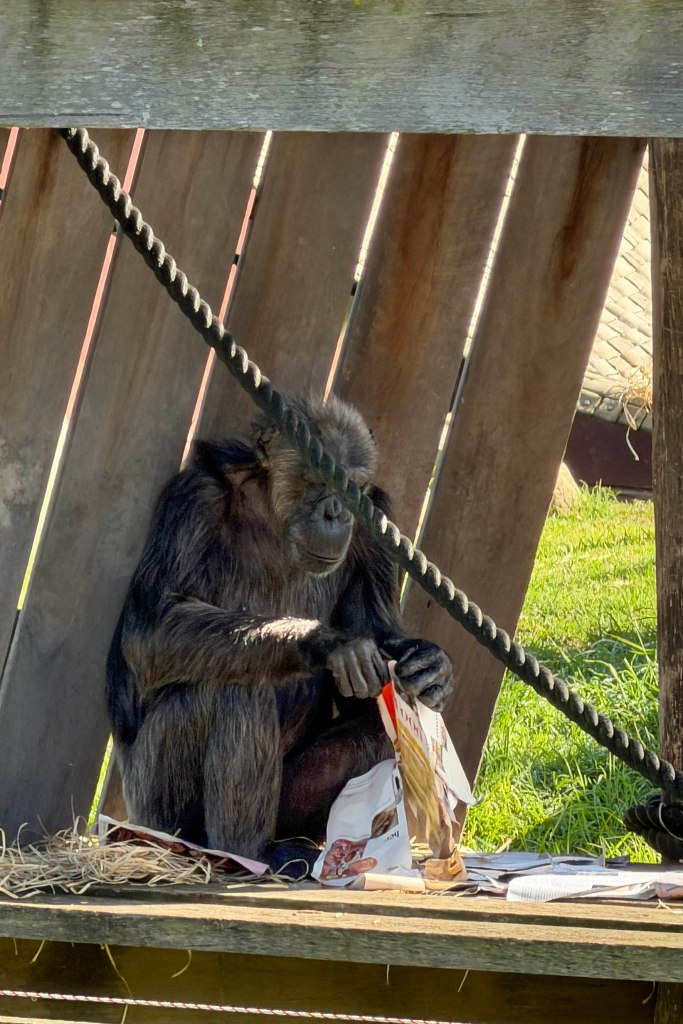
Before we exited the zoo, we were delighted to encounter a chimpanzee in a spacious habitat well suited to his restless temperament. Seated with a philosophical air about him, he was methodically tearing apart a magazine, as though delivering a withering verdict upon its contents. It was easy to imagine him grumbling, “I asked for National Geographic, not celebrity gossip.”
The road ahead soon lulled me into a brief late-morning nap, despite my efforts to keep watching the countryside slip past the window. My drowsiness was punctuated by Alfie’s occasional quips over the speakers, including an elaborate claim that he was about to inherit four million dollars from his grandfather. By the time I opened my eyes, the coach was rolling into Leura.
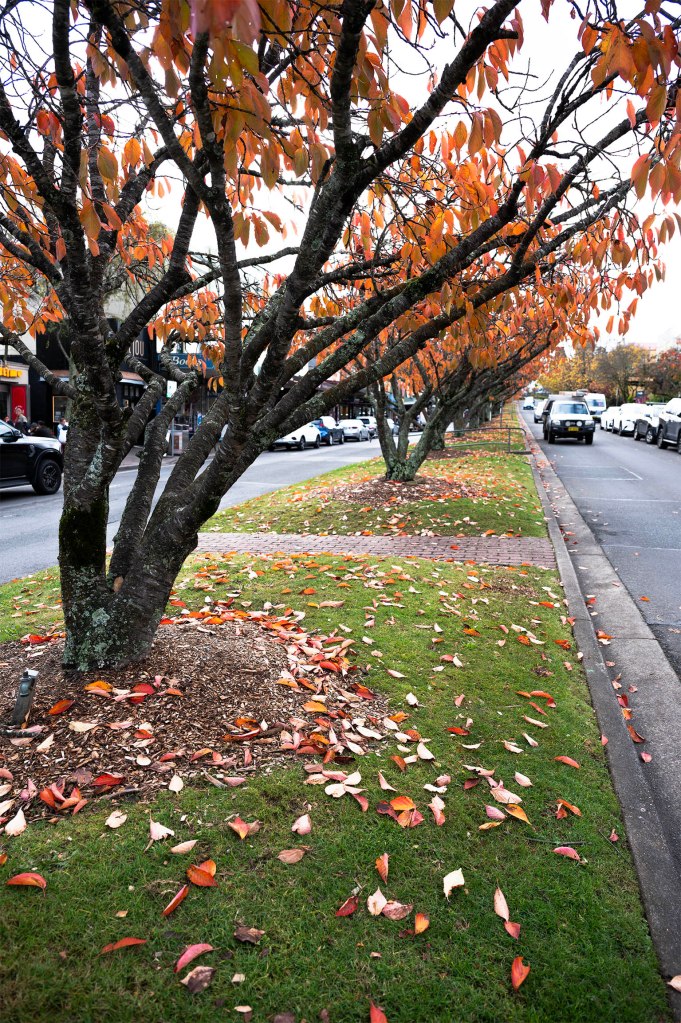
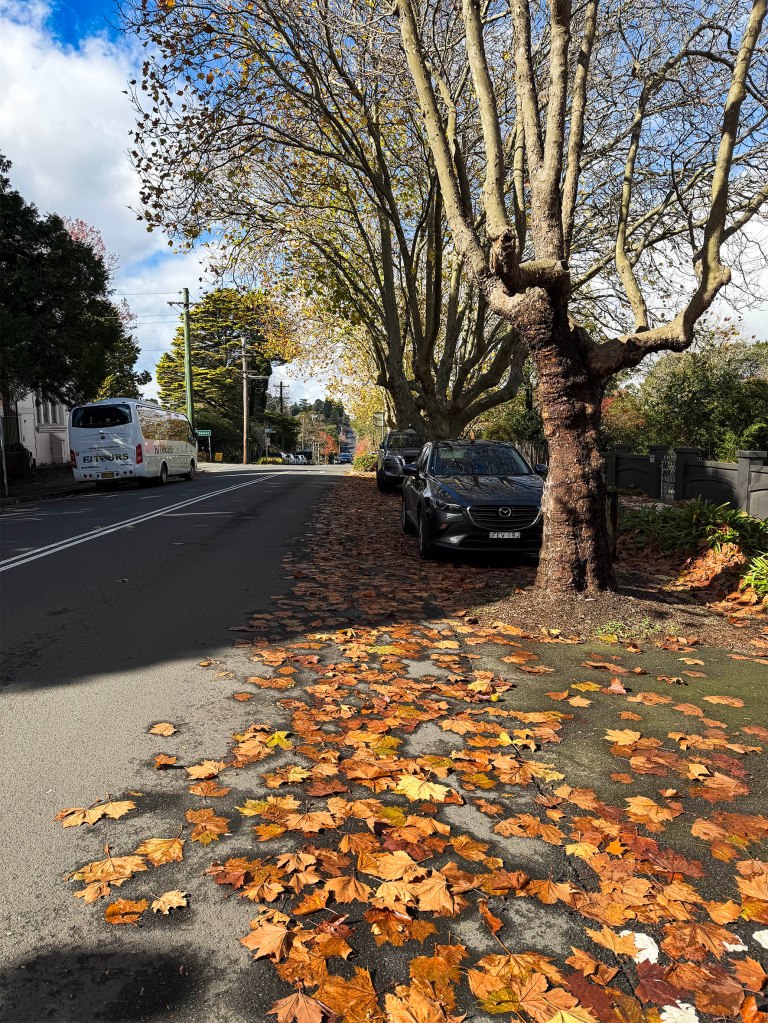
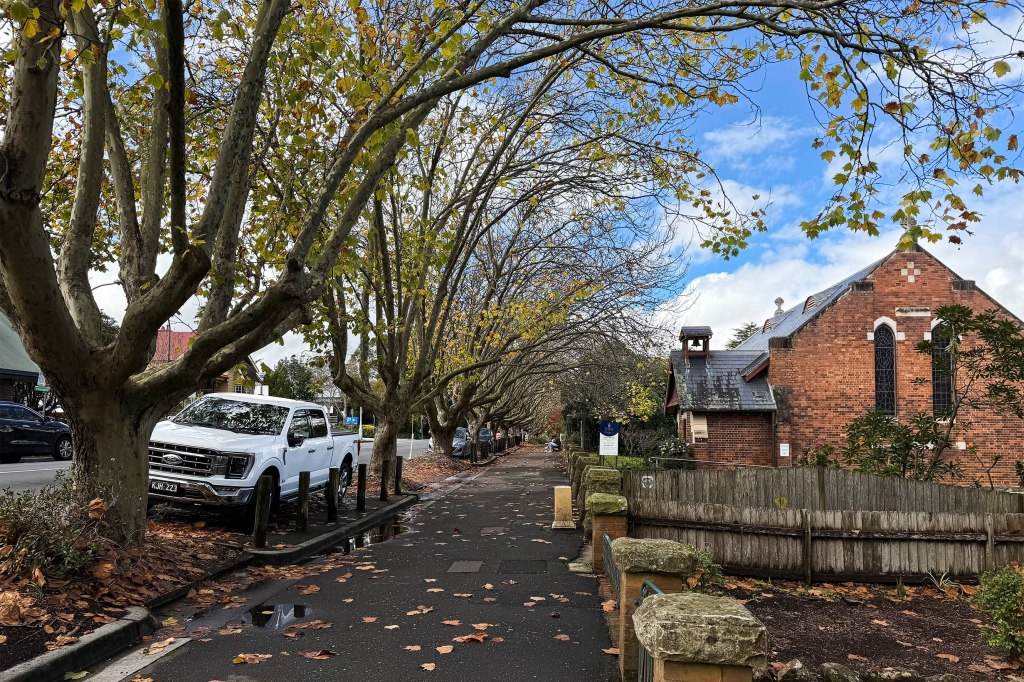
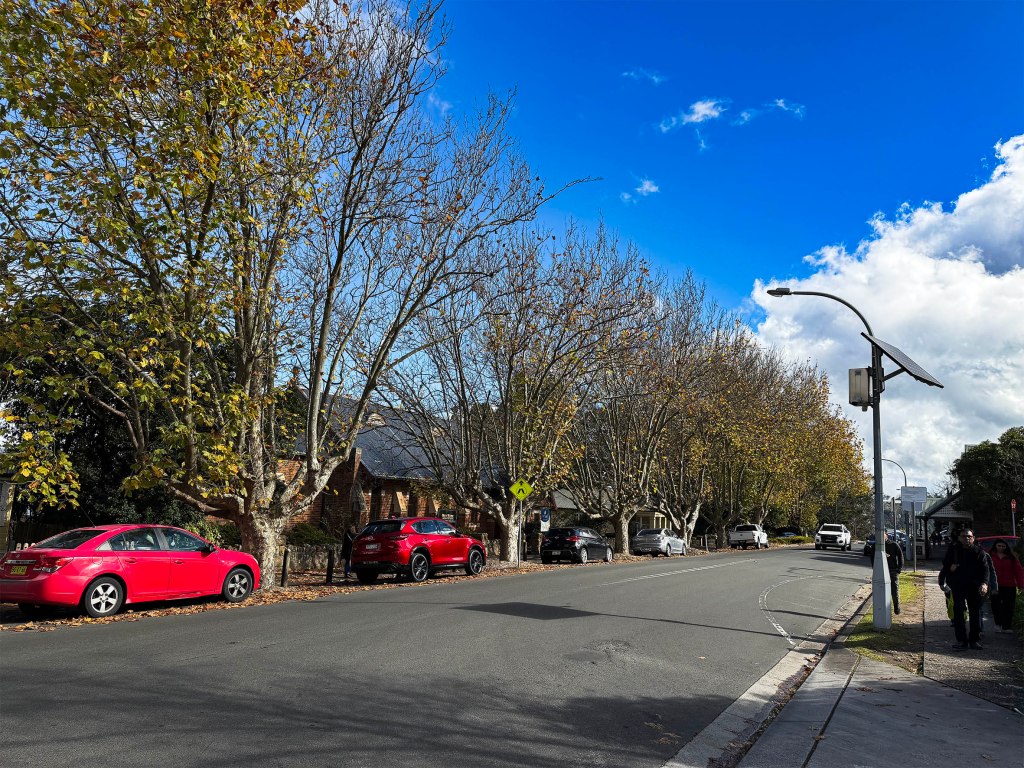
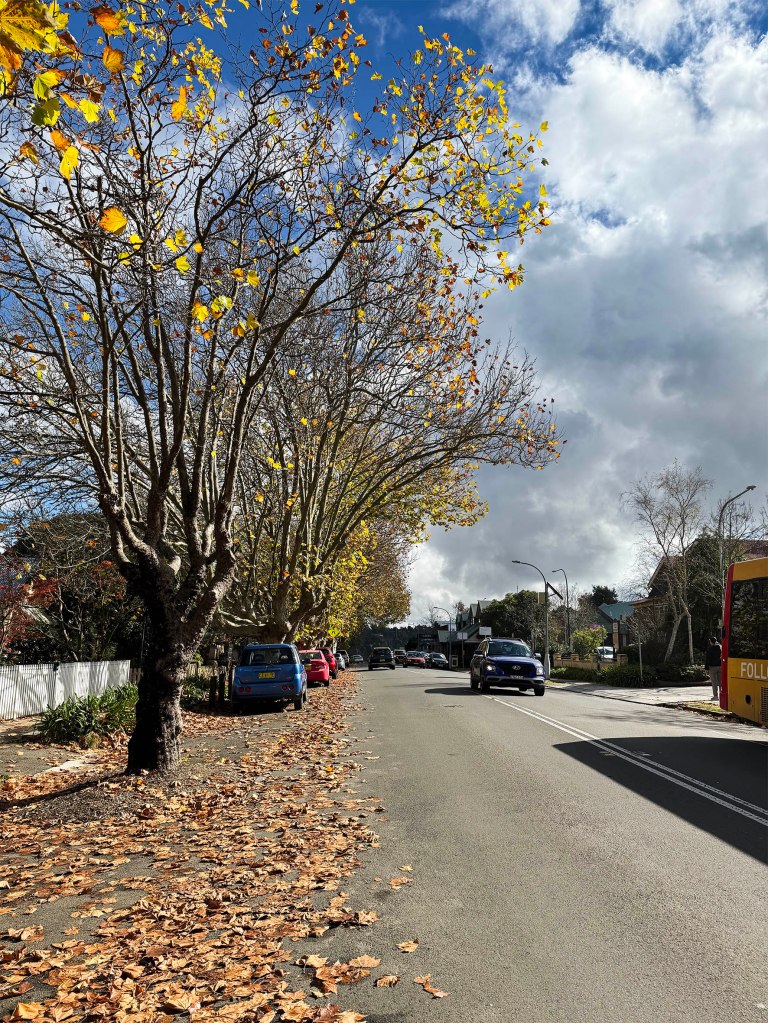
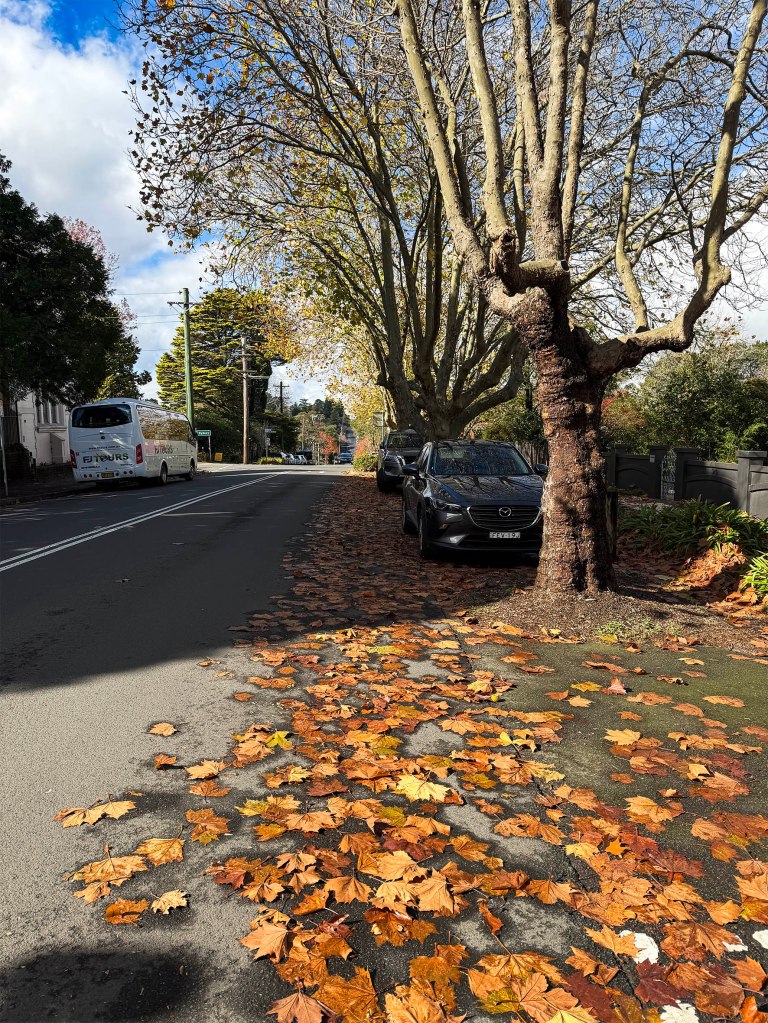
Leura in autumn possessed a beauty that seemed borrowed from distant lands, yet belonged nowhere but here. Along the broad median of Leura Mall, Kanzan cherries stood in graceful ranks, while elsewhere liquidambars, maples, elms and London planes had arrayed themselves in crimson, orange, gold, bronze and russet. Fallen leaves lay scattered across pavements and gardens, cushioning every footstep with autumn’s signature.
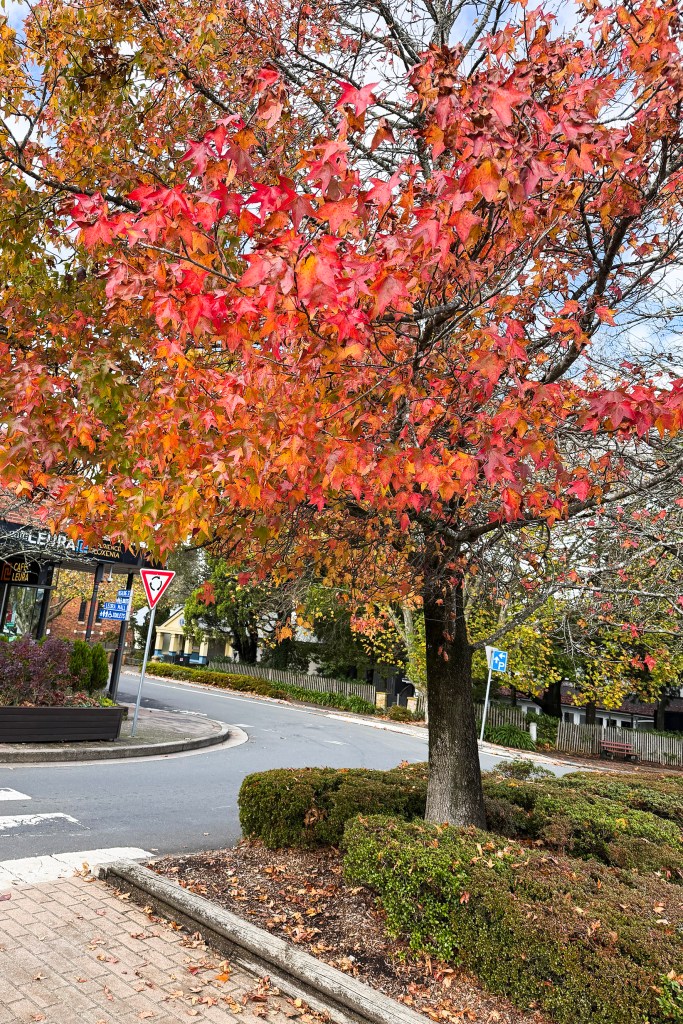
The weatherboard cottages and old bungalows of Leura possessed an old-world elegance. Their verandas were framed by flowering shrubs and mature trees, while well-tended gardens softened the boundaries between home and street. Churches, cafés, bookshops and little curio stores lined the avenues with an unassuming charm, inviting neither haste nor spectacle. There was something almost apologetic about arriving as a visitor, as though one were briefly interrupting the gentle rhythm of a mountain village that had long ago learnt the art of living unhurriedly.
More than the beauty of Leura, what fascinated me most was the ease with which it held together seemingly distant worlds. Its streets possessed the unmistakable air of an English village. The autumn palette evoked memories of New England and Japan. Yet beyond the cottages rose the vast blue-green wilderness of the Australian bush. Nothing felt borrowed, nothing contrived. Peculiarly antique yet quietly contemporary, it possessed a grace that was difficult to forget.
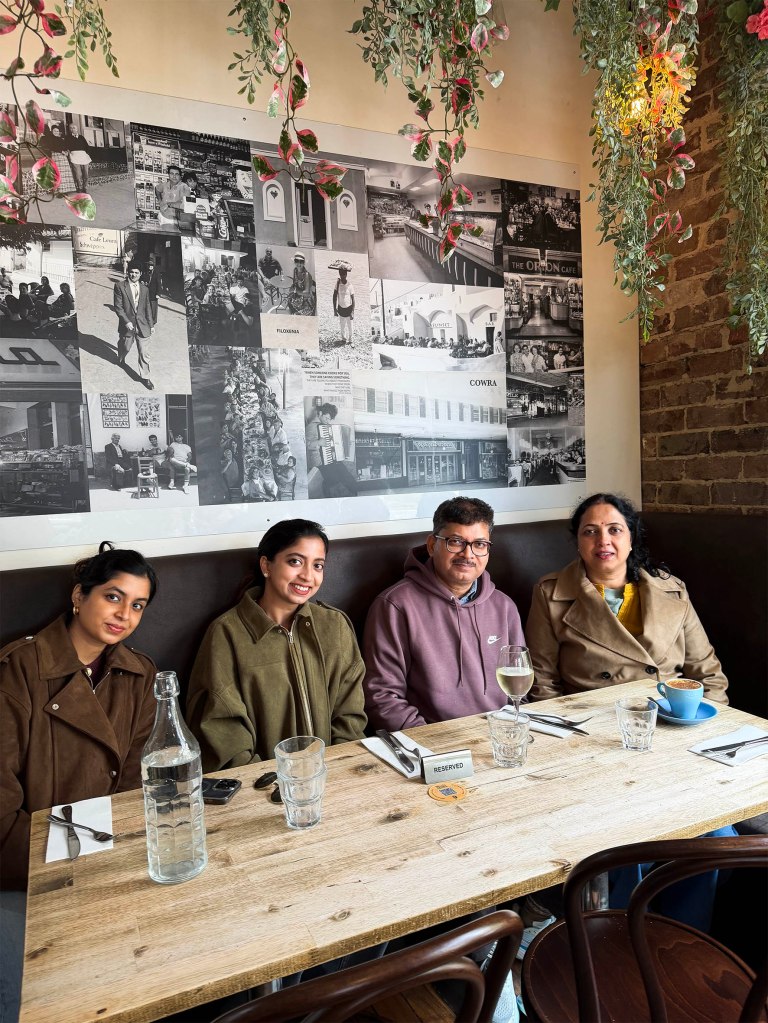
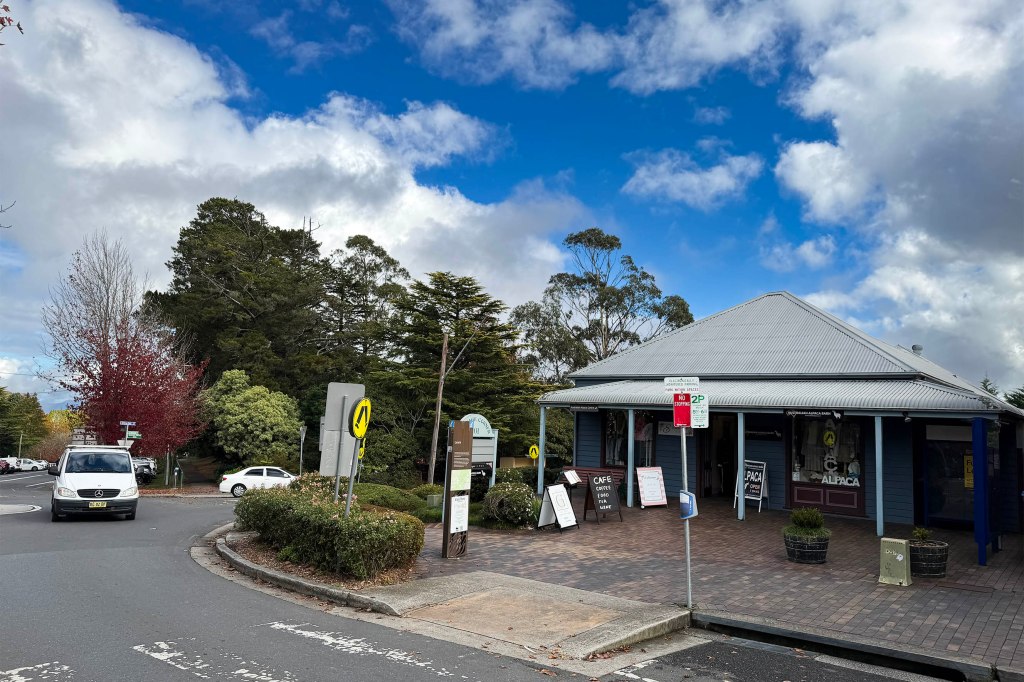
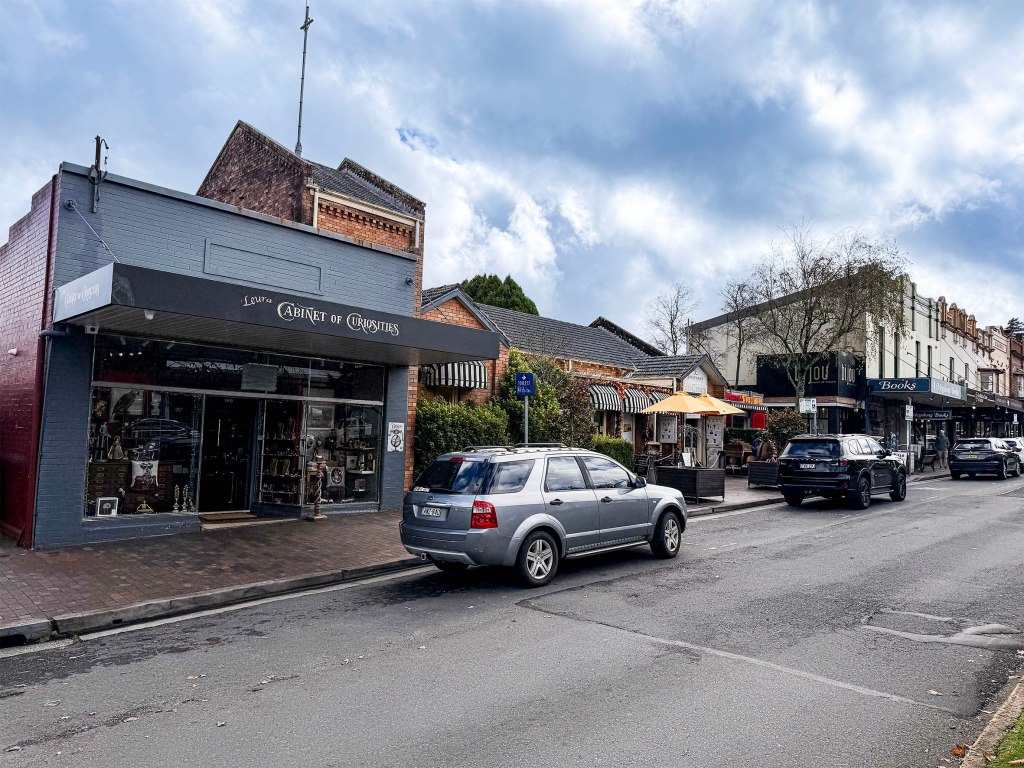
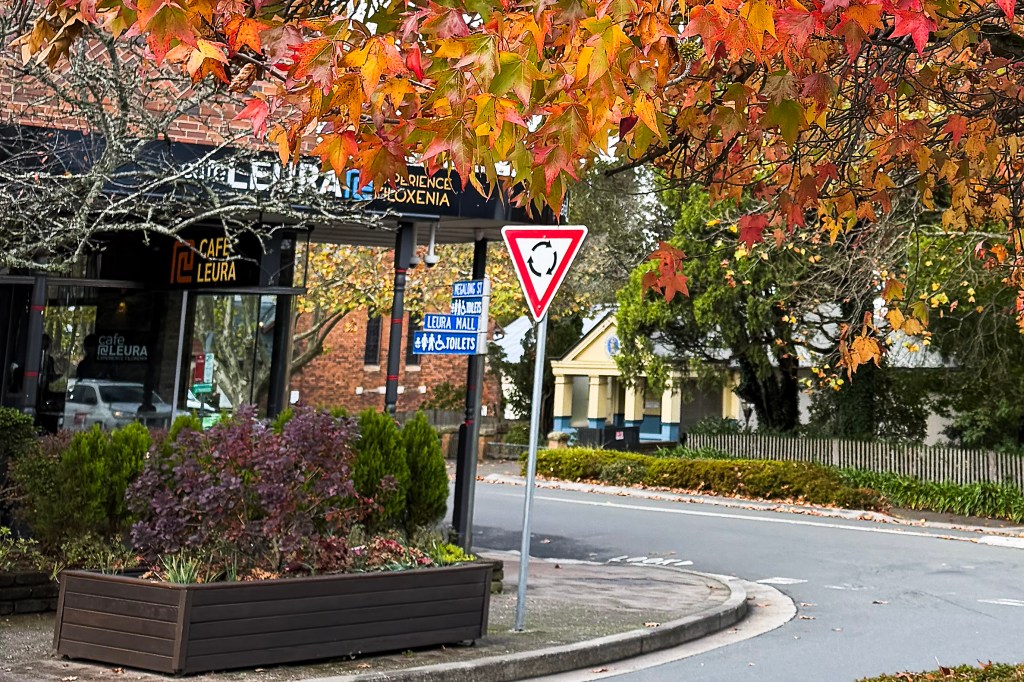
We lingered over brunch at Café Leura, perched prominently at the corner of the main avenue. Choosing a table at the back, we found ourselves beneath a wall covered with old photographs that chronicled the café’s own journey through the decades and, in doing so, narrated the story of Leura itself. In Leura, history seemed as much a part of brunch as the coffee itself.
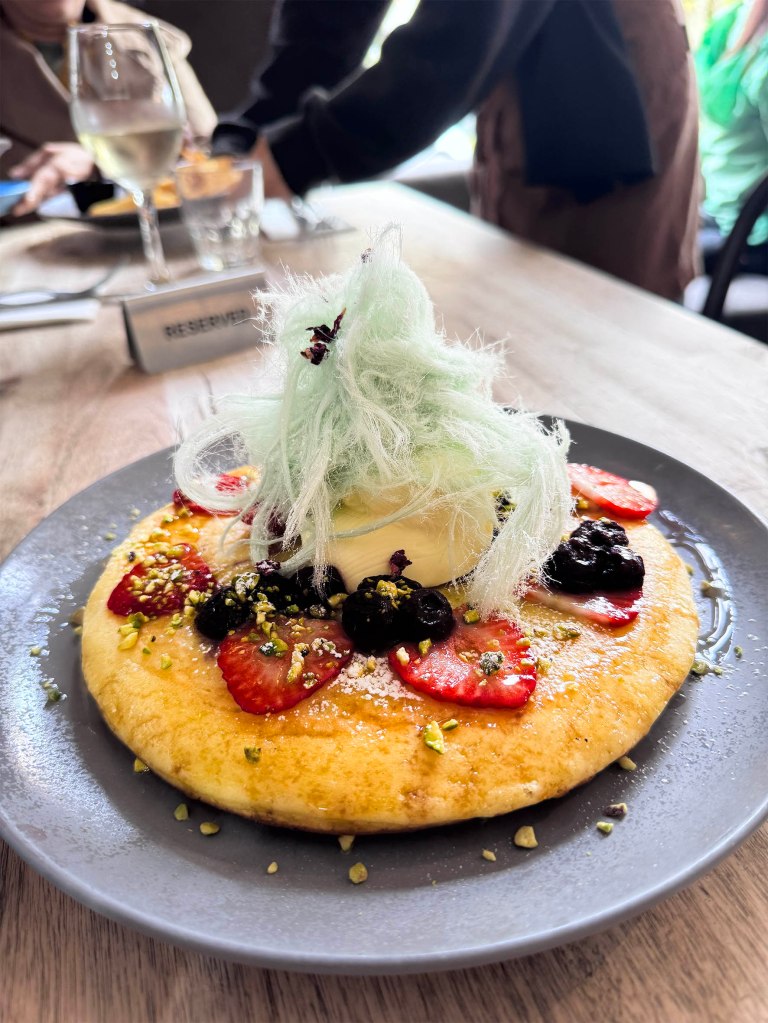
Café Leura’s menu was as inviting as the streets outside. Between us, we ordered a Mediterranean nourish bowl, avocado toast, ricotta and lemon pancakes, piccolos, cappuccinos and a glass of Pinot Grigio. Every dish arrived beautifully presented and disappeared with equal enthusiasm. While our meal was being prepared, I asked one of the cheerful attendants if she might take a family photograph. She readily obliged, capturing a series of images that have since become cherished souvenirs of our time in Leura.
Long starved of a proper autumn, I briefly abandoned my family and set off in pursuit of Leura’s colours. Alfie had allowed us only a limited time, and every passing minute felt borrowed. I hurried from one avenue to the next, from tree to tree, photographing blazing canopies overhead and the coppery carpets beneath my feet. Every few moments I paused to adjust a polarising filter, refine the composition or chase a more pleasing light, before hurrying on again.
Only after I had returned to the coach did an unwelcome thought strike me. In the excitement of the chase, I had forgotten to stop down the aperture—the one adjustment that would have carried sharpness from the foreground to the distant trees. There was no opportunity for an encore. The group had reassembled, Alfie was counting heads, and Leura, still glowing in its autumn splendour, quietly slipped away behind us.
Our next halt lay a short distance away at Olympian Parade. “About one hundred and fifty steps,” Alfie announced with the practised caution of someone who had delivered the warning countless times before. It hardly mattered. We would gladly have descended a thousand for our first glimpse of the Blue Mountains.
The staircase wound through open woodland fragrant with eucalyptus. With every turn the forest drew us deeper into itself, concealing whatever lay beyond. Then, almost without warning, the trees fell away.
Before us opened the Jamison Valley.
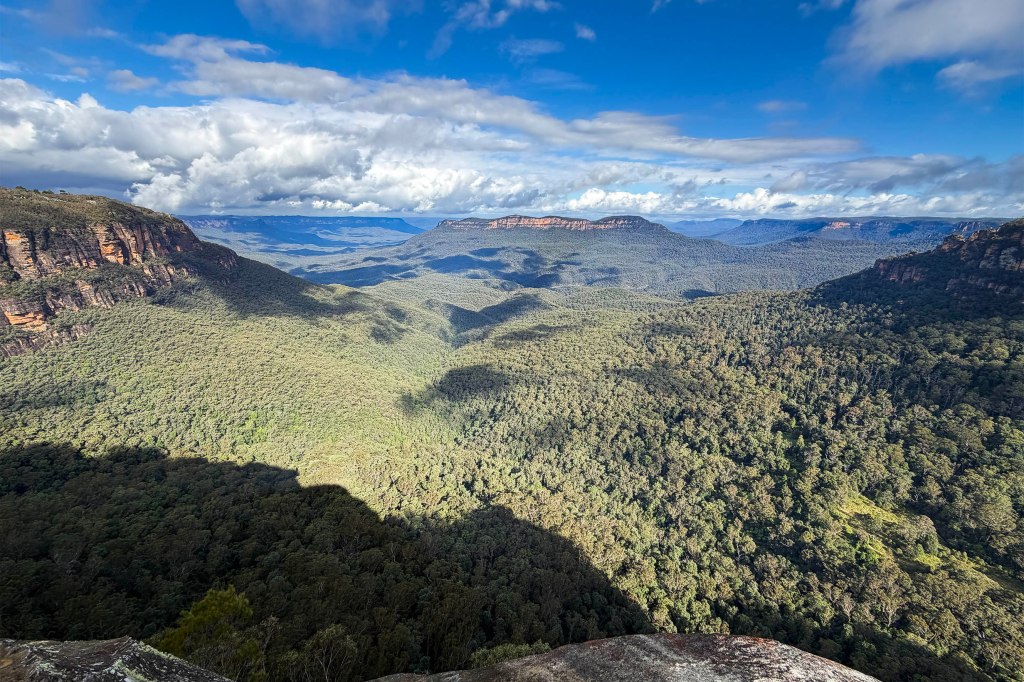
Layer upon layer of blue-green ridges dissolved into the horizon, their outlines softened by the blue haze that gives these mountains their name. Sculpted from ancient sandstone by millions of years of wind and water, the landscape possessed no sense of violence. It bore the signature of nature’s infinite patience.
Across the valley rose the broad, flat silhouette of Mount Solitary. To our right, the Three Sisters revealed themselves from behind—an unfamiliar, almost private perspective far removed from the celebrated view at Echo Point which we would later visit. Beyond them stretched the Narrow Neck Plateau, its sandstone spine disappearing into an unbroken sea of eucalyptus.
Like many remarkable landscapes, the Three Sisters have gathered stories around themselves. One of the best-loved tells of three sisters—Meehni, Wimlah and Gunnedoo—of the Gundungurra people, whose hearts strayed towards three brothers of the neighbouring Dharug. Tribal law forbade their union. As conflict loomed between the two peoples, a shaman transformed the sisters into stone to shield them from harm, intending to restore them when peace returned. But he fell in the battle that followed, and the secret of reversing the spell died with him. So the sisters remained upon the escarpment, keeping their eternal watch over the Jamison Valley.
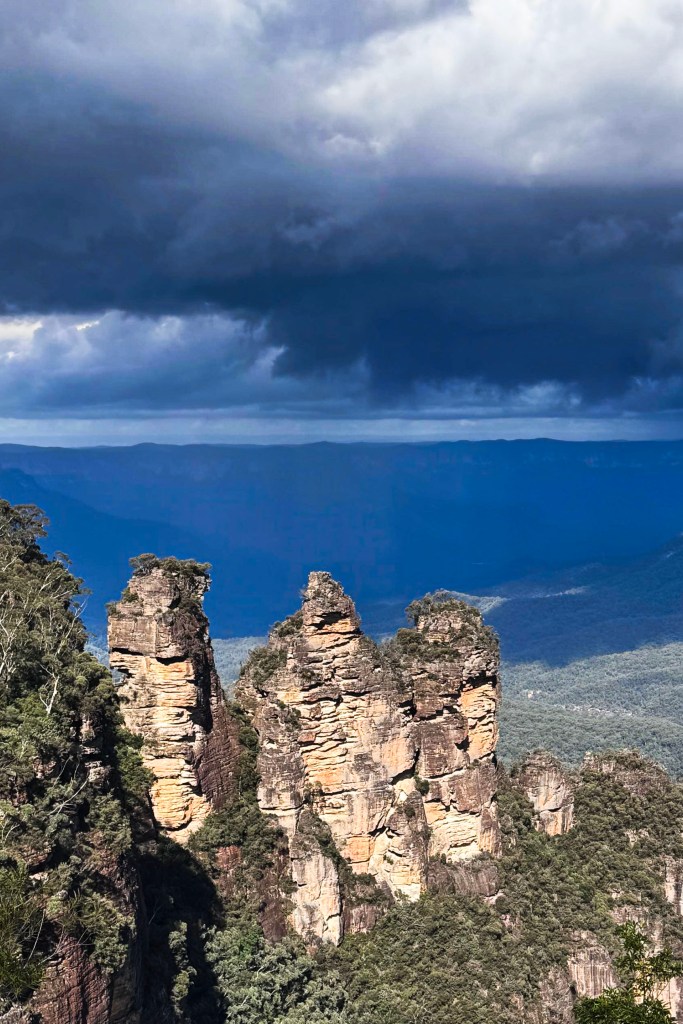
Whether history, folklore or a later embellishment, the tale captures something that maps and geology cannot. In the Dreaming, mountains, rivers and rocks are seldom mere scenery; they are living presences, shaped by ancestral beings and entrusted with memory. Standing before the Three Sisters, it was easy to understand why generations had looked upon these ancient sandstone pillars and seen not only cliffs, but lives, love and loss turned to stone.
A short drive brought us from the quiet seclusion of Olympian Rock to Echo Point, where the Blue Mountains’ most celebrated landmark awaited us. After lingering before the Three Sisters, it was only a few minutes more to Scenic World, perched upon the edge of the Jamison Valley.
At the far station of the yellow Scenic Cableway, Alfie entrusted us to the mountains. We were to board the red Scenic Railway—the world’s steepest passenger railway—for its dramatic descent into the rainforest. From there, a short boardwalk through the ancient forest and the preserved coal-mining relics would bring us to the lower station of the blue Scenic Cableway, which would lift us back to the escarpment. It sounded like an invitation to experience the Blue Mountains from above, within and below, all in the space of an hour.
The only cloud over our enthusiasm was the mention of the Scenic Railway. Descending 310 metres down a 52-degree incline sounded far more intimidating in the boarding area than it had while listening to Alfie’s cheerful commentary. The moment we joined the queue, T came to an abrupt halt. Colour drained from her face as she surveyed the precipitous track disappearing into the forest below.
“There is no way I’m going on that cliffhanger!”
The declaration startled the three of us. This was the same T who had cheerfully survived some of the wildest roller-coasters in India and Singapore. Yet here she was, thoroughly unnerved by a train that merely rolled downhill.
“I’ve read about it,” she insisted. “Alfie said it was optional.”
She kept repeating the sentence, becoming more convinced each time. Meanwhile, the train glided quietly into the station, and the crowd moved forward with disarming indifference. We reassured her that the descent lasted barely a couple of minutes and promised, perhaps with more confidence than certainty, that she would survive it.
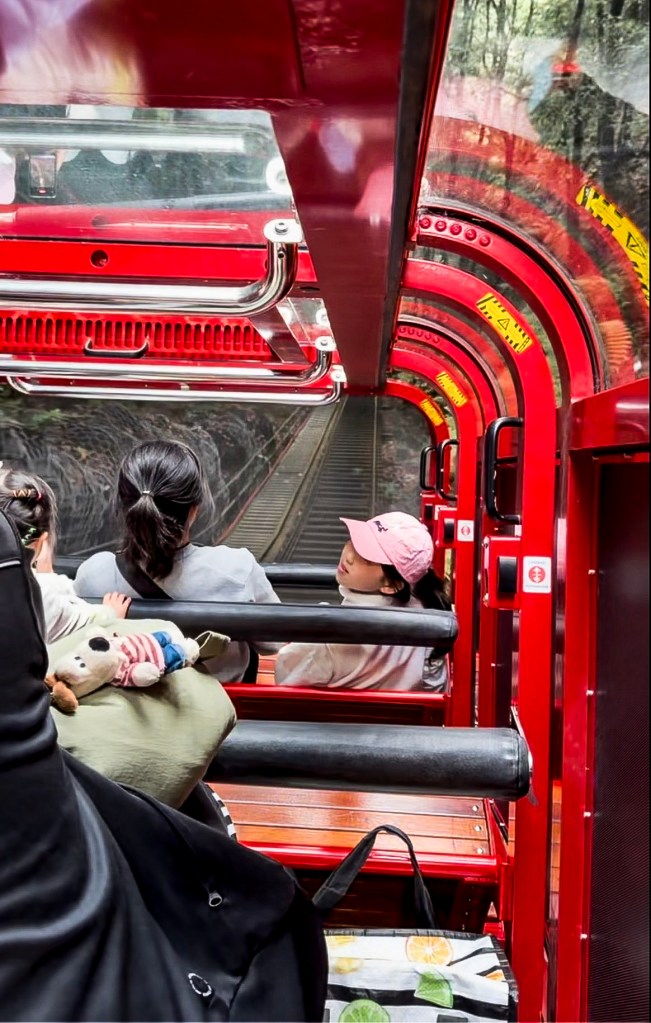
Somehow, we managed to coax her to step aboard. She immediately seized the overhead bar, shut her eyes, and prepared herself for what she imagined would be a catastrophic plunge into the valley.
The red train tipped over the edge and gravity took over. It felt like riding a tilted lift without a floor. It plunged through a sandstone tunnel, burst into a narrow canyon of rock, and kept dropping until the track suddenly levelled out beneath us. The ride was over.
We emerged onto the boardwalk among ancient tree ferns and the relics of the old coal mines. T had survived perfectly well, although she continued to mutter darkly about having been lured into the adventure under false pretences.
Back on solid ground, I found myself marvelling at its engineering, not without a sense of satisfaction at having ridden the world’s steepest railway. It was impossible not to admire the ingenuity with which coal had once been hauled from the valley to the escarpment above. We then followed the raised boardwalk that wandered through the cool heart of the rainforest and the preserved relics of the old coal mines. We passed a bronze pony harnessed to a mine wagon, its young handler standing patiently behind. The sculpture paid tribute to the pit ponies that had once hauled coal through these valleys and played a crucial role in the Blue Mountains’ mining history.
Here, at the floor of the Jamison Valley, we were no longer merely looking at the Blue Mountains—we were within them. Towering eucalyptus, tree ferns and dense undergrowth enclosed the boardwalk, while birdsong replaced the chatter of the crowds above. It was remarkable how quickly the railway had carried us from open sandstone cliffs into the cool, green heart of an ancient forest.
The blue Scenic Cableway carried us gently back to the summit, gliding between forest and sky. Suspended high above the valley, we stole frequent glances into the deep gorge below, where sheer cliffs, cascading waterfalls and the unbroken rainforest stretched away in every direction. Cameras clicked almost continuously. By then, T had completely recovered her spirits and was once again her cheerful self, as though the dramatic descent of a few minutes earlier had belonged to somebody else.
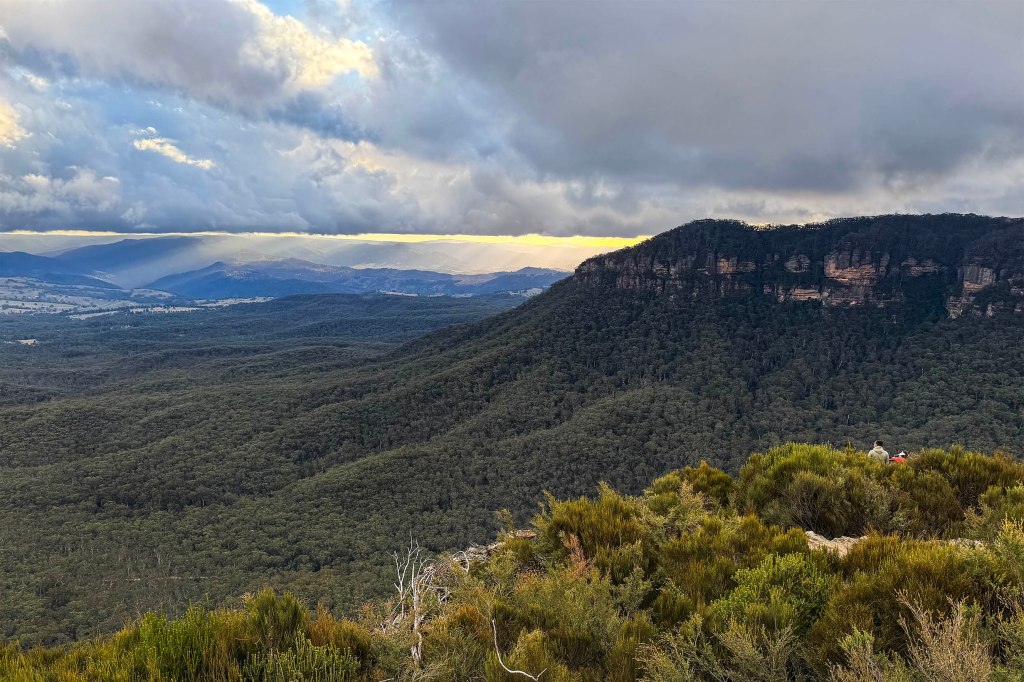
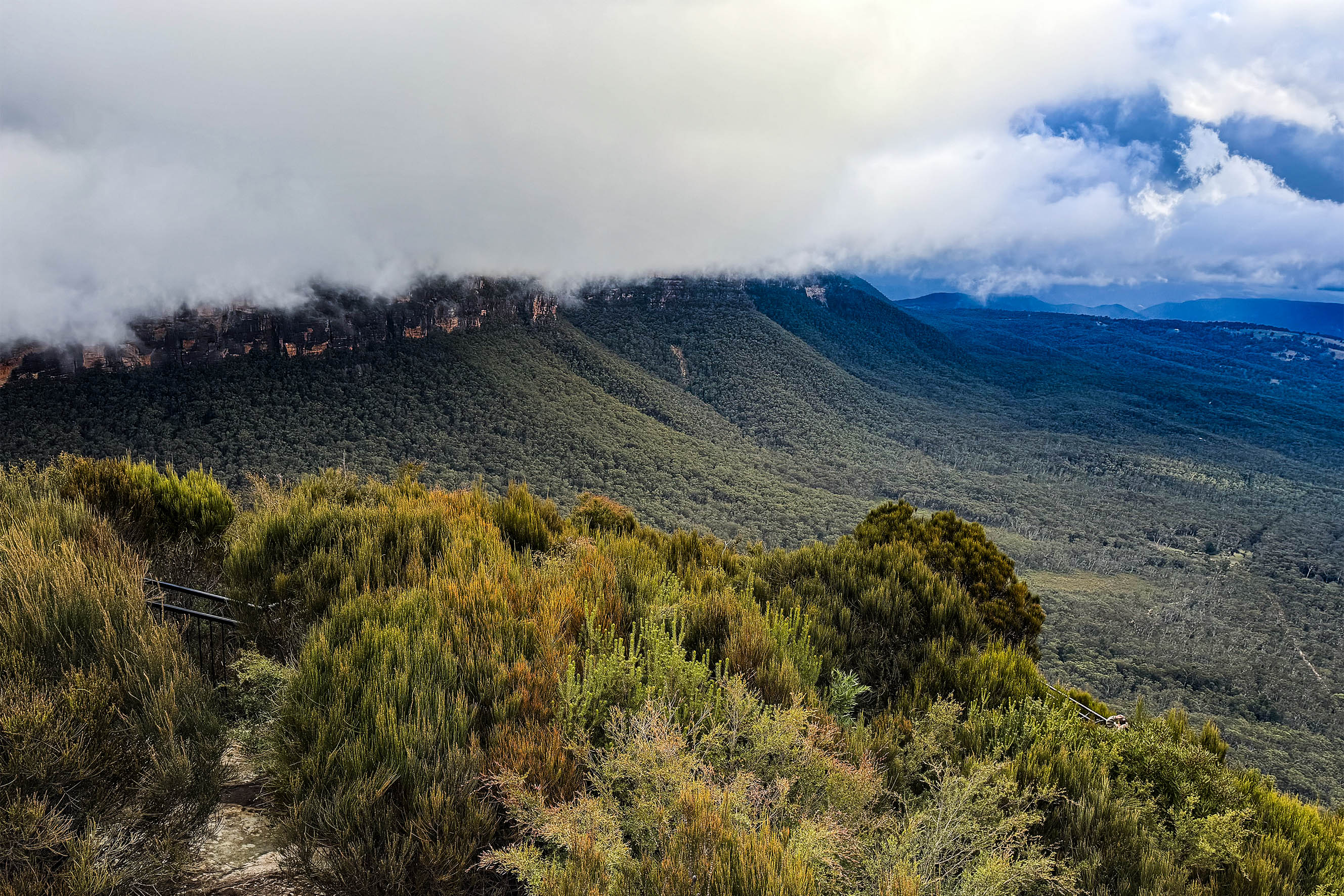
From Scenic World, our coach climbed to Cahill’s Lookout on the western edge of Katoomba. There lay the vast Megalong Valley, bounded by the imposing sandstone ramparts of the Narrow Neck Plateau. Beyond them, blue ridges dissolved one into another until they melted into the horizon.
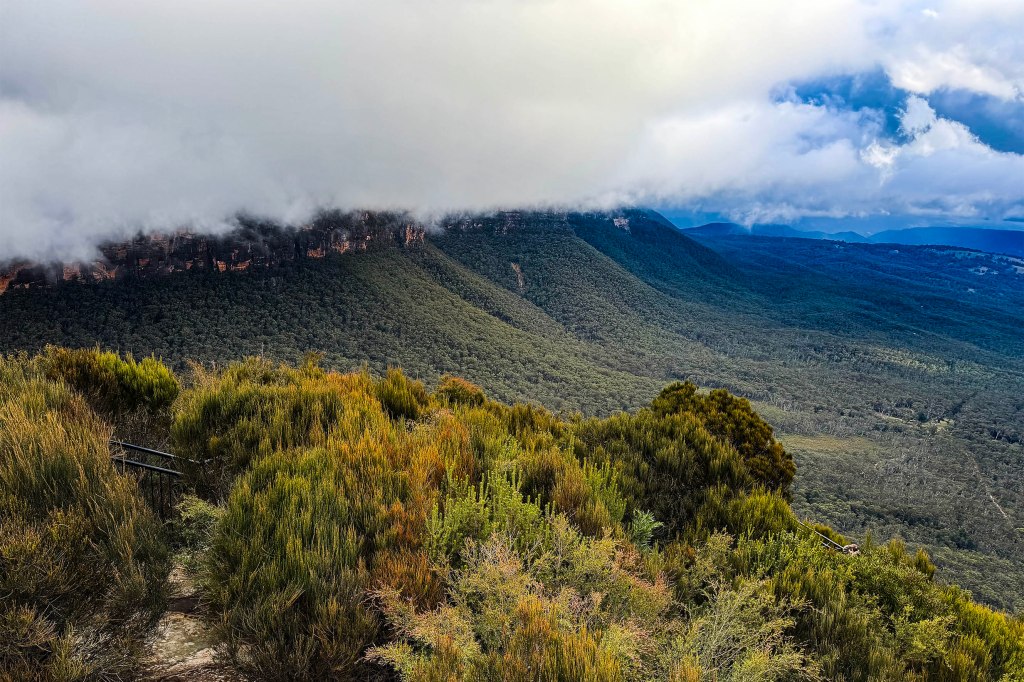
A great river of cloud was spilling over the escarpment as we arrived, slowly flooding the valley below. Between that dark canopy and the distant ranges lingered the thinnest ribbon of pale gold, creating an extraordinary sense of depth. It was as though the heavens had parted just enough to reveal another world beyond. Through scattered breaches in the cloud, shafts of sunlight wandered across the forested slopes, illuminating one ridge while leaving the next in shadow. It was the Blue Mountains’ own way of greeting us—and bidding us farewell.
The sandstone escarpments, deep valleys and eucalyptus forests of the Blue Mountains belong to a story measured in hundreds of millions of years. Standing at these lookouts, one cannot escape the feeling that human lives occupy only the briefest margin of that immense chronicle.
These ancient mountains also shaped a far younger history. For nearly a quarter of a century they confined Britain’s infant colony to a narrow strip beside the Pacific. Their summits are not especially lofty. Their strength lay instead in a bewildering maze of ravines, cliffs and sandstone ridges that turned every hopeful advance into retreat. It was only in 1813, when an expedition chose to trust the ridgelines rather than descend into the valleys, that the mountains yielded their secret. Beyond them lay the vast Australian interior, waiting at last to enter the colony’s story.
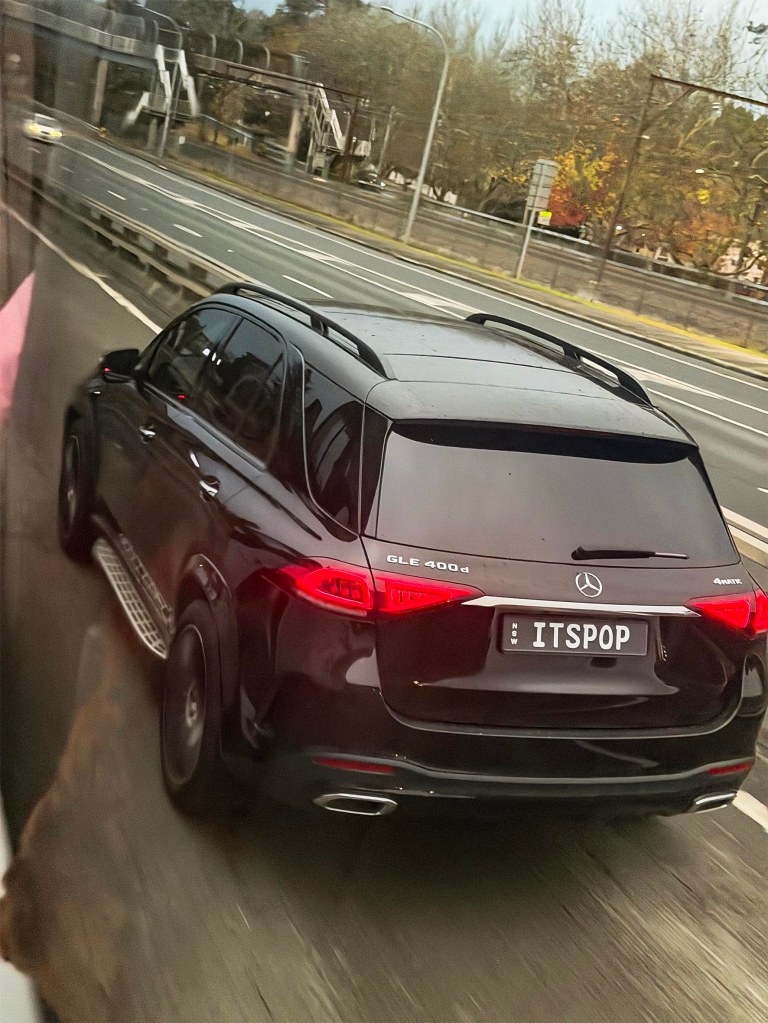
Our final souvenir from the Blue Mountains was not another vista, but a black Mercedes with the personalised plate ITSPOP. It made us smile all the way back to Sydney.


Umashankar, this took my breath away. The way you hold together so many scales at once a concierge’s kindness, a fear overcome, a mountain’s hundreds of millions of years, a story the Gundungurra have carried since the Dreaming. And that aperture regret, that missed technical moment in Leura, you didn’t dwell on it as failure. You acknowledged it as the cost of being present. That’s the whole essay right there. To understand landscape, we must surrender our perfect compositions and simply be in it. The ribbon of gold between cloud and earth at Cahill’s Lookout, that blue between worlds, is exactly what we come to mountains to find. Extraordinary work. 💙
I am grateful to you for reading so carefully, for understanding how the many thoughts have been woven together, and for commenting so thoughtfully. That “missed technical moment” in Leura is exactly that: the cost of being present. You have touched the very core of the piece. Thank you.
The cost of being present. Yes, that’s it exactly. We lose something when we stop to capture it, and we gain something irreplaceable by simply witnessing it as it unfolds. Your piece holds that tension so gracefully, Umashankar. The fact that you could articulate it, that you named what T was choosing, speaks to how alive you are in those moments. Thank you for writing with such intention. 💙
Life keeps a meticulous profit and loss account. Every moment of being fully present is a debit against our finite time. Yet when the books are closed and the balances carried forward, we discover that memories are the only assets we truly own.
That’s not travelogue writing, Umashankar. That’s wisdom.
And again …. you write an excellent travelogue.
Thanks for the nod, John.
Another beautifully written trip. Of all the memorable sentences I highlight this one: “cushioning every footstep with autumn’s signature.” I am pleased you quoted the Dreaming. I am with T on that drop.
Thanks for the company and the compliments, my friend. I am sure T would appreciate having your support on the drop.
The Kaleidoscope
This episode is aptly described as a kaleidoscope. It moves at a brisk pace, with the scenery changing as rapidly as clouds driven across the sky on a windy day. Every few paragraphs, a new landscape, a new character, or a new emotion quietly steps onto the stage, each leaving behind a distinct impression before yielding to the next.
From the literary critic disguised as a contemplative chimpanzee, silently passing judgement on the magazine entrusted to him, to the patient koala, from the poignant legend of the Three Sisters to the affectionate father in Mr Pandey gently persuading T to conquer her fear of the Scenic Railway, the narrative is populated by an unforgettable cast of characters. Among them all, however, the legend of the Three Sisters lingers longest. Whether folklore or history, it leaves behind a quiet sadness that refuses to leave the reader’s mind.
I could almost picture the scene of Mr Pandey patiently coaxing T to board the train. It is perhaps the only occasion when the world’s steepest passenger railway was rendered less intimidating by the reassuring voice of a father than by the engineering behind it!
The episode also offers an unexpected lesson in photography. Mr Pandey’s confession about forgetting to stop down the aperture after chasing Leura’s glorious autumn colours may have sailed comfortably over the heads of readers like me. Nevertheless, I suspect photographers everywhere nodded knowingly, recognising that even the most experienced among them occasionally become so captivated by the moment that technique quietly takes a back seat.
For me, however, the true literary gem of this chapter is this beautiful reflection on Leura:
“There was something almost apologetic about arriving as a visitor, as though one were briefly interrupting the gentle rhythm of a mountain village that had long ago learnt the art of living unhurriedly.”
What a wonderfully perceptive observation!
I have experienced that very feeling myself while visiting quiet villages tucked away from the relentless pace of the outside world. One almost hesitates to speak too loudly, fearing that the tranquillity painstakingly nurtured by the place might be disturbed by one’s own presence. To me, this is more than a graceful literary contemplation. It is also a gentle lesson in how travellers ought to conduct themselves when they visit such places—with humility, gratitude and the awareness that they are guests in someone else’s world.
And that, perhaps, is what distinguishes Mr Pandey’s travel writing. He does not merely visit places; he enters into conversation with them.
To sum up, this chapter is indeed a kaleidoscope—of landscapes, legends, humour, family moments, wildlife, engineering marvels and quiet philosophical reflections. As the coloured fragments settle into place, they reveal yet another memorable pattern in Mr Pandey’s Australian odyssey.
Looking forward to the next chapter with great anticipation.
Thank you so much for such a thoughtful and generous reading. It is the kind of response every writer hopes to receive, not merely because it is appreciative, but because it reflects such careful engagement with the work.
Your title, The Kaleidoscope, beautifully captures the way the chapter is composed, and I consider that a wonderful compliment. I was especially struck by what you wrote about the legend of the Three Sisters, that factual accuracy becomes secondary to emotional truth. You expressed in a few words something I had only hoped the narrative might convey.
I was equally touched by your observation about “the reassuring voice of a father.” You saw beyond the Scenic Railway itself to the relationship it framed, and that means a great deal to me. Likewise, your reflections on the photography anecdote reassured me that sometimes being absorbed by beauty matters more than technical perfection.
Among all your observations, however, the one that I shall treasure most is your response to the Leura passage beginning, “There was something almost apologetic…” The fact that it resonated with your own experience makes it especially precious.
And finally, your sentence, “He does not merely visit places; he enters into conversation with them,” goes straight to the heart of what I have been trying to achieve throughout this travelogue. I cannot think of a finer understanding of my intentions as a writer.
Thank you once again for reading with such care, generosity and sensitivity. Your words are deeply encouraging, and I shall cherish them.
I so enjoyed seeing what autumn looks like in Australia. Ours will be upon us soon. I am usually in a hurry for October, but you know snow is right on its heels so I will take my time wishing for it.
I was on the edge of my seat. You know I am a sucker for a story, and you are so good at the details. Some of the vistas remind me of my trip to the U.S. southwest 2 years ago. (did I say that already? ) Especially the three sisters. I started a journal on that trip during a few quiet times but did not end up finishing it. I also never wrote the blog posts detailing how it was for me to see the desert for the first time.
Reading your conversation with a reader about being present makes me feel better about it. So I never finished a journal, but I was there. I think I should write what I remember before I forget what it felt like.
Thank you so much.
Oh, and I wouldn’t be doing that drop either, I would have backed her up and bought her a coffee while we waited!
I am afraid I caught only a sliver of the Australian autumn. For someone who has sunk a fair chunk of his financial worth into a photographic arsenal, that is almost criminal. That said—and not to sound as though I am making excuses—organised group tours tend to hustle you from one stop to the next. Photography, on the other hand, makes a serious claim on your time. And that might come at the cost of being present.
I do hope you are able to revisit the moments from your trip to the U.S. Southwest. If you keep geotagging enabled, photographs become wonderful aids to memory—not just in retracing the route, but sometimes in recovering the emotions of the journey as well. You should do that before winter settles over those memories.
As for that drop, we did try to nudge T into joining us, given her long-standing affection for daredevil swings and roller coasters. For all we knew, she might have ended up regretting not riding the world’s steepest railway.
And, hey, a million thanks for being part of the journey. T would be mighty pleased to know she has your support—and a coffee with her name on it!
Please share what you mean by geotagging…
And I forgot that she had been on rollercoasters before and liked them. I am no daredevil. The most I risk in this life is going to a fast food restaurant a few times a year ^_^
I just mean ‘Location Services’ are on for the Camera app. After this, every photo taken with the Camera app will normally include:
* GPS coordinates (latitude and longitude)
* Date and time
* Altitude (if available)
* Camera information (lens, exposure, etc.)
Note: Many people keep this off to save battery and for privacy reasons.
Thank you for explaining. And I do turn off the location as a rule.
If I share a photo online From my phone will that information always be attached to it do you know ?
It depends on the method. Location information is typically transferred via Airdrop or iCloud links but is removed when sharing with Facebook Instagram and WhatsApp. I believe there’s a way to strip the location before sharing in the Options menu.
Koalas, changing leaves, yummy treats, folklore and that lovely blue-what’s not to love!❤️
Thanks for being with us every step of the journey.
My education continues! Wonderful! I don’t think I would have enjoyed the steep train ride…
Time to cross the Tasman!
Don’t believe everything a tourist brochure says about NZ unless it’s extolling our cricket prowess.
Beautifully written Uma, you’ve seen some spectacular sights on this trip.
Thank you so much Andrea. The Blue Mountains trip was truly fulfilling and unforgettable.
Uninhabited areas have their own charm. Let us hope certain areas remain like that for centuries to come. It is very difficult to balance travelling on a schedule with doing justice to photography. Still then some of your photographs fascinate me because of their perspectives.
The call of the wild is always riveting. As for photography, if you intend to indulge your creative instincts, you run the risk of losing touch with the rest of the group, besides constantly struggling for time. Thank you for appreciating it.