
We had set aside a day in Sydney for a ferry ride from Circular Quay to Manly. While parting from our organised tour group on the Gold Coast, the guide had given us a ‘golden tip’ about not taking the cruise in Sydney. Still foxed by the riddle, we chose the ferry to Manly instead. We figured it would give us more time to linger there, besides saving us some money.
Manly had grown as Sydney’s seaside retreat from the mid-nineteenth century, its fortunes closely tied to the ferries that carried people across the harbour. In making the crossing, we were following an old Sydney escape route, later immortalised in the promise: seven miles from Sydney and a thousand miles from care. For generations of Sydneysiders, Manly had been the escape. We had flown across oceans for ours: Sydney itself was the escape.
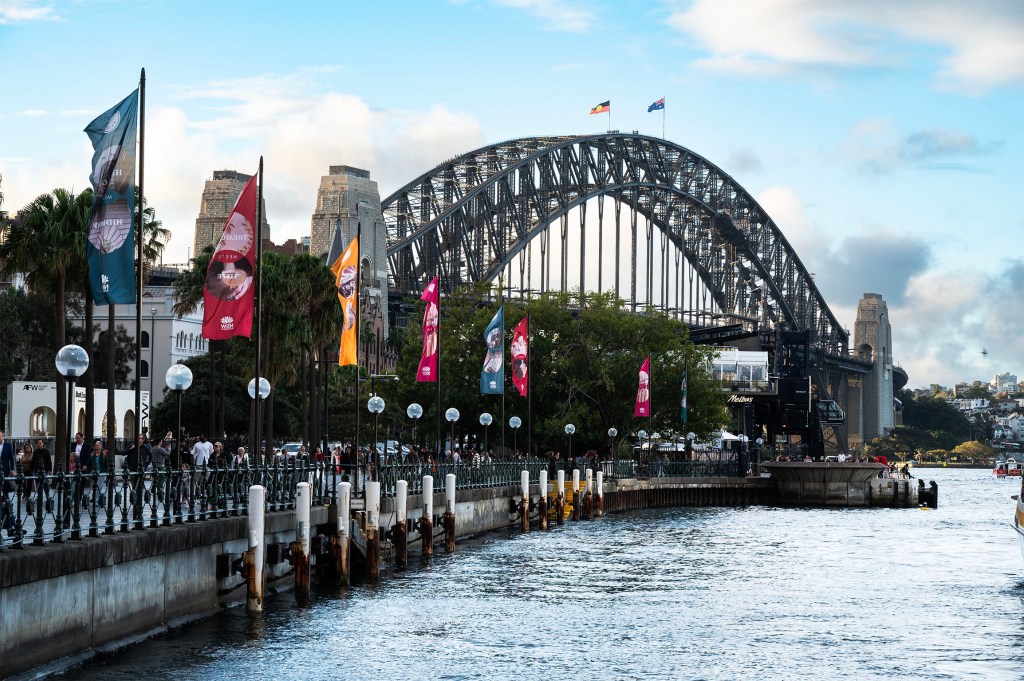
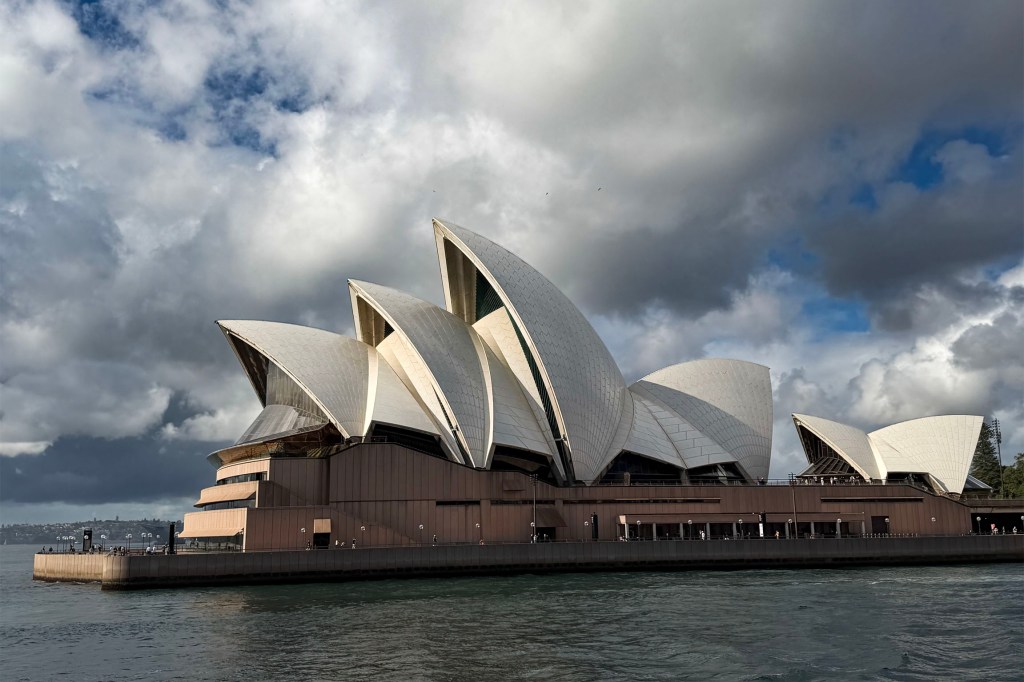
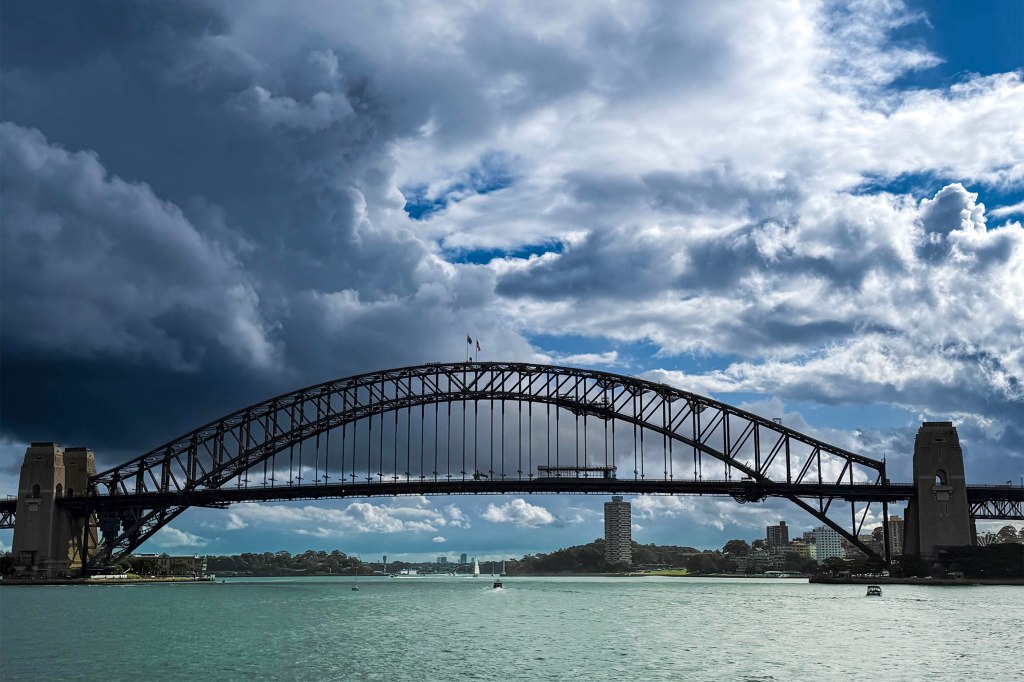
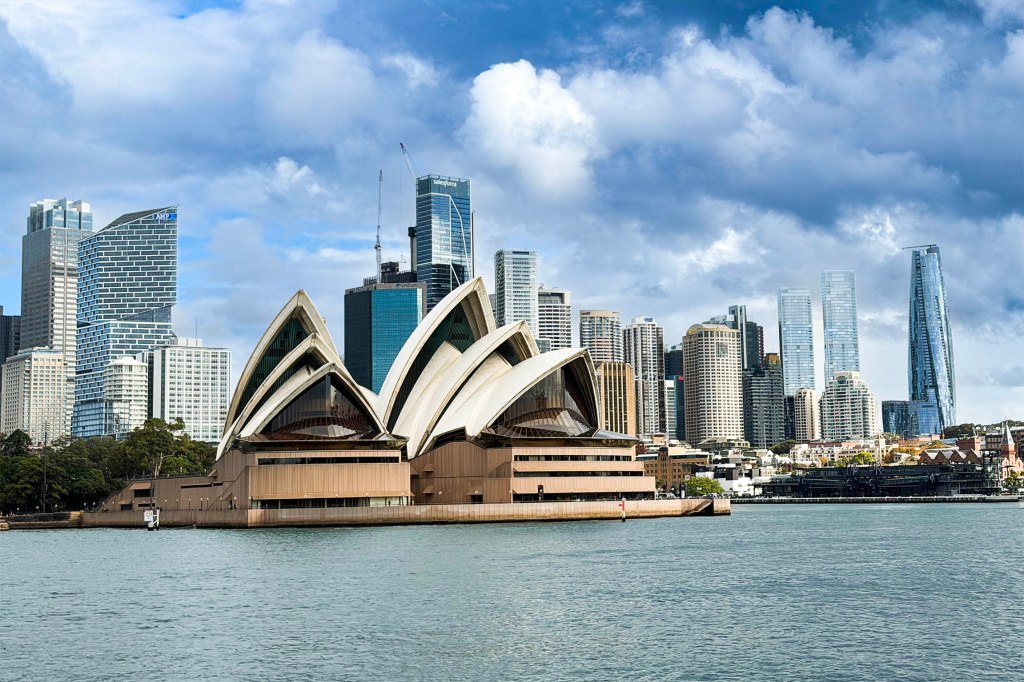
The ferry changed our relationship with the city, offering different truths about familiar landmarks around the harbour. Perspective altered, as perhaps it can only from moving water. Shedding its postcard appearance, the Harbour Bridge presented itself up close and broadside, revealing the intricate engineering beneath the icon. The Opera House revelled in its impossible geometry. And the weather was a gift. Enormous broken clouds, alternating sunlight and shadow, gave the harbour a powerful sense of drama and suspense.
The harbour had another face too. As the ferry carried us past Garden Island, the grey bulk of naval vessels appeared along the shore, including the immense HMAS Canberra. Sydney Harbour, so often presented as a theatre of beauty and pleasure, reminded us that it was also a working harbour with a military life.
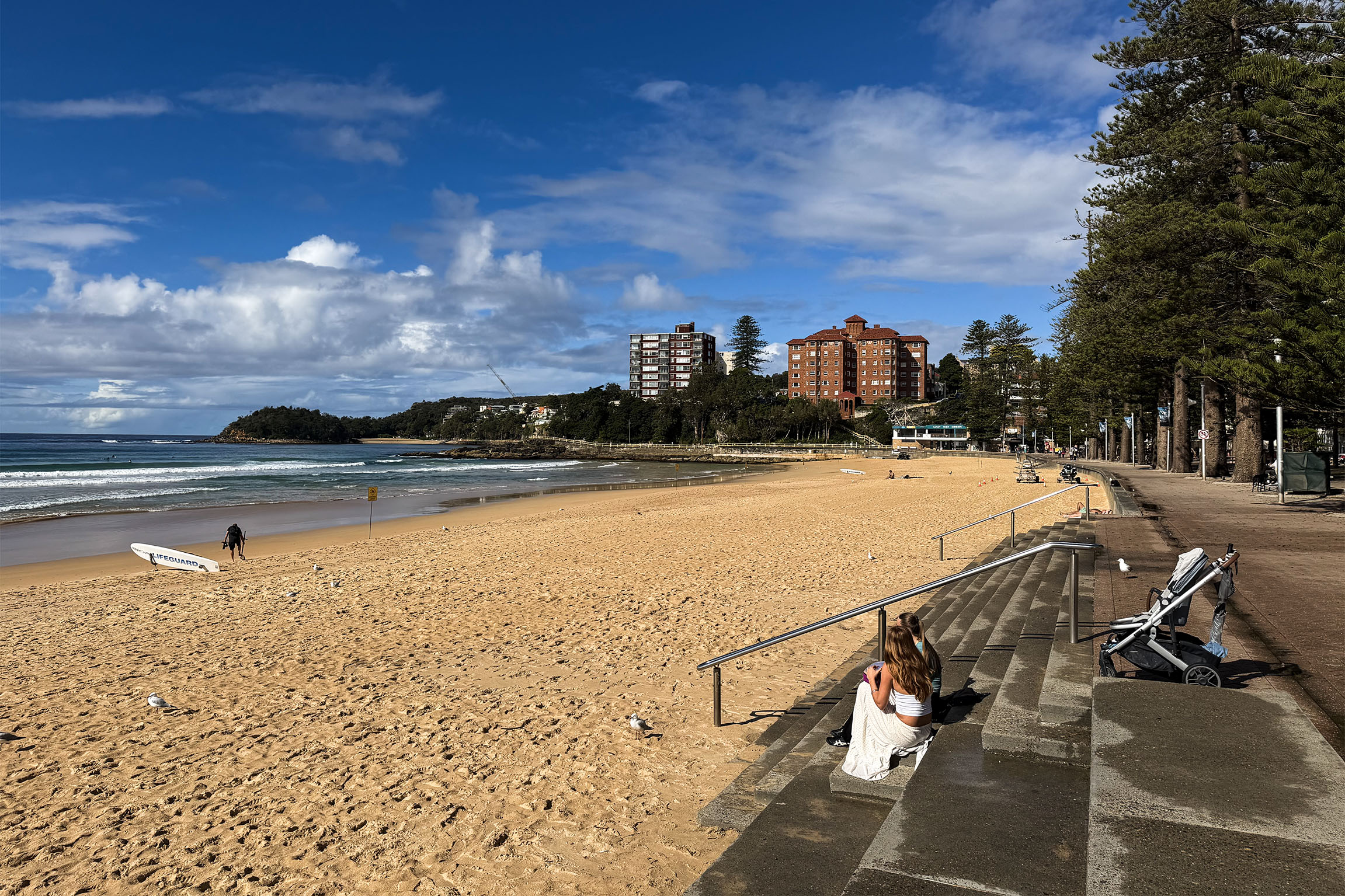
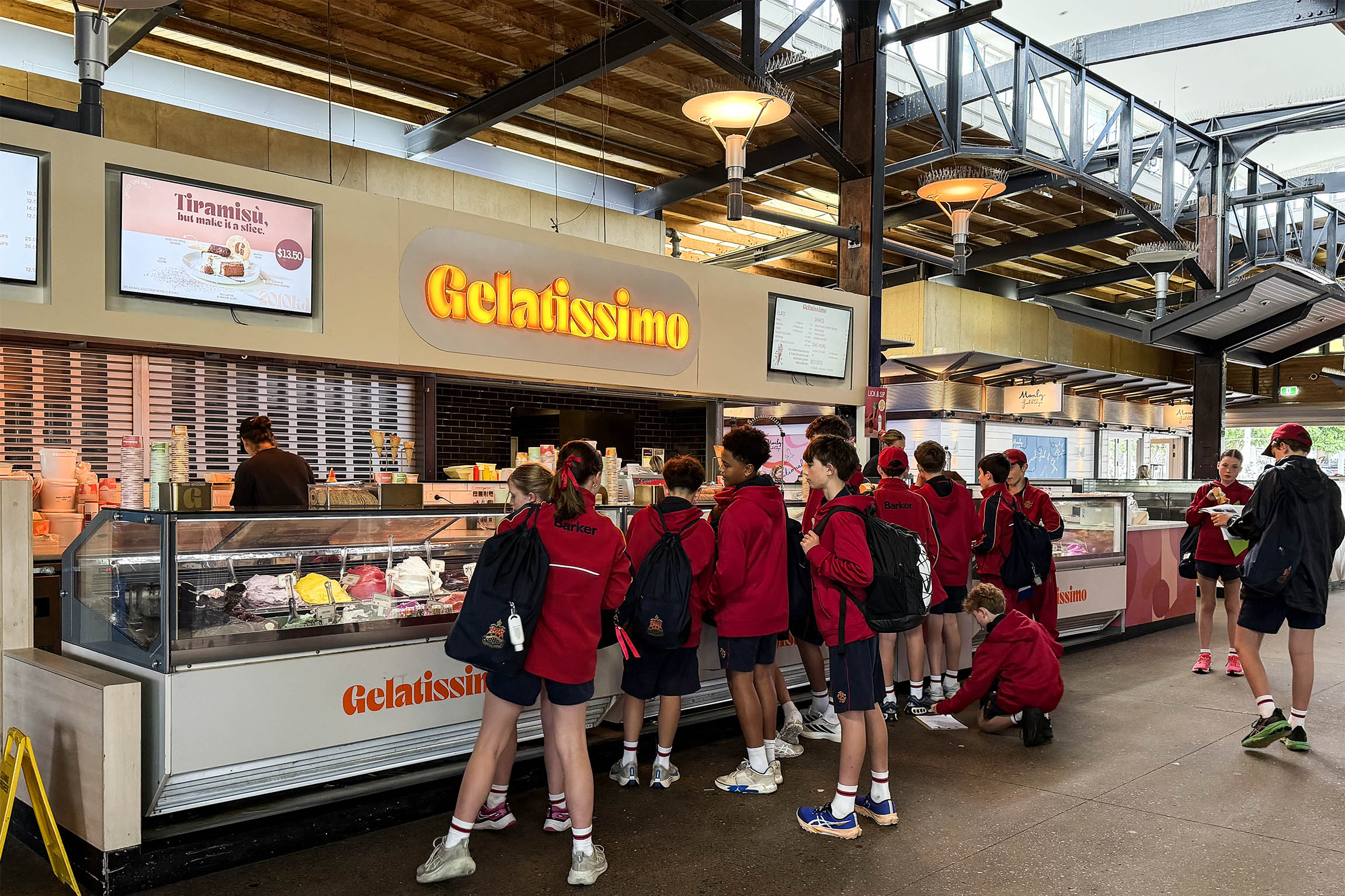
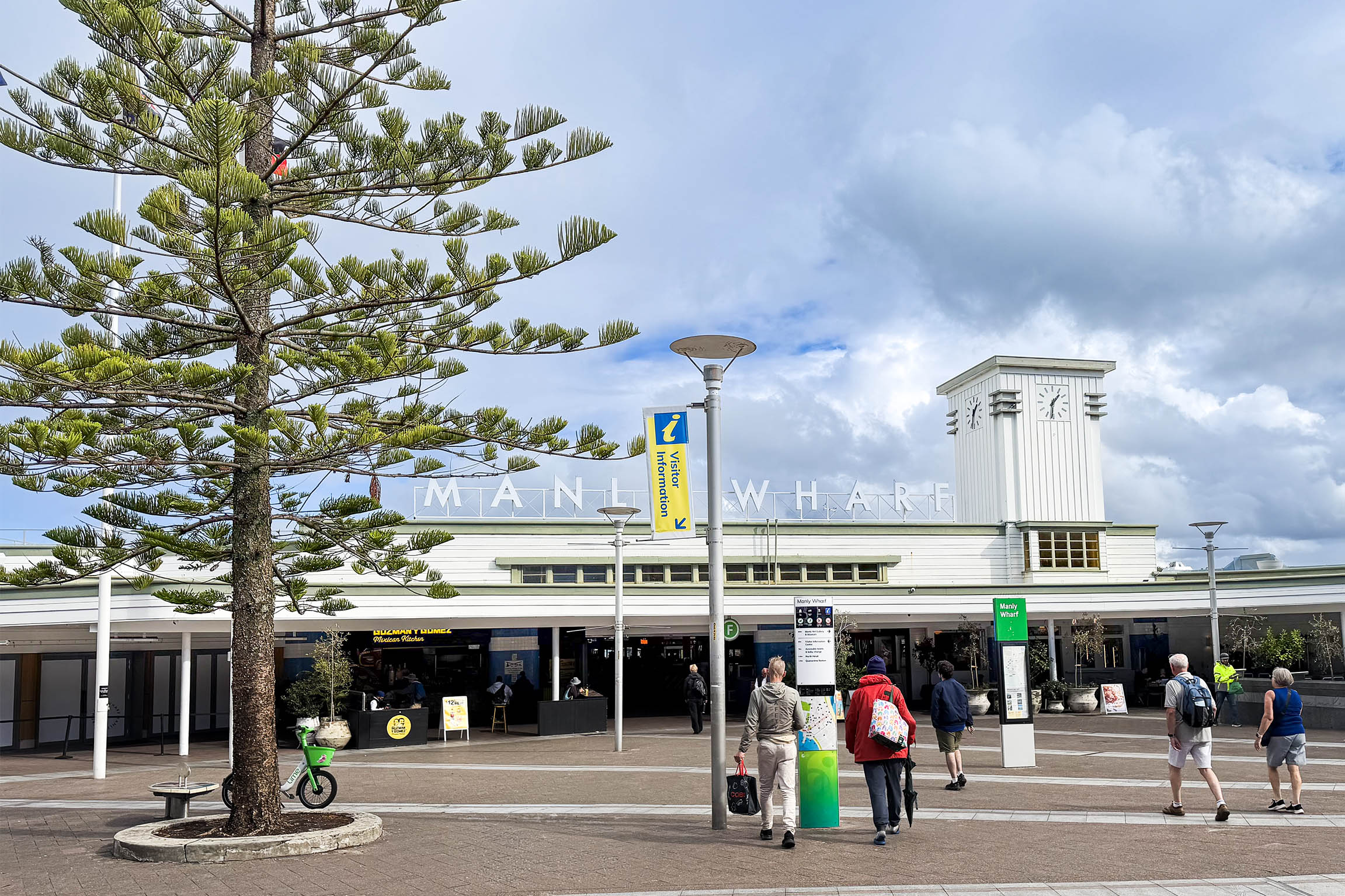
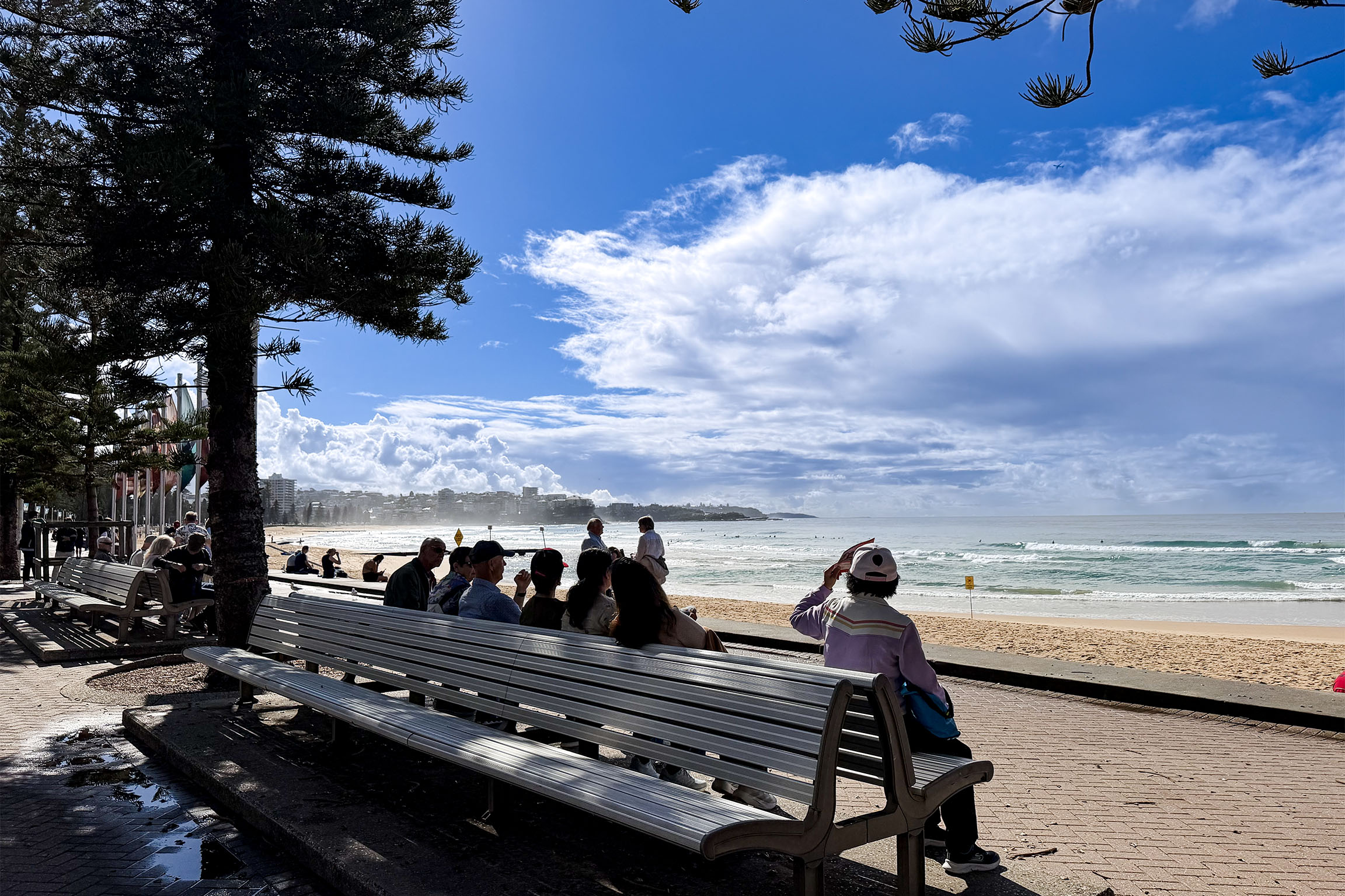
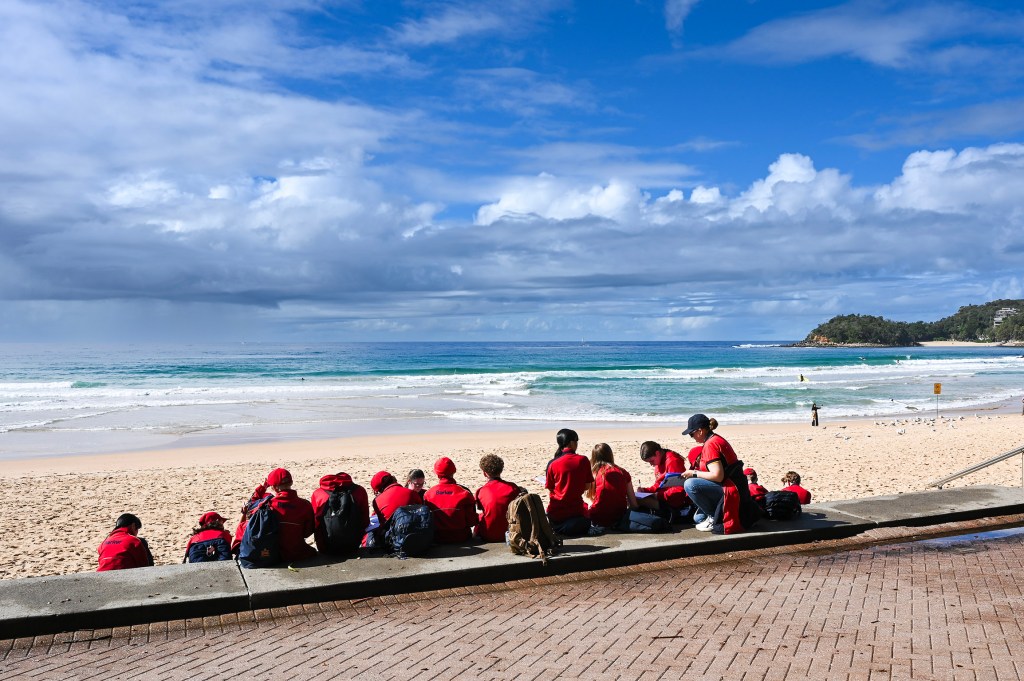
At Manly, beneath the tall Norfolk pines of South Steyne, we sat for a while and watched the beach breathe. Waves advanced and withdrew, gulls wandered over the sand, and sunlight travelled between cloud and sea. From a bench on the promenade, we watched a group of schoolchildren gathered around their teacher, earnestly drawing in their notepads. Their uniforms and their age carried me suddenly back twelve or fourteen years, to my own daughters sitting with their classmates on the lawn of their school in Mumbai. For a moment, Manly and Mumbai occupied the same patch of afternoon.
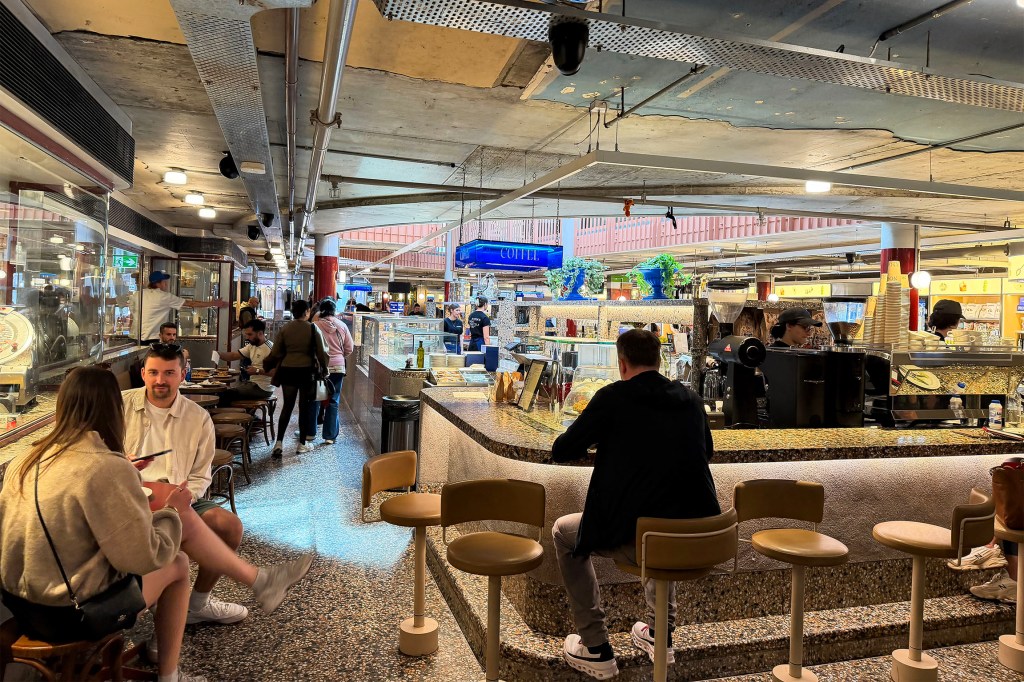
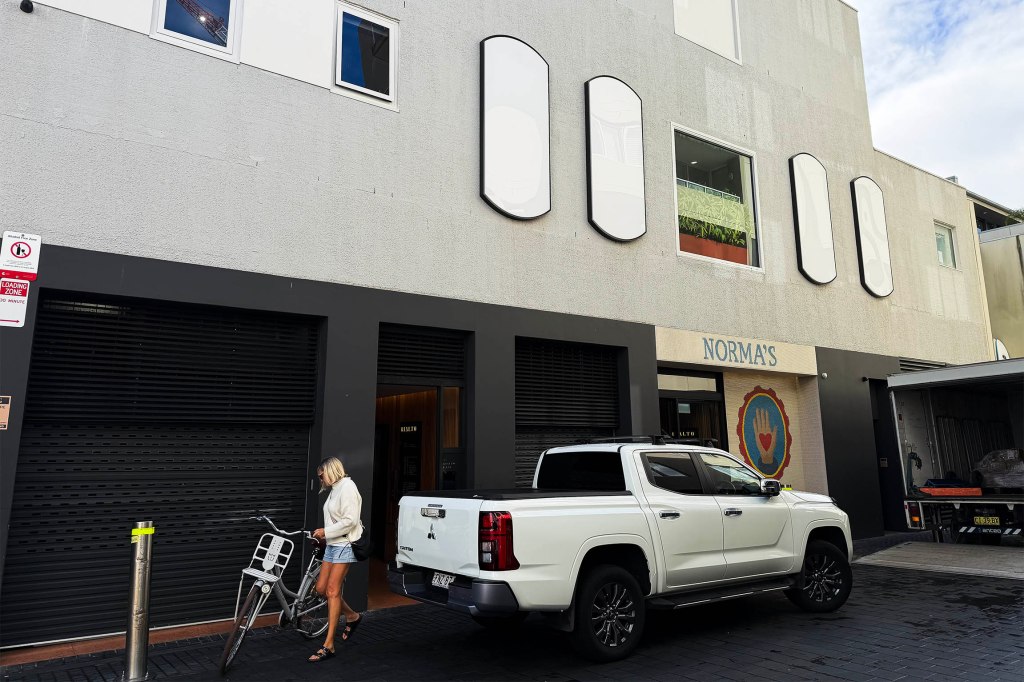
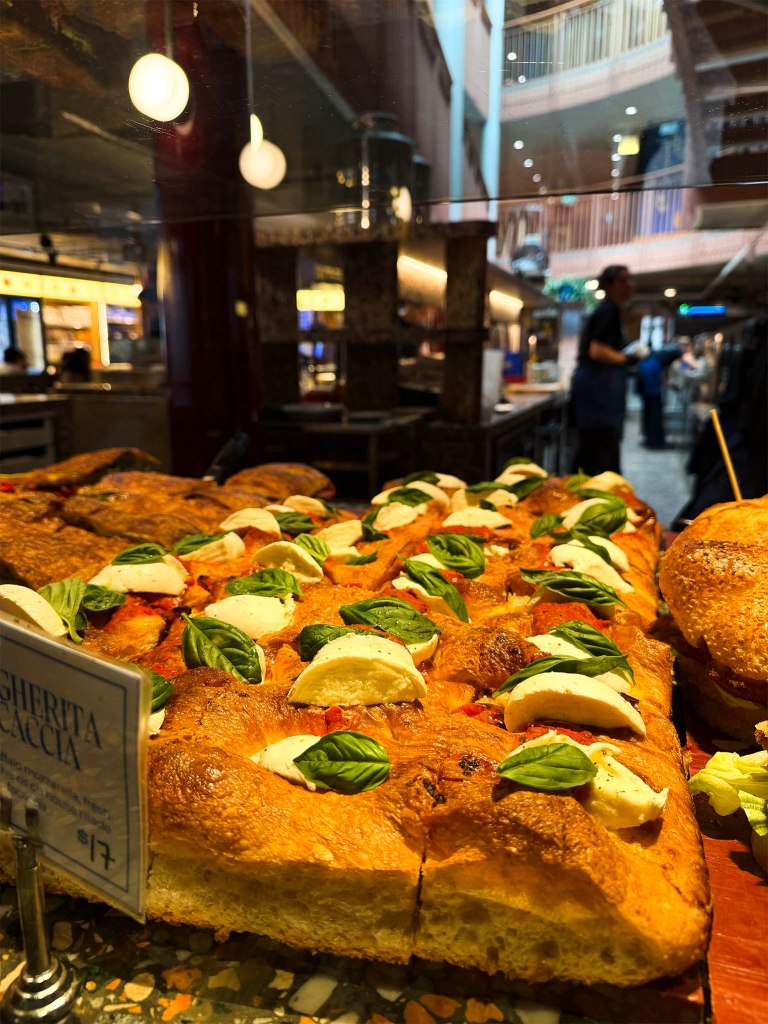
Before we could wind up our sojourn in the seaside suburb, T had one more item on the Manly agenda. Somewhere off The Corso was Norma’s, a bustling deli she had researched with greater diligence than some of the landmarks we had crossed the harbour to see. Inside the deli, counters disappeared beneath focaccia sandwiches, salads and pastries in bewildering abundance. We settled down to sandwiches, pizza, soup, fish and chips. I discovered Santa Vittoria lemonade—cold, sparkling and wonderfully sharp after the morning by the sea. In retrospect, that unplanned pleasure acquired the dignity of a destination.
By the time we boarded the ferry back, the harbour had changed its mood. A drizzle had begun, and T stationed herself at the front of the ferry. I joined her later. Through the rain, we watched Sydney slowly assemble itself before us. From indistinct shapes it grew steadily larger: the Harbour Bridge, the Opera House, Circular Quay and, out in the water, that intriguing little fort we later discovered was Fort Denison. Once used as a place of punishment, it was fortified in the nineteenth century as part of Sydney Harbour’s defences.
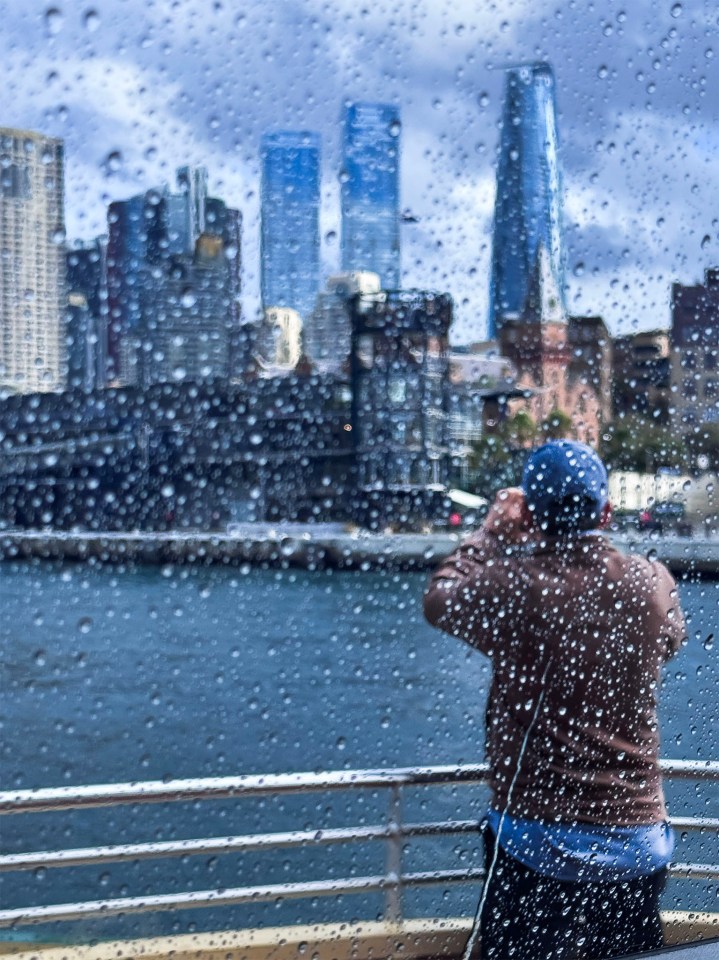
From inside the cabin, V photographed me through the rain-spattered window as I stood outside, lost in photographing Sydney. The rain lies sharply between photographer and subject, while the city dissolves beyond me into blue-grey shapes. It has become one of my favourite portraits from Australia.
We spent the evening wandering through the CBD and the QVB, drinking coffee, watching the trams and picking up a few souvenirs for the journey home. By then, our Australian afternoon was itself beginning to run out.
Tourists are like dragonflies on an autumn afternoon. They hurry from attraction to attraction and monument to monument in search of beauty or history, hovering over gardens, harbours and mountains, footpaths and shopfronts. Sometimes they alight softly in a library, among books rising from wall to wall. They venture onto a glass floor eighty-eight storeys above a city and fall in love with the spectacle below. They follow a road curling beside a foaming sea, disappear among the ancient vines of a rainforest, return to ogle a harbour beneath its contemplative coat-hanger of a bridge, then rush towards the mountains to end with drops of rain on their faces in a blue-green valley.
Sometimes, though, they just can’t land on that blade of grass bending in the high wind from the Tasman.
The tourist’s predicament is not merely that there are infinitely many places and finite time. Attention is another scarcity. One may have ten minutes at a lookout from which millions of years of geology are visible, twenty minutes inside a building carrying two centuries of history, half an hour on a ferry crossing waters over which vastly different human lives have passed.
A tourist naturally thinks horizontally. The itinerary is a line across a map: Melbourne today, Great Ocean Road tomorrow, Gold Coast afterwards, Sydney next. Distance is measured in kilometres, flights, road trips and ferry crossings. The tourist can cross the horizontal distance easily. The vertical distance, however, is impossible to traverse completely. You can fly a thousand kilometres in two hours; understanding two hundred years of a place may take considerably longer.
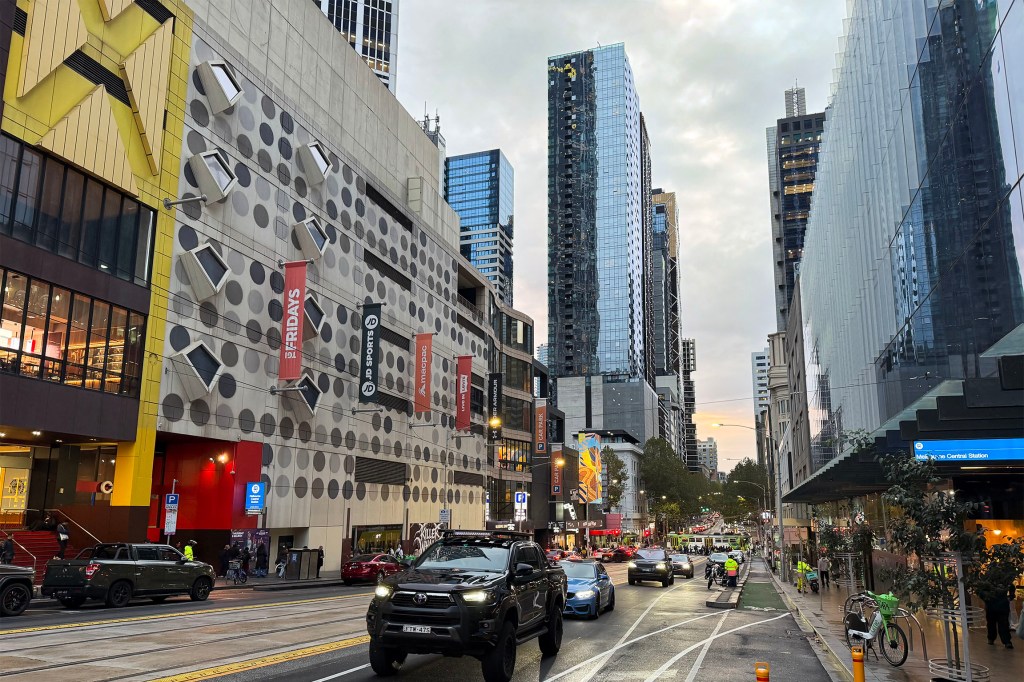
Nowhere did we realise this more acutely than when we first set foot in Melbourne on an autumn afternoon, a city I had waited years to see. Our planned four days in Melbourne had shrivelled to a laughable day and a half, with one whole day reserved for a trip down the Great Ocean Road.
But the Australia I visited in 2026 had perhaps been accumulating in my imagination for more than thirty years, through cricket watched on television screens. Particularly imprinted on my mind is India’s tour of Australia in the early 1990s, for five Tests and the Benson & Hedges World Series. That was the era of Australian summer cricket that made the distant MCG a mythical place for someone watching from India. On 18 January 1992, the spectacle at that ground was unforgettable: coloured clothing, white ball, floodlights, the Benson & Hedges branding and the vast MCG crowd. Border, Boon, Jones, Marsh and the Waugh brothers faced Kapil, Shastri, Srikkanth and a very young Tendulkar. Indian hopes survived for a while with Srikkanth, but fell away with him; Australia won the first final of the triangular series by 88 runs.
How strange, then, that my first glimpse of the MCG in Melbourne came from the 88th floor of Eureka Tower. More than three decades earlier, I had watched that ground through a television screen thousands of miles away; now it lay below me, part of that living map of the city.
Memories of many more India-Australia fixtures at the MCG, SCG and WACA inhabit the mind, but cricket alone did not bring Australia to the top of our list for a family expedition.
Melbourne and Sydney, our primary destinations, stand third and fourth in the 2026 EIU Global Liveability Index, maintaining their familiar place among its upper ranks. Melbourne’s attraction lies partly in the fact that it wears an unusually rich collection of pleasures with ease. Its coffee and food cultures are legendary. Every meal we had and every cup of coffee we savoured in the city lived up to that reputation, though they weren’t always the cheapest.
One happy consequence of Melbourne’s extraordinary multiculturalism is the sheer variety of food on offer, satisfying both those in search of the exotic and those hankering for a taste of home. We chose the unfamiliar, resisting the comfort of food that tasted like home, and found our culinary adventures well worth the risk. We loved how the city’s Victorian architecture coexists comfortably with cafés, murals and bookshops, while trams rumble along its streets and past the ends of laneways. The result is an atmosphere at once old and modern, stimulating yet remarkably easy to inhabit. Greenery, too, weaves through Melbourne, across its parks, reserves and gardens and along the Yarra corridor, with generous spaces throughout for walking and cycling.
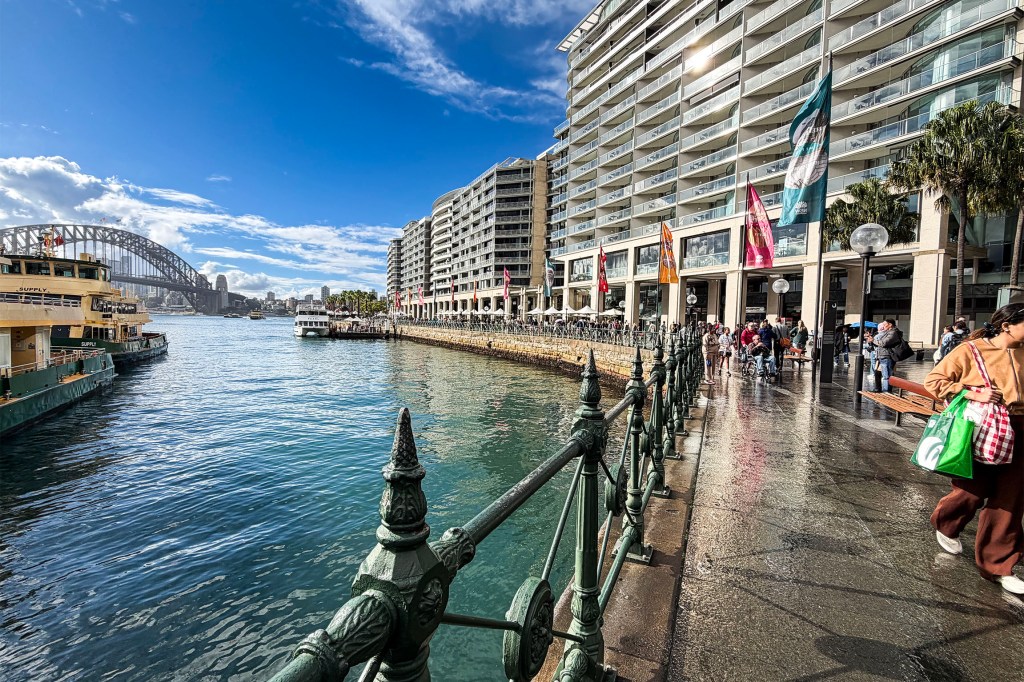
What captivated us about Sydney was how effortlessly a great city shared space with an extraordinary natural setting. The harbour was never far away, and neither, it seemed, were the beaches, cliffs, coves and stretches of bushland that gave the city room to breathe. We encountered the Harbour Bridge and the Opera House repeatedly, from gardens and promenades, from Circular Quay and, most memorably, from the water, yet they rarely looked quite the same twice. Beyond these familiar icons, Sydney kept revealing other dimensions: its suburban life and the sandstone traces of its colonial past, layered over a far older Aboriginal history. It was a city whose visible splendours were easy to admire, but whose deeper stories continually invited us to look again.
Sydney’s exquisite sandstone buildings speak eloquently of its past, though not all of that past is beautiful. In 1975, Juanita Nielsen, a newspaper publisher and activist who had fought property development in Kings Cross, disappeared and was never seen again. Decades later, rumours still consign her body beneath an airport runway or the foundations of a Sydney building—macabre folklore lurking beneath the polished surfaces of the modern city.
Yet perhaps no great metropolis on earth has escaped the darker streaks of humanity. Beauty does not confer immunity from violence, greed, hatred or crime; cities accumulate their shadows along with their monuments. To know a place only through what it chooses to display is to know only half its story.
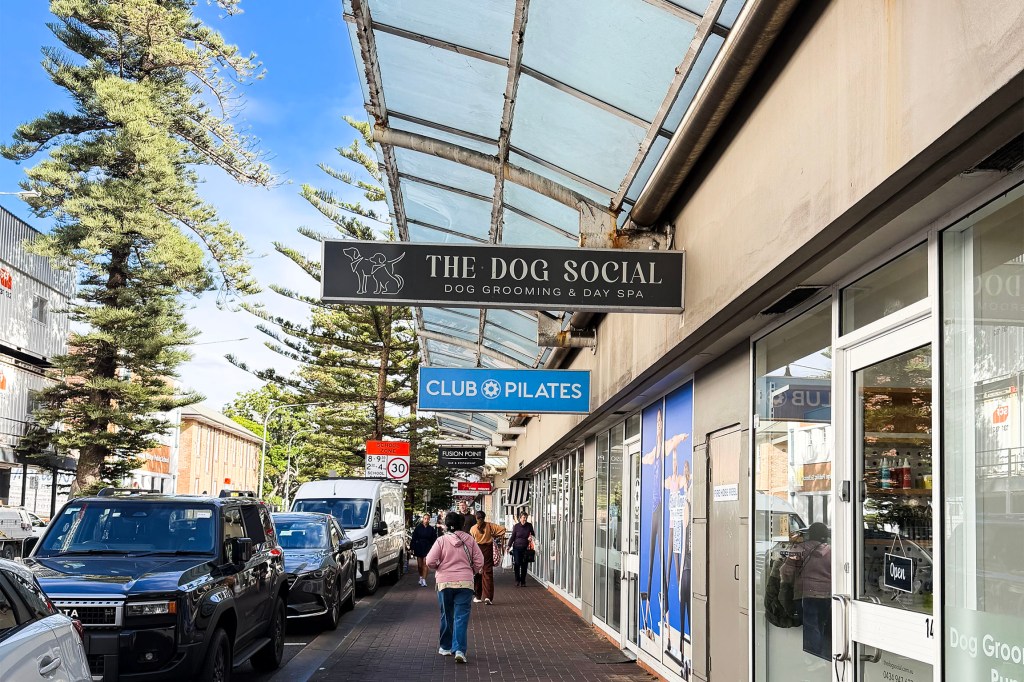
Then there are weird matters, such as the side of the road a country prefers to drive on, that can influence where the tourist chooses to go. Like many countries with a British colonial past, Australia drives on the left—a huge comfort to someone from a country with similar habits who is also fond of driving in foreign and exotic places. That Australia has strict driving rules and astronomical penalties for violations only added to the challenge, as did the lack of lawlessness.
As it turned out, we stayed just outside Melbourne’s Central Business District, and roamed its markets and laneways on two evenings as time permitted. Visits to the State Library Victoria, Federation Square and the Edge experience at Eureka Tower could hardly count as an authoritative exploration of a city as vast and multi-layered as Melbourne. To be fair, our visit was little more than the darting progress of a dragonfly across a passing afternoon; a longer stay would certainly have afforded us a deeper cultural encounter. Yet the Melbourne of our imagination was remarkably close to the one we encountered in person.
In Sydney, we stayed in the unassuming suburb of Hurstville, away from the glitz of its postcard locations. It gave us an opportunity to encounter another Sydney through its apartment blocks, suburban houses, Asian groceries and restaurants, railway stations, schools, parks and people going about their ordinary lives. We were also fortunate enough to visit some of its celebrated landmarks, monuments, gardens and market squares more than once. We came away with more than the visual panorama: the city had become a remembered place, its present constantly opening little windows into its past.
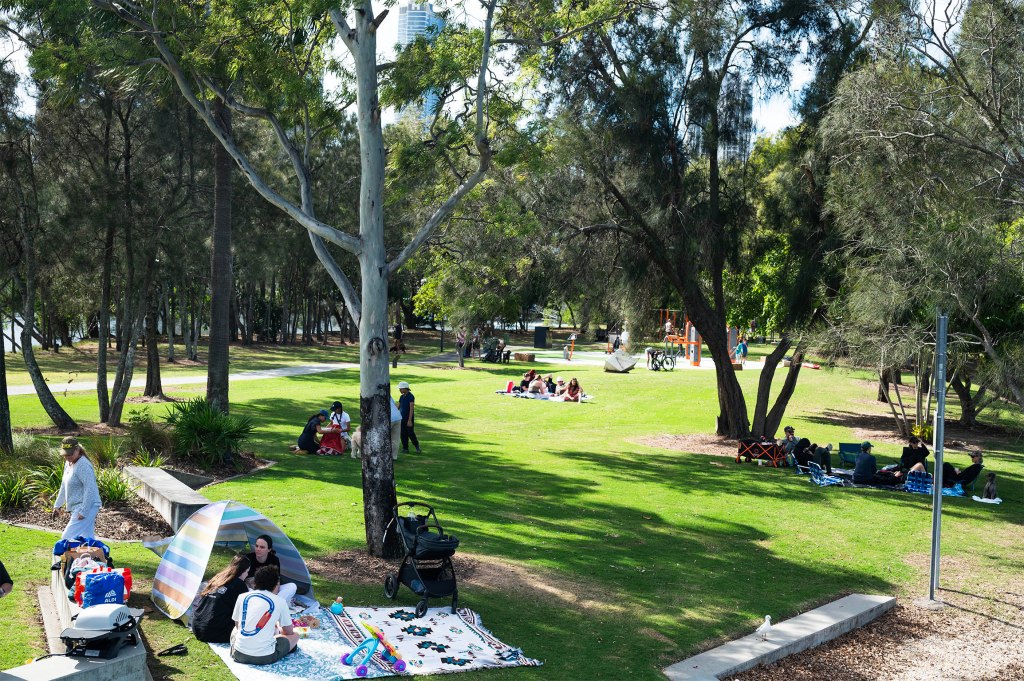
We included the Gold Coast in our itinerary because of its beaches and surfing culture. We found tranquillity and immense stretches of sand without the hubbub of a metropolis. We savoured something of the Gold Coast’s relaxed way of life at HOTA’s Sunday market, an experience that remains particularly memorable. And with the ancient rainforest at Springbrook close by, the Gold Coast offered far more than the beaches that had first drawn us there.
Our tour was conceived as a month-long journey, with three weeks in Australia and one in New Zealand. According to the original schedule, we would begin with the magic of Melbourne and move on to the many faces of Sydney. In between were the Gold Coast, a peek into Brisbane, and the impossible Uluru in the Outback. From Melbourne, we might even have veered off towards Ballarat to meet John, who had once asked the question on his blog, ‘Shall we meet?’
Like Australia, New Zealand had first appeared on my cricketing radar, thanks to Richard Hadlee and his team. Then it became the land where the Hobbits lived in the magical saga of The Lord of the Rings. Somewhere over there was another remote friend, Bruce.
What cut our planned epic Down Under by two-thirds was not an overambitious itinerary, but the unexpected intervention of my twin daughters’ workplaces.
It is easy to make a list of places I missed and things I could have done. Watching an India-Australia match at the MCG would be one. Uluru remained impossibly far away, and so did the prospect of riding the Indian Pacific from Sydney all the way to Perth. Hiring a car and letting myself loose on Australian highways remains a dream. So does the thought of meeting folks farther afield—or across the Tasman.
Perhaps that is how journeys are meant to end—with many places still beyond reach, many roads left untaken, and enough unfinished business to keep a distant country alive in the imagination. A dragonfly has only an afternoon. It would be unreasonable to ask it to land everywhere.


A wonderful conclusion to a wondrous – albeit dragonfly – adventure. I’ve put the kettle on – it keeps evaporating dry, but one day we will catch it boiling!
Keep the kettle on—
these dragonflies wander far.
Tea will find us yet.
If you ever get back, somehow, then Bruce, John and I will make sure we meet you, and one another, Mr Dragon Fly.
Dear Mr Dragonfly, if you ever come back here, somehow Bruce John and I will ensure we meet you, and one another. (I have met John, but not Bruce Almighty.)
The dragonfly would love to meet the spirits of the meadows on either side of the Tasman.
I have lived here for 83 years and I have missed places that you missed. And I am sure if I came to India I would find places that you have missed. But your reports are full, detailed and delightful and I have enjoyed them all immensely.
I fully accept the wisdom of those words. Perhaps a lifetime is not enough to go everywhere, or to see all that is worth seeing. I am delighted that my account of Oz has met with your approval. Thank you very much, John.
Another splendid prose description. I particularly liked the way you worked your dragonfly/tourist simile and V’s photograph of you. Manly brought memories for me, too. You would have liked John
That was how I increasingly came to feel in the face of the enormity of the canvas before me. Manly lived up to its name, and I am happy to have stirred some memories of your own. I still hope to meet John someday. Many thanks for your kind words.
Used to traffic chaos (not to speak of cows) as we are, this was really amusing – 😀
Australia has strict driving rules and astronomical penalties for violations only added to the challenge, as did the lack of lawlessness.
I read this post ignoring the photographs and had to disagree with the famous line – a picture is worth a thousand words. Sometimes no amount of pictures can replace the way an author may draw attention to certain minute details.
The whole series was a fascinating read. Loved the poetry of the narration as much as the photographs of course.
Humour aside, orderliness and sanity on roads anywhere can be truly challenging to those accustomed to the utter madness of Indian roads. I am glad you could see and enjoy these places through my eyes—it is a huge compliment to me. Sometimes, when you stand before a celebrated landmark, you realise just how impossible it is to capture it in all its splendour.
I am grateful for your company across the distance and for your kind words. Thank you very much.
I enjoyed taking this trip vicariously with you and your family. I was amazed at how many terrains you visited, and the liveliness of Sydney. I liked what you said about the traffic there. We have the laws but they are not always enforced. Traffic is getting more and more dangerous here.
Did you have a favorite food or restaurant from the trip that will always remind you of your time there? I often associate food with special occasions.
And finally, as always there is poetry woven into the story, vis à vis the dragonfly, a perfect and fitting conclusion of your story.
We were determined to make the most of our days there and visit as many places as we could. We relished the cities as much as the vast natural landscapes—the sea, the sandstone cliffs, the mountains and the valleys—not to mention the charming weather. And we loved the Aussies too—of course, the koalas and the roos as well!
Traffic, I suppose, is becoming dangerous everywhere, what with rising speeds and soaring tempers. In the corner of the planet where we live, it is a veritable war on the roads, and you need more than your normal complement of senses, all working overtime, simply to stay alive.
We liked quite a few restaurants in Australia, although we did not return to any particular one. Operator 25 was special because it was the first café we visited. Leura Cafe, and Norma’s Deli at Manly were truly outstanding. The food and drinks, wherever we went, remain among our fond memories of the journey.
I am happy that the story of the dragonfly appealed to you. I am grateful for your attentive company throughout the journey. Thank you very much.
Dragonflies have always seemed magical, like fairies.
I looked up driving in your cities today on YouTube. Whoa. I have no words.
Dragonflies—
No thought of tomorrow,
no mourning for yesterday;
only this afternoon,
this trembling leaf,
this sudden blaze of blue
Driving in Indian cities: We are a land of Morlocks turned overground.
Lovely sestet, pure joy
(p.s. Hubs laughed right out loud at your Morlock comment. Stay safe out there!)
A wonderful end to a captivating journey Uma. There is a sense of melancholy in this post, as though you were already nostalgic for the things you’d seen – and didn’t see.
Thank you very much, Andrea. You may have caught a little saudade there—the melancholy of already missing what one has seen, and somehow missing even what one didn’t get to see.