‘I want to feel what I feel. Even if it’s not happiness.’ — Toni Morrison
Man is not God, yet he has played God not only with other animals but with his fellow humans too. And what a God he has been: callous, cruel and murderous. He has driven hundreds of species that once freely roamed the earth, flitted in its air or swam its waters to extinction. He has subjugated entire peoples and reduced human beings to chattel. The historical record can barely convey the enormity of what unfolded over centuries in America, or the consequences that endure to this day.
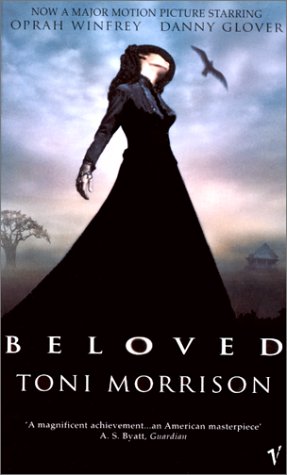
Beloved won the Pulitzer Prize in 1988, and in a 2006 New York Times Book Review survey of writers and critics, it was named the best work of American fiction published in the preceding twenty-five years. Morrison had already been awarded the Nobel Prize in Literature in 1993 for the “visionary force and poetic import” of her writing.
Beloved is both a ballad and a dirge for the millions whose bodies, lives and histories were consumed by slavery. Millions are the stories, and many have been told before, but none has made the reader inhabit those lives quite as Toni Morrison does.
It is 1873, Cincinnati, Ohio. The book begins with Sethe and Denver, mother and daughter, living in a grey-and-white house called 124 on Bluestone Road. They share the house with the ghost of Sethe’s baby daughter, whom she killed years earlier. “124 was spiteful. Full of a baby’s venom.”
Eighteen years earlier, Sethe had escaped from Sweet Home, the Kentucky plantation where she was enslaved. A planned group escape went awry after Sixo and Paul D were captured and Halle, Sethe’s husband, disappeared. Sixo was killed and Paul D shackled in a three-spoke collar. Schoolteacher’s mossy-toothed nephews held Sethe down and took her breast milk while he watched and made notes. When she reported the assault to the ailing Mrs Garner, she was whipped with cowhide. Sethe nevertheless escaped, determined to reach Baby Suggs in Ohio with her children, with or without Halle.
Baby Suggs was already free, her son Halle having bought her freedom from Mr Garner with money earned by hiring himself out for additional work. Sethe sent her two sons and baby daughter ahead to Baby Suggs in Ohio, helped by people assisting enslaved people to escape. Heavily pregnant, Sethe followed alone. On the way she encountered Amy Denver, a young white indentured servant, who helped her and assisted at the birth of her baby in a boat. Sethe named the child Denver after her.
Sethe was reunited with her children and mother-in-law at 124 in Ohio. For a brief period she lived in freedom, during which Baby Suggs held a great feast for the Black community around them. Then schoolteacher arrived with his nephews and the sheriff to reclaim Sethe and her children. Faced with their return to slavery, Sethe gathered her children into the woodshed, cut her baby daughter’s throat with a handsaw, and attempted to kill the others. She would rather have them dead and safe than returned to slavery. Sethe was jailed but later released. Baby Suggs, profoundly changed by what had happened and by the community’s response to it, eventually withdrew to her bed, where she died.
Isolated from the community, Sethe and Denver were living quietly at 124 when Paul D, one of the Sweet Home men, appeared at their door. He and Sethe were drawn together by their shared past, and Paul D moved into the house. When the ghost violently asserted itself, he confronted it and drove it away. Soon afterwards, however, a mysterious young woman appeared, about the age Sethe’s dead daughter would have been. She called herself Beloved—the single word Sethe had had chiselled on her daughter’s headstone, paying for the engraving with sex. Beloved gradually drove Paul D from 124 and became the centre of Denver’s and, increasingly, Sethe’s lives. Sethe became convinced that Beloved was her dead daughter returned to her, and devoted herself almost entirely to her, neglecting Denver and eventually wasting away in her efforts to explain the past and make amends.
Beloved doesn’t make for light reading. It is disturbing, lyrical and haunting. Unbound by conventional chronology, the novel unfolds in fragments of memory and emotion. Morrison puts the reader inside the lives of people denied any claim to themselves or to those they loved—to parents, children, siblings and spouses; to their own bodies and identities; almost, it seems, to the sun and wind and the earth beneath their feet. She takes us into the mind of a mother consumed by longing for her dead daughter, and then gives voice to the daughter’s own longing for her mother.
Beloved also blurs the boundaries between the living and the dead, yet it must not be mistaken for a ghost story. Suppressed and stubborn, emotions pass from the past to the present and back again, from the living to the dead and back to the living, revisiting times and places through ‘rememory’ and imposing themselves upon both the characters and the reader. The novel portrays the brutal, lifelong oppression that has damaged the sense of self of the enslaved and the freed alike, making it difficult for them to trust themselves or others. They are humiliated in dignity, violated in flesh and wounded in memory, yet Beloved is equally imbued with their endurance and fortitude. It remains a short but remarkably powerful emotional history of American slavery.
“But it wasn’t the jungle blacks brought with them to this place from the other (livable) place. It was the jungle whitefolks planted in them. And it grew. It spread. In, through and afterlife, it spread, until it invaded the whites who had made it. Touched them everyone. Changed and altered them. Made them bloody, silly, worse than even they wanted to be, so scared were they of the jungle they had made. The screaming baboon lived under their own white skin; the red gums were their own.”
Beloved
Author: Toni Morrison
Publisher: Vintage Random House
Pages: 324


Excellent review USP ! Those who have not read this book will hit the stands for a copy after reading this review and those who have read it already, will revisit the pages 🙂
Sharmila, I have read other books on slavery and each has struck me hard but Beloved left me petrified.
Great imagery!
Thank you.
It is not a ghost story and yet it blurs the line between the living and dead must make it very interesting. Excellent review as always. In fact you should review books for newspapers. TOI has no book reviews and the HT reviews do nothing to inspire or inform.
Newspapers? TOI? HT? The grapes are sour, Alka. Remember, I am One Grain Amongst the Storm! Thank you for your kindness.
Yes, that is true. Yet, once you are in the middle of Morrison’s twister nothing can retrieve you. Thanks for appreciating.
what a review!!! your interpretation of a book is all i get to read and that’s more than enough for me! even if i become an avid reader one day and start reading all the books on earth, you will still remain my favourite writer.
just wondering why wordpress decided not to send me the post notification this time.
That is a heart-warming compliment, Deb. My God bless you! Something seems to be wrong with WP notifications for sure. I’ll write to them.
Hi USP,
This looks like a wonderful book which seems to have escaped my eyes. I would surely want to read a Noble prize winning story for sure.
However, you’ve presented an equally outstanding review of this classic book. It makes me feel like I’ve missed out on something good.
Thanks for sharing this review and kindling an interest in this book.
Regards
Jay
Nobel Prize is usually awarded for an author’s works as a whole. There are many a gem out there, famous and forgotten, waiting to be read. Many thanks to you.
Wonderful review Uma. I especially liked the part where you say it is not a ghost story but blurs the line between living and dead and that’s enough for me to read this book.
Thank you for your confidence in my words, Jas. As for the blurred lines, that indeed is the case. You are going to love this book.
Wonderful review… Thanks for sharing……
Thanks for stopping by.
After reading this post, I am really embarrassed that I never came across this book. Your review is equally captivating. I will surely read this book.
Nothing to be embarrased about, Meenakshi. There are a triilion sparkling stars in the sky. Ever read Du Fu? He is a Tang Dynasty Chinese poet. Do read him too.
Thanks for your kind words.
I was just thinking that–as I haven’t read the book, or anything by Toni Morrison, but I need to rectify that soon. Uma, it’s not often that a book review could be called “powerful,” but I think you nailed it with this one.
Am I happy to receive that plaque, Jenn! Believe me, it was a tough one to nail down. It is a complex book and I have a feeling that I may have just skimmed the top. A million thanks to you! 😀
As usual, Uma, you effortlessly capture the mood of the book in your review. I am the chap who prefers light reading but every time I read a review by you I get glimpses of a world of literature that I am missing.
Suresh, I am also astounded often by the sheer wealth of priceless gems that may be lying out there, unbeknownst to me! But it is my request to you to step out and explore intenser, foreign yet human worlds. Thanks for your beautiful comment.
I must confess I started reading this book last year and gave up after 20 pages. It lies at my bedside table as a reminder that I must complete it. Reading your review is a great push in that direction!
Corinne, Morrison’s style could be tangled for the beginners. However, you only need to step further into the gale and you will lifted with a force. Pick up that book again!
Will do! Starting Feb 1st, sir!
I presume that is a compliment, madam!
Marked on goodreads!
Sounds interesting!
A good read, for sure.
Great review Uma Shankar Ji, so I need to get my hands at it next 🙂
That is a fine book to pick up, Purnendu. Happy reading and thanks for the compliment!
Once again a great review, Umashankar.
Many thanks, TF.
Great review, but am a bit scared of reading such an intense book which seems to be quite gruesome in places. It probably has the ability to shake you up and dwell on the story and characters long after you have read the book, which is the making of a great literature.
Gruesome it is. But more than that, it is a painful account of unbridled suffering. It is certainly going to linger in your thoughts for long and that is a mark of all great writings.
Keep away when you are inclined upon lighter readings. But do let it unveil the cruelties men can unleash, and the miseries men can endure, when you are are ready for it.
Amazing review US ! Makes me want to go and buy it right now. But what you have outlined is indeed dark and dark were the days when slavery and even worse were the order of the day. I will probably have to look for a bright day to read something like this, as a book this dark will surely make for heavy reading. The only book I have read with racial overtones and slavery was “To Kill a Mocking Bird” which was a fantastic read.
To Kill a Mockingbird is a beautiful book indeed. I was quiet young when I had read it but I still remember it vividly. Maybe it’s time to revisit that classic.
Yes, Beloved will make your heart heavy. Do read it sometime though. Thanks for liking the review.
I read this book 2 years back and I remember how disturbed I felt. It never came across as a ghost story but I could always feel the pain it carried the moment I opened its pages.
Have you read ‘The Colour Purple’? That is another masterpiece.
True, Amit. It is a poignant book from the very first sentence, right through its length till the last word uttered. I am yet to read The Color Purple.
I haven’t read much in recent years except for wildlife related books and journals. Beloved seems to be a gripping novel that is bound to stir your mind for a long time. Your review ensures that this book is read by many more. Well written.
Thank you, Sabyasachi. I am aware of your passion and dedication to photography. I also happen to know, albeit on a much smaller scale, how consuming and financially devastating it can get. There are times I find it hard to explain why a lens filter I own costs more than the entire camera of my neighbours. They simply think I am a braggart, or sick, or both.
Thank you for reading and appreciating.